SGNUTRI


البحث عن المنتج
Does Polydextrose Raise Blood Sugar
Let’s go straight to the conclusion: Polydextrose will not cause a significant increase in blood sugar, nor will it cause severe insulin fluctuations. For friends who need to strictly control blood sugar, it is a relatively safe category. Although it is classified as a “carbohydrate” on food labels, its behavior in the body is very different from glucose and sucrose. Since the body can only partially digest and ferment it, it is more like a soluble dietary fiber in nature. So neither people with diabetes nor those on the ketogenic diet need to worry about it triggering a serious metabolic loss of control or insulin spike.
Why Can Polydextrose Be ‘Blood Glucose Neutral’?
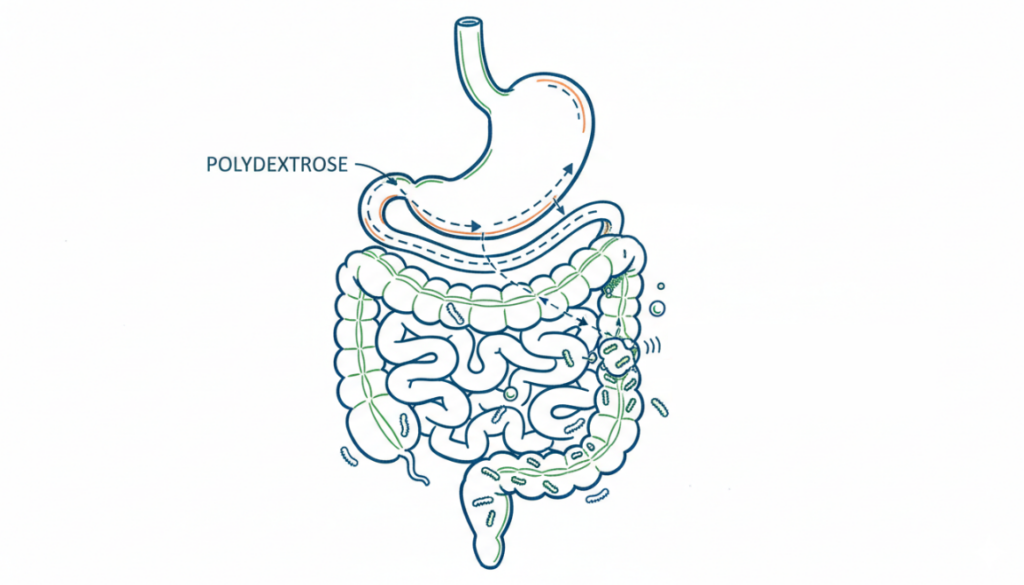
We’re going to dissect the mechanism by which the body processes it. Simple carbohydrates (such as glucose, fructose, sucrose) are usually rapidly broken down and absorbed into the blood, while polydextrose is the synthetic glucose polymer. Our small intestine lacks the enzymes needed to completely hydrolyze it, so it can pass through the upper digestive tract intact. It is only when it reaches the large intestine that it is partially fermented by the intestinal flora. This “slow and incomplete” digestion is the key reason why it does not cause blood sugar to soar like ordinary sugar.
Understanding The Effects Of Blood Glucose
In clinical blood glucose management, the glycemic index (GI) is an indicator that cannot be bypassed. The performance of polydextrose in this regard is almost negligible. Because it does not increase the concentration of glucose in the plasma, it actually functions more like a dietary fiber than a carbohydrate that provides energy. This is essential for the management of patients with type diabetes. The core logic of clinical management is to avoid high blood sugar (hyperglycemia), so the introduction of this kind of composition similar to dietary fiber is obviously much safer than the intake of high-sugar carbohydrates in food formula and daily diet.
إلى طليعة التغذية
الألياف القابلة للذوبان
الألياف القابلة للذوبان هي مكون غذائي عالي الثبات وغير قابل للهضم يعزز التحكم في الوزن عن طريق زيادة الشبع وتقليل تناول الطعام. وهي متعددة الاستخدامات، وتستخدم على نطاق واسع لتعزيز المظهر الغذائي وقوام الأطعمة والمشروبات والمنتجات الصحية.
الألياف القابلة للذوبان
بريبايوتك
تعمل البريبايبيوتيك كعامل تكاثر يتحلل بشكل انتقائي وتستخدمه البكتيريا المعوية النافعة، مثل البكتيريا المشقوقة. وتؤثر هذه العملية تأثيرًا إيجابيًا على صحة الإنسان بشكل عام، وغالبًا ما تكون مصحوبة بمزايا أيضية مثل انخفاض تأثير السعرات الحرارية والحد الأدنى من تقلبات السكر في الدم بسبب استقرارها الهضمي الفريد.
بريبايوتك
الفيتامينات
الفيتامينات هي مغذيات دقيقة عضوية أساسية، مصنفة إلى أشكال قابلة للذوبان في الماء وأشكال قابلة للذوبان في الدهون، والتي تنظم العمليات الفسيولوجية الحيوية مثل الأيض والمناعة والتخثر. نظرًا لحساسيتها للضوء والحرارة والرطوبة,
الفيتامينات
Polydextrose And Special Diets
The safe configuration of polydextrose makes it a “frequent visitor” to various dietary restriction programs:
Diabetes management: the most headache for patients is postprandial blood sugar control. Since polydextrose is not metabolized to glucose, it does not cause those postprandial spikes that often require additional insulin injections to calm down.
Ketogenic diet: The strict ketogenic diet requires extreme avoidance of insulin fluctuations in order to maintain the ketonic state. Since polydextrose does not elicit a significant insulin response, it is widely accepted in many ketogenic products. It’s rare to retain the texture and taste needed for processed foods without betraying your metabolic state.
Clarifying Confusion About ‘Carbohydrate’ Labels
Categorical attribution on the label and physiological metabolic reality are two different things. Regulations require that polydextrose be labeled as a carbohydrate based on its chemical structure; however, from a physiological point of view, it does not have the characteristics of ordinary carbohydrates at all. Although it produces about kilocalories per gram, this is by no means from a rapid influx of blood sugar. Don’t just stare at the total number of carbohydrates on the label, learn to distinguish between “sugar-raising carbohydrates” and “non-sugar-raising carbohydrates”, so that you can really take the initiative in diet choice.
Author Name: Dr. Julian Rivers
“I am a specialist in metabolic health and functional food ingredients. My work focuses on bridging the gap between complex nutritional biochemistry and daily dietary choices. I wrote this guide to help individuals—especially those managing diabetes or following a ketogenic lifestyle—understand the real-world physiological impact of ingredients like polydextrose.”
السابق: What Food Has Allulose
التوصيات ذات الصلة
-

مسحوق الفركتوز العالي الفركتوز: عامل التحلية المركّز للتركيبات الجافة والتطبيقات الوظيفية
1186تعرّف على مسحوق وشراب الفركتوز، وافهم ما هو شراب الذرة عالي الفركتوز وكيف يُستخدم كمُحلي للذرة.
عرض التفاصيل -
هل الجلوكوز هو نفسه الجلوتين
349لا، الجلوكوز ليس جلوتين. الجلوكوز سكر، بينما الجلوتين بروتين. تعرف لماذا الجلوكوز آمن لمرضى السيلياك.
عرض التفاصيل -
مراجعة الإيزومالت الطبيعي - مُحلي ينجز المهمة بالفعل
973تعرّف على ما إذا كان الإيزومالت طبيعياً، واكتشف لونه وملمسه واستخدامه الوظيفي كبديل للسكر منخفض السعرات الحرارية.
عرض التفاصيل -
بدائل مالتوديكسترينبدائل طبيعية لأكل صحي أكثر
546الدليل الاحترافي للبديل الطبيعي للمالتوديكسترين. ابحث عن بدائل صحية لسكر الدم والتحكم في الوزن.
عرض التفاصيل