 SGNUTRI


البحث عن المنتج
هل يعمل الألولوز مثل GLP-1؟ أسرار إنقاص الوزن
لا يحتوي الألولوز على هرمون GLP-1، لكنه يحفز أمعاءك على إفرازه بشكل طبيعي. فعندما تتناول هذا المُحلي، تقوم خلايا L في أمعائك بضخ هرمون GLP-1 الداخلي، مما يخفف من ارتفاعات سكر الدم ويقلل من شهيتك. إن توقع أن ملعقة من الألولوز في قهوة الصباح ستحاكي تأثير حقنة سيماجلوتيد الأسبوعية سيؤدي بك إلى خيبة أمل. فأنت بحاجة إلى استراتيجية دقيقة لتناول الجرعات قبل الوجبات لتنشيط هذا المسار البيولوجي دون الإضرار بعملية الهضم. لقد قمتُ بتتبع مستويات الجلوكوز في الدم ومؤشرات الشبع الخاصة بي باستخدام جهاز مراقبة الجلوكوز المستمر (CGM) لإيجاد البروتوكول الدقيق الذي يجعل الألولوز يعمل كأداة فعالة لفقدان الوزن. دعونا نحلل الواقع السريري.
هل يحتوي الألولوز على GLP-1 أم أنه يفرزه؟
يسأل الناس دائمًا: هل يحتوي الألولوز على GLP-1 مخبأً في تركيبته الكيميائية؟ الإجابة هي «لا» قاطعة. فالألولوز هو سكر أحادي، أي سكر بسيط. أما GLP-1 فهو هرمون ببتيد ينتجه جسمك. ولا يمكنك تناول GLP-1 عن طريق الفم لأن حمض المعدة يدمره على الفور.
تكمن السحر الحقيقي في الأمعاء السفلية. تشير البيانات السريرية إلى أن السؤال الصحيح الذي يجب طرحه هو: «هل يفرز الألولوز هرمون GLP-1؟». عندما يصل الألولوز إلى ميكروبيوم الأمعاء دون أن يتم هضمه بشكل كبير، فإنه يعمل كمحفز إفراز داخلي. فهو يرتبط بمستقبلات محددة على الخلايا L المعوية الصماء. ثم تفرز تلك الخلايا هرمون GLP-1 الطبيعي في جسمك مباشرةً إلى مجرى الدم. وهذا يُرسل إشارة إلى دماغك بأنك تشعر بالشبع، ويُوجه البنكرياس لإدارة الأنسولين بكفاءة.
تحصل على الإشارة الأيضية دون الحاجة إلى حقن دواء اصطناعي. كما تتجنب مخاطر فقدان العضلات المرتبطة بمحفزات مستقبلات GLP-1 الاصطناعية، لأن عمر النصف للهرمون الطبيعي لا يتجاوز بضع دقائق. ويستخدم جسمك بالضبط ما يحتاجه لتلك الوجبة المحددة، ويتخلص من الباقي.
لماذا لا يعني «المزيد» «تقليل الجوع»؟
يفشل معظم المبتدئين في نظام الكيتو عند استخدام الألولوز لأنهم يعاملونه كالسكر العادي. فهم يخبزون كعكة كاملة باستخدام كوب من الألولوز، معتقدين أن تناول جرعة كبيرة منه سيقضي على شهيتهم لعدة أيام. وهذا يؤدي إلى “فخ العتبة”.”
تتمتع خلايا الأمعاء بقدرة إنتاج قصوى لهرمون GLP-1 لكل وجبة. ولا يؤدي تناول 50 جرامًا من الألولوز إلى إفراز كمية من هرمون GLP-1 تزيد خمس مرات عن تلك الناتجة عن تناول 10 جرامات. كما أن الفائض من الألولوز يسحب الماء إلى القولون عن طريق التناضح. والنتيجة هي إسهال شديد وانتفاخ شديد في البطن، وليس زيادة في فقدان الوزن.
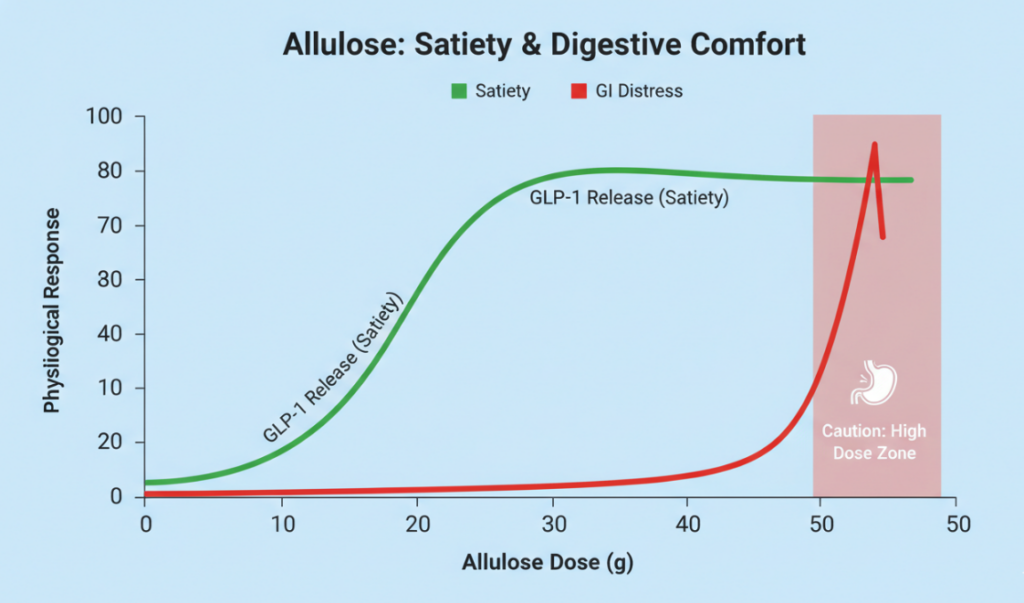
احرص على أن تتراوح جرعتك الواحدة بين 5 و10 جرامات. فهذا النطاق المحدد للجرعات الصغيرة يزيد من تحفيز الخلايا L إلى أقصى حد مع الحفاظ على استقرار الجهاز الهضمي تمامًا.
إطار التنشيط الداخلي A.S.A.P.
لقد قمت بتطوير إطار عمل «A.S.A.P.» لتحويل الألولوز من مجرد مُحلي بسيط للقهوة إلى مُثبِّط للشهية يُستخدم قبل الوجبات بشكل هادف. حيث تقوم بتناول أربعة مكونات محددة قبل 20 دقيقة من وجبتك الأكثر دسماً لتعظيم إفراز هرمون GLP-1 الطبيعي.
- ألولوز: يعمل كمحفز رئيسي لخلايا L.
- الألياف القابلة للذوبان: يبطئ عملية إفراغ المعدة ويؤدي إلى تخمير مطول في الأمعاء، مما يطيل فترة إفراز هرمون GLP-1 من دقائق إلى ساعات.
- حمض الأسيتيك: يقلل من التأثير على مستوى السكر في الدم للوجبة التالية ويحسّن استجابة مستقبلات الأنسولين.
- البروتين: يحفز إفراز هرموني CCK وPYY، وهما هرمونان آخران مهمان للشعور بالشبع يعملان بشكل تآزري مع هرمون GLP-1.
اشرب هذا المزيج قبل 20 دقيقة من الجلوس لتناول الطعام. ستجد صعوبة جسدية في إنهاء وجبة غنية بالكربوهيدرات.
بيانات الرصد المستمر للجلوكوز (CGM) واستراتيجية ما قبل الوجبة
قمت باختبار استراتيجية تناول 10 غرامات من الألولوز قبل الوجبة مقارنةً بعلاج وهمي، وذلك باستخدام جهاز مراقبة مستمر لمستوى الجلوكوز. وكان الهدف هو قياس كل من الارتفاع الموضوعي في مستوى الجلوكوز وتقييمات الجوع الذاتية بعد تناول 100 غرام من الأرز الأبيض.
| النظام المتري | وجبة قياسية (مع مياه مسبقة التعبئة) | بروتوكول الألولوز (جرعة أولية من الألولوز تبلغ 10 غرامات) |
| الارتفاع الأقصى لمستوى الجلوكوز | +50 ملغ/ديسيلتر | +35 ملغ/ديسيلتر (أقل بمقدار 30%) |
| حان وقت العودة إلى المستوى الأساسي | 120 دقيقة | 85 دقيقة |
| الشعور بالجوع بعد مرور ساعتين على تناول الوجبة | 7/10 | 3/10 |
البيانات لا يمكن إنكارها. فقد أدت الوجبة العادية إلى ارتفاع مستوى الجلوكوز في الدم إلى 145 ملغ/ديسيلتر، تلاه انخفاض حاد أدى إلى ظهور رغبة شديدة في تناول السكر بعد ساعتين. أما الوجبة التي سبق تناولها بـ 10 جرامات من الألولوز، فقد تسببت في ارتفاع طفيف في مستوى الجلوكوز إلى 112 ملغ/ديسيلتر. ولم يحدث الانخفاض الحاد في مستوى الجلوكوز بعد الوجبة أبدًا. أدى الإفراز المستمر لهرمون GLP-1 إلى الحفاظ على معدلات الشعور بالجوع عند مستوى أساسي قدره 3/10 لمدة أربع ساعات متتالية.
توقفوا عن التعامل معها كأنها حبة سحرية
يعمل الألولوز كرافعة بيولوجية، وليس كـ«رمز غش» لنظام غذائي سيئ. فإذا تناولت 4,000 سعرة حرارية من الوجبات السريعة، فإن الارتفاع الطفيف في مستوى هرمون GLP-1 المُنتج داخليًّا لن ينقذ محيط خصرك.
استخدم الألولوز بطريقة استراتيجية. اشترِ مسحوق الألولوز النقي دون إضافة الإريثريتول أو فاكهة الراهب، لأن هذين المكونين لا يحفزان الخلايا L بنفس الطريقة. قم بإذابة 10 جرامات في الماء، واشربها قبل وجبتك الأكبر، ودع الجهاز الغدد الصماء في أمعائك يتولى المهمة الصعبة.
الأسئلة الشائعة
هل يتسبب الألولوز في ارتفاع مفاجئ في مستوى الأنسولين؟
لا. لا يؤدي الألولوز إلى ارتفاع حاد في مستويات الأنسولين. بل إنه في الواقع يحسّن حساسية الجسم للأنسولين ويخفف من الاستجابة الجلايسيمية للكربوهيدرات الأخرى التي يتم تناولها في نفس الوقت.
ما هي كمية الألولوز التي أحتاجها لإفراز GLP-1؟
تشير الملاحظات السريرية إلى أن جرعة تتراوح بين 5 و10 جرامات تكفي لتحفيز الخلايا L المعوية الصماء على إفراز GLP-1. وتزيد الجرعات التي تتجاوز 15-20 جرامًا في الوجبة الواحدة من خطر الإصابة باضطرابات الجهاز الهضمي دون أن توفر فوائد إضافية في الشعور بالشبع.
هل يمكنني خلط الألولوز مع السكر العادي لتقليل ارتفاع نسبة السكر في الدم؟
نعم. إن تناول الألولوز إلى جانب السكروز أو الجلوكوز العادي يثبط عمل الإنزيمات المسؤولة عن تكسير السكر العادي. وهذا يؤدي فعليًّا إلى إبطاء امتصاص الجلوكوز في مجرى الدم.
هل يُعد الألولوز بديلاً آمنًا عن أوزيمبيك أو ويغوفي؟
الألولوز هو مكمل غذائي ومُحلي، وليس دواءً صيدلانيًّا. وهو يحفز إفرازًا طبيعيًّا قصير المفعول لهرمون GLP-1 من أجل التحكم المعتدل في الشهية. ولا يمكنه محاكاة التأثيرات الجهازية الهائلة التي تستمر لمدة أسبوع والتي تحدثها ناهضات مستقبلات GLP-1 الاصطناعية المستخدمة في الأدوية التي تُصرف بوصفة طبية.
هل يؤدي الطهي أو الخبز إلى إبطال فوائد الألولوز المتعلقة بـ GLP-1؟
لا تؤدي الحرارة إلى تدمير الألولوز. ومع ذلك، فإن استخدام الألولوز في المخبوزات المخلوطة بدقيق ودهون عالية السعرات الحرارية يلغي فوائده في إنقاص الوزن. ولتحقيق أقصى قدر من إفراز الهرمونات، تناول الألولوز مذابًا في الماء أو في سائل خالٍ من السعرات الحرارية على معدة فارغة قبل تناول الطعام.
لماذا أشعر بالانتفاخ بعد تناول الألولوز؟
أنت تتناول كمية كبيرة دفعة واحدة. لا تستطيع الأمعاء الدقيقة امتصاص الألولوز بكفاءة. فتنتقل كميات كبيرة منه إلى القولون، حيث تمتص الماء وتتخمر بسرعة، مما يتسبب في ظهور الغازات والانتفاخ. التزم بالجرعات الصغيرة بدقة.
التوصيات ذات الصلة
-

هل يُعد الألولوز بديلاً للسكر بنسبة 1 إلى 1؟ الحقيقة
79هل يُعد الألولوز بديلاً للسكر بنسبة 1 إلى 1؟ لا. تعرف على نسب التحويل الدقيقة وفقًا لنظام SMB لتتقن اليوم فن الخبز الكيتو المثالي.
عرض التفاصيل -
ما هو الدكستروز اللامائي
603ما هو الدكستروز اللامائي؟ مصدر نقي منخفض الرطوبة للجلوكوز من أجل الطاقة السريعة واستعادة اللياقة البدنية والاستخدام الطبي.
عرض التفاصيل -
هل يرفع البولي دكستروز نسبة السكر في الدم
364تعرّف على سبب كون بولي دكستروز محايدًا لسكر الدم وآمنًا للحمية الكيتونية ومرض السكري، وكيفية قراءة ملصقاته بشكل صحيح.
عرض التفاصيل -
مكملات فيتامين د للعدائين
556الدليل الأساسي لمكملات فيتامين د للعدائين. تعزيز التعافي والوقاية من الإصابات باستخدام استراتيجية D3 و K2 الصحيحة.
عرض التفاصيل