
 SGNUTRI


製品検索
Is Vitamin C The Same Thing As Calcium
No, vitamin C (ascorbic acid) and calcium are definitely two completely different essential nutrients.
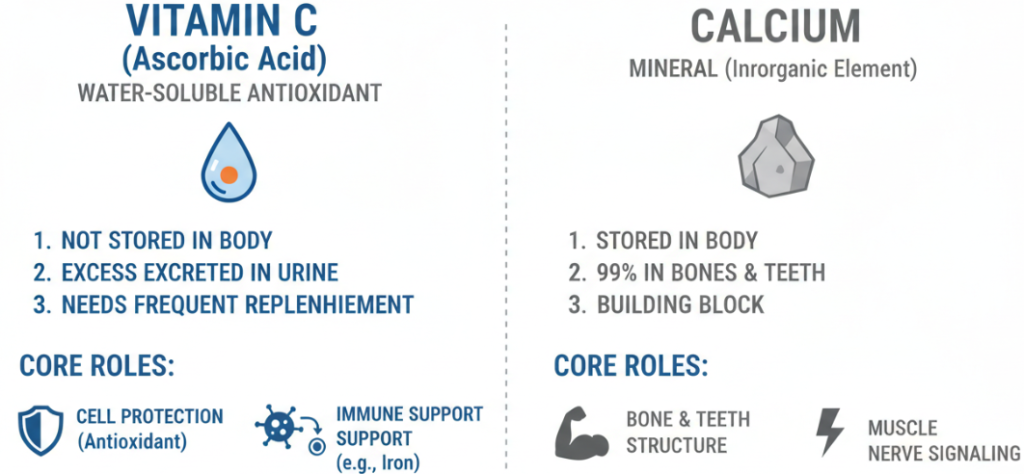
Simply divide it: vitamin C is a water-soluble vitamin, which mainly manages immunity, collagen synthesis and iron absorption; while calcium is the mineral, which is the foundation of strong bones and teeth, and is also responsible for muscle function and nerve conduction.
However, although they have different biological “origins”, they are indeed a good partner in the human body-vitamin C can actually assist the body in absorbing calcium. The common “calcium ascorbate” on the market is a combination of the two., Mainly mild digestion.
In order to fully explain why these two things are always discussed together, we need to disassemble their specific definitions, biological differences, and how they work together to maintain health.
Vitamins Vs. Minerals
In the final analysis, the most essential difference between vitamin C and calcium lies in biological classification and main functions.
Vitamin C (Ascorbic Acid):
This is a typical water-soluble antioxidant. Note the word “water-soluble”-this means that the body cannot store it in large quantities, and the excess is excreted in the urine. Many people ignore this, leading to frequent deficiencies, so it must be supplemented frequently through daily diet or supplements. Its core job is to protect cells from damage (anti-oxidation), boost the immune system, and act as a “porter” to promote the absorption of iron and other nutrients.
Calcium:
This stuff is minerals, not vitamins. Minerals are inorganic elements derived from the land and are the “building blocks” of the body structure “. Calcium is the most abundant mineral in the body. Unlike vitamin C, which cannot be stored, the human body locks 99% of calcium in bones and teeth to maintain hardness. Its role is not only physical (bone), but also physiological-without it, your muscles can’t contract, and your nerves can’t send signals.
How Do They Each Work?
Vitamin C: Builders And Protectors
As an antioxidant, vitamin C is the body’s line of defense against oxidative stress. But in practical applications, I value its structural role more: it is a necessity for the biosynthesis of collagen. Collagen is like the “glue” of the body, holding the skin, cartilage, tendons and blood vessels together. If vitamin C intake is insufficient, the body’s ability to repair tissues will be greatly reduced, and slow wound healing is often the reason.
Calcium: Structural Support And Signal Transmission
Everyone knows that calcium is for hard bones. But the function of calcium is much more than that. Calcium ions are key to muscle function and nerve signaling. Every time you beat your heart, every muscle contraction, you’re consuming calcium. There is a very real risk: if the diet is not enough calcium intake, the body will “extract” calcium from the bones in order to save life (maintain heart and nerve function). This “borrowed” is usually not paid back, and over time, the bones become brittle.
Synergistic Effect Of Vitamin C And Calcium
Although it is two things, but they work together very powerful. This symbiotic relationship is mainly reflected in the absorption and bone architecture.
Enhanced Absorption
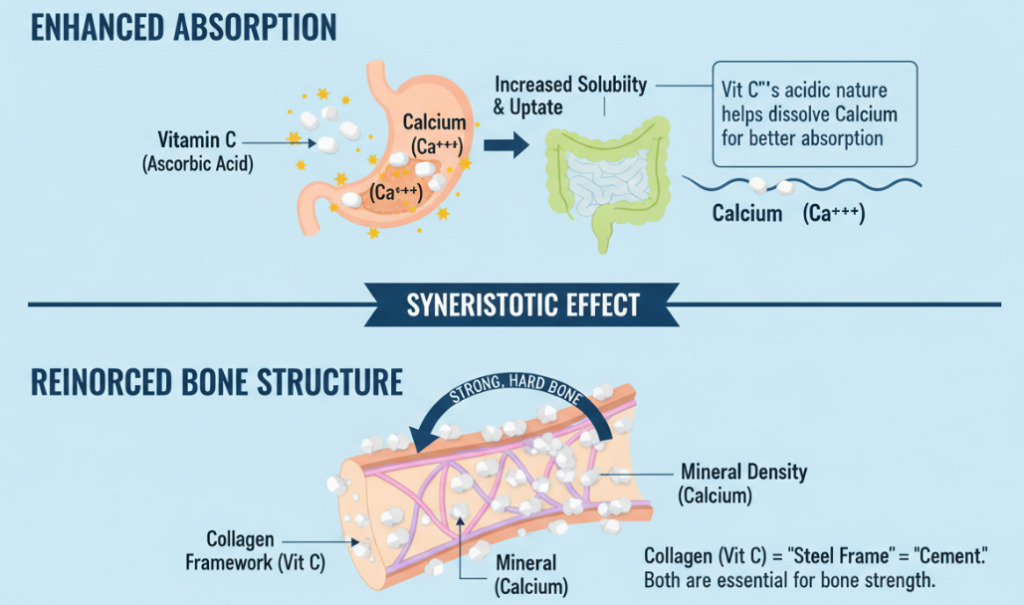
This is one of the most valuable interactions between these two nutrients: vitamin C helps your body “eat” more calcium. The acidic nature of ascorbic acid creates a favorable environment for dissolving calcium in the stomach, making it easier for the intestine to absorb. This is particularly important for those with low levels of gastric acid secretion.
“Reinforced Cement” For Bone Health
Both are vital to bones, but they work at completely different points: calcium provides mineral density, which is the “hardness” of bones, while vitamin C is responsible for the production of collagen. In the bone structure, collagen forms a soft framework, and calcium is attached to this framework to crystallize and harden. For example, if there is no “steel frame” provided by dimension C, there is no place for the “cement” of calcium to be poured.
What Is Calcium Ascorbate?
Calcium ascorbate is actually a unique compound that combines ascorbic acid (vitamin C) with calcium carbonate to create the buffered form of vitamin C.
A More Gentle Digestive Experience
Pure ascorbic acid is very acidic, and some people with sensitive intestines and stomach are prone to acid reflux or stomach pain. By binding to calcium, the entire supplement becomes pH neutral (buffered).
Double Benefit
This form is not only more friendly to the stomach, but also provides high bioavailability of calcium and vitamin C at the same time. It’s a pretty clever solution for someone who wants to balance immunity and bone strength in one dose.
Author: Alex Mercer
As a certified nutritionist specializing in dietary supplements, I focus on clarifying nutrient misconceptions. In this article, I break down the biological distinctions between Vitamin C and calcium, explaining how these two unique nutrients synergize to support your bone health and immunity.