
 SGNUTRI


제품 검색
Does Soluble Fiber Dissolve In Water
Yes, soluble dietary fiber does dissolve in water. When water-soluble fiber touches the liquid in your digestive tract, it absorbs water wildly and completely changes its physical form-from its original dry state to a thick, viscous gel-like substance. This is completely different from insoluble fiber, which increases the volume of stool by “keeping it as it is”, and this smooth “gel” moves slowly through your gastrointestinal system. It is this unique solubility and the consequent increase in viscosity that makes it so effective in delaying gastric emptying, stabilizing blood sugar, and protecting cardiometabolic health by “catching” LDL cholesterol.
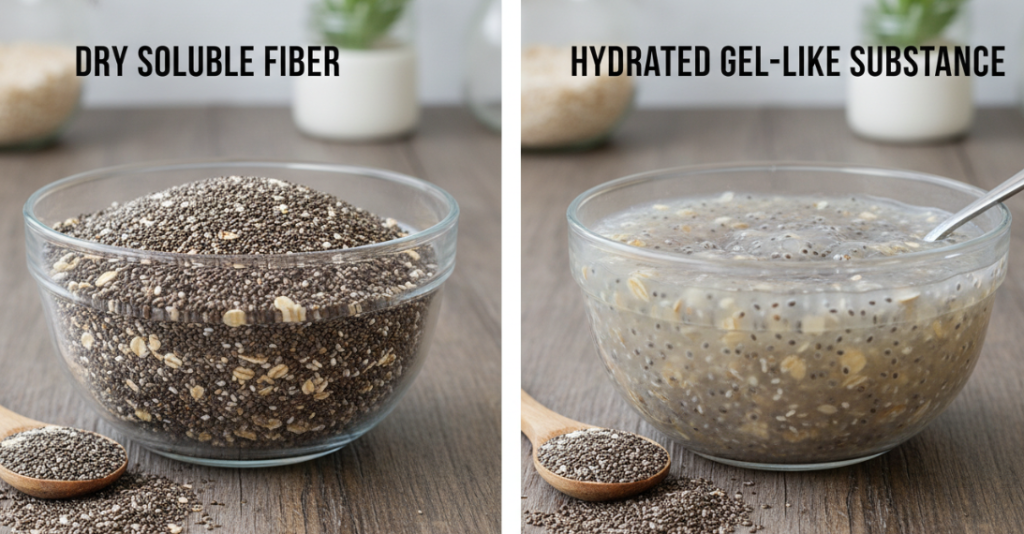
Understanding This “Gelation” Transition
To understand why water-soluble fiber is so unique, we have to look at the way it interacts with liquids. The so-called “water solubility” is essentially its strong hydrophilic ability. When you eat foods rich in water-soluble fiber, such as oats, flaxseed or beans, these fiber particles do not remain solid, but absorb water and swell. You can imagine adding water to a chia seed. The fibers form a colloidal suspension, which means that the particles are evenly distributed in the water, forming a very cohesive gel mass. This transformation is essential for those with sensitive intestines, because it means that this fiber is very gentle to the intestinal mucosa. It does not “rub” in the intestines like coarse fibers, but slides smoothly. This soothing effect can regulate defecation very effectively without the discomfort caused by coarse fibers.
How The ‘Sponge Effect’ Slows Digestion
The greatest contribution of this dissolution process to weight management and digestive health is that it alters the rate of digestion. Since the water-soluble fiber becomes a thick gel, it will significantly reduce the speed of food leaving the stomach, which is what we often call “gastric emptying”. In the eyes of those customers who need to control their diet, this is simply a “fat reduction plug-in”. This sticky gel occupies the stomach space and constantly sends signals to the brain that “I’m full. By prolonging the time food stays in the stomach, water-soluble fiber enhances satiety and makes you less likely to snack between meals. It is the use of their own water absorption characteristics, has become a natural appetite regulator.
영양의 최전선으로
수용성 섬유질
수용성 식이섬유는 포만감을 높이고 음식 섭취를 줄여 체중 조절을 촉진하는 매우 안정적이고 소화가 잘 되지 않는 식이 성분입니다. 용도가 다양하여 식품, 음료 및 건강 제품의 영양 프로필과 식감을 향상시키는 데 널리 사용됩니다.
수용성 섬유질
프리바이오틱스
프리바이오틱스는 다음과 같은 유익한 장내 세균에 의해 선택적으로 분해되어 활용되는 증식 인자로 작용합니다. 비피더스균. 이 과정은 전반적인 인체 건강에 긍정적인 영향을 미치며, 특유의 소화 안정성으로 인해 칼로리 영향이 적고 혈당 변동이 최소화되는 등의 신진대사 이점을 동반하기도 합니다.
프리바이오틱스
비타민
비타민은 수용성 및 지용성 형태로 분류되는 필수 유기 미량 영양소로 신진대사, 면역, 응고 등 중요한 생리적 과정을 조절하는 역할을 합니다. 비타민은 빛, 열, 습기에 민감하게 반응합니다,
비타민
Stabilize Blood Sugar Levels
The solubility properties of water-soluble fibers also play a central role in glycemic control. As the fiber dissolves and forms that sticky barrier in the small intestine, it acts as a trap for carbohydrates and sugars. This “trapping” mechanism prevents digestive enzymes from breaking down carbohydrates so quickly. As a result, the rate at which glucose enters the bloodstream becomes slow and controlled. For those who need to monitor their insulin response or are pre-diabetic, this means avoiding the roller-coaster blood sugar spike that occurs after a meal. So, the point is not just “how much fiber you eat”, but that this fiber dissolves and physically hinders the rapid absorption of sugar.
Catch Cholesterol, Guard Heart Health
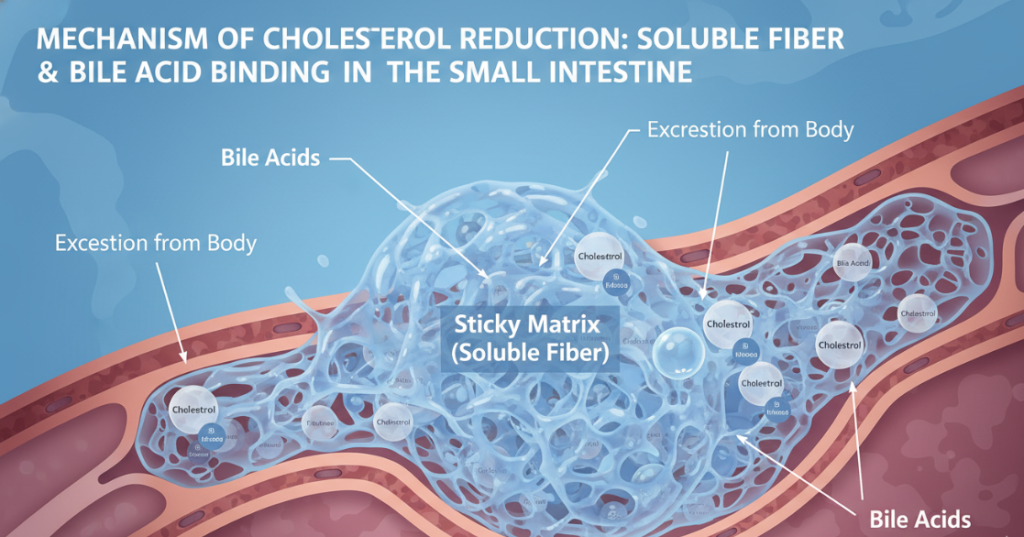
Finally, this “sponge effect” is also a key mechanism by which water-soluble fibers can claim to be “heart-protecting. As the gel passes through the small intestine, it traps bile acids (which are made from cholesterol). Because the body cannot reabsorb this “fiber-bile complex”, it is eventually excreted as waste. In order to replenish the lost bile acids, your liver has to pump cholesterol from your blood, which lowers your total cholesterol and LDL (the “bad” cholesterol) in your blood. This entire protection process relies entirely on the ability of water-soluble fibers to dissolve in water and form a “sticky matrix” that can grab the compound “. If it doesn’t dissolve, it won’t be able to do this cardioprotective task.
Author: Sarah Miller
Hi, I’m a Registered Dietitian Nutritionist specializing in digestive health and metabolic wellness. My passion is translating complex nutritional science—like how fiber interacts with your body—into clear, actionable advice. I help clients master their gut health and blood sugar levels through evidence-based dietary strategies.
관련 권장 사항
-
고과당 분말: 건식 제형 및 기능성 응용 분야를 위한 농축 감미료: 고과당 분말
1113과당 분말과 시럽에 대해 알아보고, 고과당 옥수수 시럽이 무엇이며 옥수수 감미료로 어떻게 사용되는지 이해하세요.
세부 정보 보기 -
포도당은 글루텐과 같은 성분인가요?
276아니요, 포도당은 글루텐이 아닙니다. 글루텐은 단백질인 반면 포도당은 당분입니다. 글루코스가 셀리악병 환자에게 안전한 이유를 알아보세요.
세부 정보 보기 -

비타민 B12 결핍이 암의 징후일 수 있나요?
661비타민 B12 결핍이 암의 신호일 수 있는지, 일반적인 원인, 증상 및 의사의 조언을 구해야 하는 시기에 대해 알아보세요.
세부 정보 보기 -

왁스 옥수수 대 말토덱스트린: 어느 것이 더 많은 근육을 만들까?
312왁스 옥수수 또는 말토덱스트린? 어떤 탄수화물이 더 빠른 회복을 촉진하고 복부 팽만을 방지하는지 알아보세요.
세부 정보 보기