 SGNUTRI


البحث عن المنتج
Calories maltodextrin: How to Read the Number
“Calories maltodextrin” cannot be answered with one number alone. First confirm whether the subject is ordinary digestible maltodextrin or resistant maltodextrin; then distinguish an estimate per gram of the ingredient from calories per serving of a finished product. Similar names do not mean the two types share the same nutrition data.
Identify the Maltodextrin Type
Ordinary digestible maltodextrin is a carbohydrate mixture produced by starch hydrolysis and mainly provides digestible carbohydrates. Resistant maltodextrin is treated differently for energy, available carbohydrates, and dietary fiber. Do not apply the calorie or fiber figures for one type directly to the other.
“Complex carbohydrate” describes maltodextrin as containing multiple glucose units. It does not mean it digests slowly, provides sustained energy, or has a low glycemic response. Ordinary digestible maltodextrin is usually converted to glucose relatively quickly. There is no single glycemic-index value that applies to every raw material, DE, molecular distribution, dose, and food matrix. Post-meal response is also affected by protein, fat, fiber, amount consumed, and individual status.
Estimate Calories by Ingredient Weight
Nutrition calculations for ordinary digestible maltodextrin commonly use an approximate factor of 4 kcal/g. On that basis, 10 g is about 40 kcal, 25 g about 100 kcal, and 100 g about 400 kcal. These are estimates based on the ingredient’s weight; the weight used in the calculation must be the maltodextrin itself.
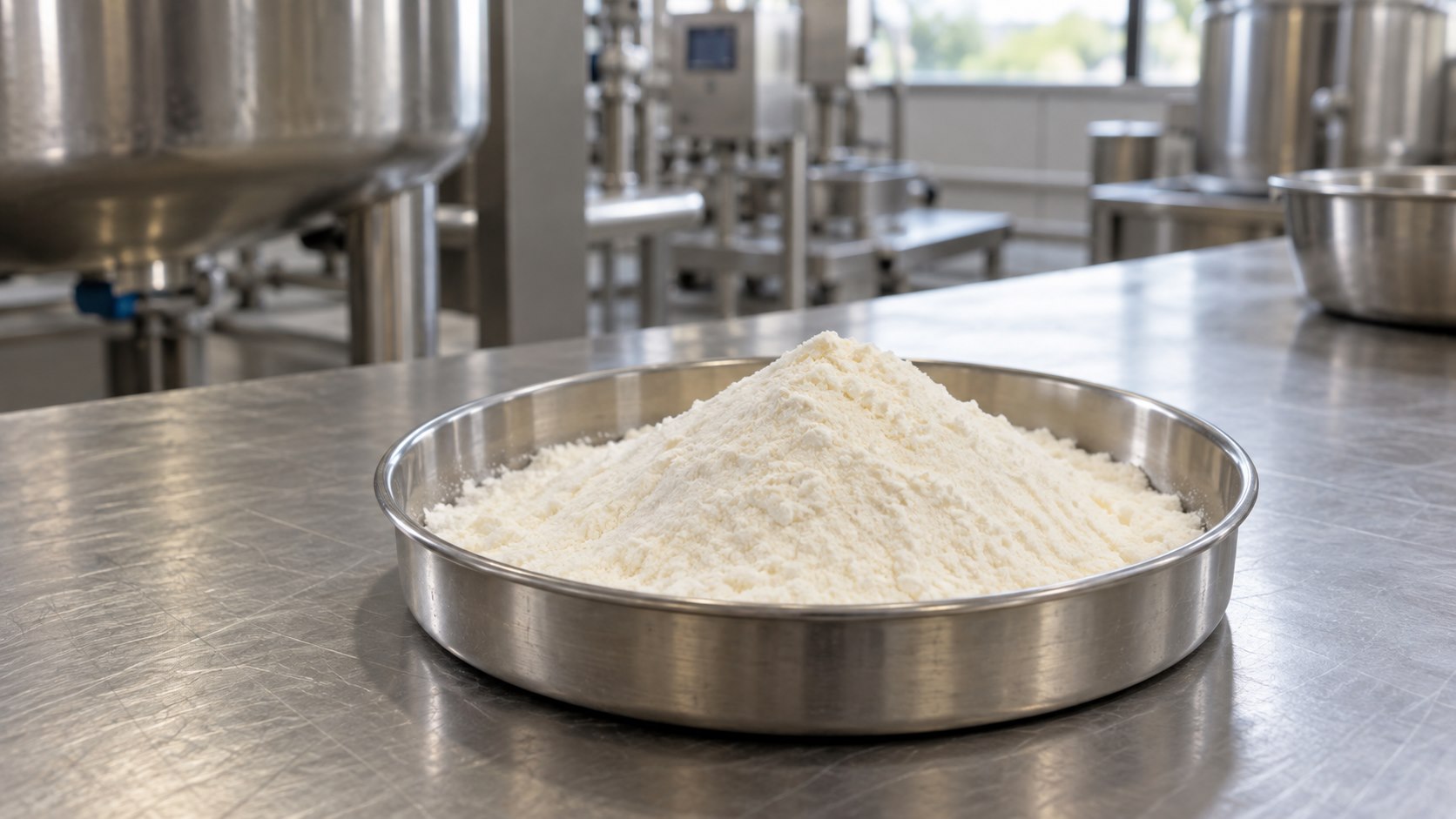
When a food or powder contains multiple ingredients, the weight of the whole serving is not the same as its maltodextrin content. Calories per serving also depend on the formula, the actual amount of maltodextrin, and applicable nutrition-labeling rules. The ingredient name alone cannot tell you the exact calories per serving of a particular protein powder, drink, or blend.
Read Sugar-Related Entries Separately
Maltodextrin is neither a monosaccharide, a disaccharide, nor a sugar alcohol; it is a carbohydrate mixture produced by starch hydrolysis. Ordinary products may contain small amounts of free glucose, maltose, and other short-chain sugars. Sugar labeling for a specific product depends on its composition, amount added, and target-market rules. Total sugars, total carbohydrates, and calories are different nutrition measures; one should not be used to infer the others.
When checking a specific product, first identify whether it is ordinary digestible or resistant maltodextrin, then interpret the numbers using the serving amount and nutrition label. The ~4 kcal/g figure is a common estimate for ordinary digestible maltodextrin, not a fixed per-serving calorie value that applies to all packaged products.
التوصيات ذات الصلة
-

شراب الملتيتول البلوري: دليل شامل
1997استكشف ميزات وفوائد وتطبيقات شراب المالتايتول البلوري في هذا الدليل الكامل من SGNUTRI.
عرض التفاصيل -
Allulose comes from: Natural Sources and Production
360Learn where allulose comes from, how fructose becomes allulose, and why natural traces differ from commercial products.
عرض التفاصيل -
هل مالتوديكسترين غلوتامات أحادية الصوديوم
1404كلا، مالتوديكسترين ليس مضافًا غذائيًا. تعرف على الاختلافات الكيميائية والآثار الصحية لهذه المضافات الغذائية الشائعة هنا.
عرض التفاصيل -
ما هو أفضل وقت لتناول الأحماض الأمينية؟
1415تعرّف على أفضل وقت لتناول الأحماض الأمينية (Bcaas/Eaas) لنمو العضلات والنوم.
عرض التفاصيل