 SGNUTRI


제품 검색
알룰로스의 건강 효능: 지금 당장 감미료를 바꿔야 하는 이유
주요 특징: 알룰로스(Allulose)의 가장 큰 장점은 인슐린 반응을 완전히 “평탄하게” 유지할 뿐만 아니라, 신체의 자연적인 GLP-1 호르몬 분비를 촉진하여 식욕을 강력하게 억제할 수 있으며, 심지어 장 내에서 직접 다른 탄수화물의 흡수를 차단하기도 한다는 점입니다.
설탕 섭취를 조절하거나 케톤 생성을 유지하기 위해 전 세계 곳곳에서 설탕 대체재를 여전히 찾고 계신다면, 포장지에 적힌 “0칼로리’라는 글자만 뚫어지게 쳐다보지 마세요. 임상 데이터에 따르면, D-프시코스는 혈관 내에서 포도당과 직접적으로 ”영역 다툼’을 벌입니다. 이는 한 봉지만 먹어도 입맛만 속일 뿐인 달콤한 가루라기보다는, 신진대사를 보호하는 방패에 더 가깝습니다. 현재 많은 사람들이 여전히 에리스리톨이나 스테비오사이드를 무분별하게 섭취하고 있습니다. 그들은 프시코스가 현대적인 체중 감량 약물과 동일한 포만감 호르몬을 유발할 뿐만 아니라, 오븐에서 구우면 진짜 설탕처럼 완벽한 색을 띠는 사실조차 모르고 있습니다!
M.A.C. 규칙: 알룰로스의 건강 효능에 대한 심층 분석
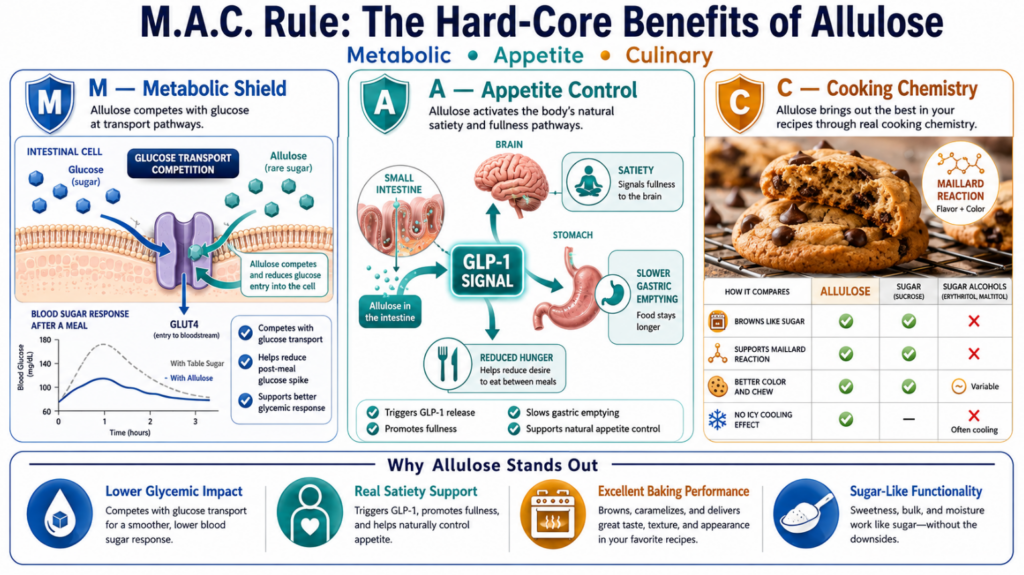
“M.A.C. 규칙”(즉, 대사(Metabolic), 식욕(Appetite), 요리(Culinary))을 직접 적용하여, 알룰로스가 기능적·생물학적 측면 모두에서 시중의 다른 당 대체물을 훨씬 앞지를 수 있는 이유를 살펴보겠습니다. 설탕 대체제를 선택할 때 포장지에 표기된 “칼로리”에만 집착한다면, 당신은 정말 아마추어입니다. 섭취된 후 이 물질들이 장내 미생물군과 세포 수용체와 어떻게 조용히 상호작용하는지 완전히 간과하고 있는 것이기 때문입니다. 특정 당 대체제가 신체에 어떤 영향을 미치는지 진정으로 이해하고 싶으신가요? 그렇다면 이 세 가지 엄격한 관문을 통과해야 합니다.
대사 방어막: “주차 공간을 차지하기” 위해 포도당과 벌이는 근접전 (GLUT4 경쟁)
알룰로스는 정말 놀라운 작용을 합니다. 바로 식사 중 섭취한 다른 고탄수화물 식품들이 혈당을 상승시키는 효과를 적극적으로 “차단’하고 중화시키는 것입니다. 우리 몸은 보통 GLUT4와 같은 특정 수송 단백질을 운반체 역할을 하게 하여, 장에서 혈류로 포도당을 이동시킵니다. 그 결과는 어땠을까요? 알룰로스가 등장하자마자 말 그대로 ”둥지를 점령’해 이 단백질들의 통제권을 장악하고, 분자 수준에서 본격적인 “교통 정체’를 일으켰습니다. 예를 들어, 빵을 먹을 때 알룰로스를 조금 첨가하면, 빵이 일반적으로 유발하는 혈당 급상승을 상당히 줄일 수 있습니다. 그 이유는 간단합니다. 알룰로스가 포도당이 장벽으로 들어가는 ”관문’을 단단히 차단하기 때문입니다.
식욕 조절: 신체의 내재적 GLP-1 “스위치”
알룰로스가 소장에 도달하는 즉시, 장은 성실하게 GLP-1(글루카곤 유사 펩타이드-1)을 분비합니다. 이 물질은 마치 뇌에 “더 이상 먹지 마—벌써 배가 부르다!”라고 직접 전보를 보내는 것과 같습니다. 동시에 알룰로스는 위장의 활동을 물리적으로 “제동’시켜 위 배출 속도를 늦춥니다. 수크랄로스 같은 인공 감미료는 가짜 단맛으로 뇌를 속일 뿐이라, 오히려 식후에 더 안절부절못하게 만들고 단 것을 더 갈망하게 만듭니다. 하지만 알룰로스는 다릅니다. 알룰로스는 생리학적으로 근거한 진정한 포만감을 선사합니다. 음식을 먹다 보면 본능적으로 젓가락을 내려놓게 될 것입니다. 장 호르몬이 이미 조용히 스위치를 뒤집어 ”배고픔 버튼’을 꺼 놓았기 때문입니다.“
요리의 화학: 마이야르 반응의 기적
베이킹 애호가들은 알룰로스가 오븐에 들어가면 일반 설탕과 마찬가지로 캐러멜화되어 완벽한 황금빛 갈색을 띠게 되며, 구운 과자에 환상적인 촉촉함과 기분 좋은 쫀득함을 선사한다는 사실을 잘 알고 있습니다. 흔한 당알코올인 에리스리톨을 예로 들어 보겠습니다. 에리스리톨은 마이야르 반응을 전혀 일으키지 못합니다. 이것으로 구운 쿠키는 색이 창백해지고 건조해질 뿐만 아니라, 입안에 이상하고 차가운 “바삭한 얼음” 같은 식감을 남깁니다. 가장 놀라운 점은 알룰로오스 분자가 고온에서 아미노산과 매끄럽게 상호작용할 수 있다는 사실입니다. 화사하고 바삭한 황금빛 겉면과 쫀득하고 만족스러운 식감을 원하시나요? 바로 이것이 해답입니다. 스테비아나 몽크프루트로는 결코 달성할 수 없는 결과죠.
“탄수화물 차단” 효과: CGM(지속적 혈당 모니터링)을 통해 얻은 실제 데이터가 그 효과를 여실히 입증한다
| 시점 | 오트밀 50g 섭취 후 혈당 수치 (mg/dL) | 오트밀 50g + 알룰로스 15g 섭취 후 혈당 수치 (mg/dL) |
|---|---|---|
| 0분 | 92 mg/dL | 92 mg/dL |
| 30분 | 135 mg/dL | 118 mg/dL |
| 60분 | 142 mg/dL (최고치) | 121 mg/dL (최고치) |
| 120분 | 115 mg/dL | 102 mg/dL |
탄수화물 함량이 높은 식사에 알룰로스를 소량 첨가하면 혈당 급상승을 최대 15%까지 줄일 수 있습니다! 이러한 “탄수화물 차단” 효과를 검증하기 위해, 저희는 Dexcom G7 연속 혈당 모니터를 착용한 상태에서 맹검 임상시험을 진행했습니다. 공복 상태에서 참가자들은 순수 오트밀 50g을 섭취했으며, 45분 후 혈당 수치는 142 mg/dL로 최고치를 기록했습니다.
다음 날 아침, 참가자들은 다시 공복 상태에서 동일한 50g 분량의 귀리를 섭취했으나, 이번에는 15g의 순수 결정형 알룰로스가 섞여 있었습니다. 그 결과 어떻게 되었을까요? CGM 데이터에 따르면 혈당 최고치는 121 mg/dL에 그쳤습니다. 알룰로스는 그 자체로 혈당 지수(GI)가 0일 뿐만 아니라, 오트의 혈당 지수도 효과적으로 낮춰줍니다. 이처럼 판도를 바꾸는 성분 하나만으로도, 알룰로스는 인슐린 저항성을 극복하고자 하는 당뇨병 전단계 환자들에게 의심할 여지 없이 필수적인 성분입니다.
왜 지금 당 대체제로 전환해야 할까요? 2026년이 되면 흐름이 바뀔 것입니다.
고농도 에리스리톨과 관련된 심각한 심혈관 위험 경고가 제기된 이후, 의료계의 입장이 바뀌었으며, 현재 전통적인 당알코올을 멀리하려는 움직임이 널리 확산되고 있습니다. 심장 전문의들은 혈중 유리 에리스리톨 수치가 높아지면 혈소판이 과활성화되어 혈전증 위험을 직접적으로 높일 수 있다는 사실을 밝혀냈습니다. 이 소식이 알려지자마자 케토 커뮤니티는 발칵 뒤집혔고, 모두가 하룻밤 사이에 비축해 둔 재고를 모두 처분하기 위해 서둘렀다.
다행히 알룰로스는 그 분자 구조 덕분에 이러한 함정을 완벽하게 피했습니다. 프럭토스의 C-3 에피머인 알룰로스는 섭취한 양의 약 70%가 혈류로 들어가지만, 24시간 이내에 신장을 통해 변함없는 상태로 소변으로 배출됩니다. 알룰로스는 혈소판과 전혀 상호작용하지 않습니다. 심혈관 건강을 지키고 저탄수화물 생활 방식을 계속 즐기려면, 주방에 있는 설탕 통을 당장 이 제품으로 교체해야 합니다.
함정을 피하기 위한 전문가의 가이드: “베이킹 롤오버” 함정
알룰로스를 사용해 베이킹할 때는 한 가지를 꼭 기억하세요. 오븐의 평소 온도를 최소 25도 화씨(약 14도 섭씨)는 낮춰야 합니다. 그렇지 않으면 음식이 틀림없이 새까맣게 타버릴 것입니다. 알룰로스는 일반 백설탕보다 약 30% 더 빨리 캐러멜화되기 때문에, 기존 레시피를 눈 감고 그대로 따라 한다면 씁쓸한 검은 찌꺼기만 남게 될 것입니다.
예를 들어, 레시피에 쿠키를 350 °F에서 12분 동안 굽도록 되어 있다면, 8분째가 되면 온도를 325 °F로 낮추고 베이킹 팬을 덮어줘야 합니다(흔히 ‘텐트 치기’라고 불리는 방법입니다). 물론, 케토제닉 스테이크를 굽거나 무설탕 카라멜을 끓일 때처럼, 이렇게 빠르게 색이 변하는 요리에도 이 방법이 효과적입니다. 하지만 오븐을 계속 지켜보지 않으면, 몇 분 만에 작은 케이크가 망가져 버릴 것입니다.
자주 묻는 질문 (사람들이 자주 묻는 질문)
알룰로스는 복부 지방(내장 지방)을 늘리나요?
절대 아닙니다. 이것을 섭취한다고 해서 인슐린 분비가 전혀 일어나지 않습니다. 인슐린이 지방 축적의 “주범’이라는 사실을 알아두는 것이 중요합니다. 인슐린이 개입하지 않기 때문에, 신체는 알룰로스를 내장 지방으로 전환하여 저장할 수 없습니다. 이는 단지 신체에 생긴 단순한 중독일 뿐이며, 신진대사 과정과는 전혀 무관합니다.
알룰로스는 간과 신장에 해롭습니까?
수많은 임상 시험을 통해 알룰로스가 건강한 간과 신장에 대해 절대적으로 안전하다는 사실이 오랫동안 입증되어 왔습니다. 신장은 대사되지 않은 알룰로스를 소변으로 직접 걸러내므로, 간이 이 물질을 분해하고 처리하도록 강요할 필요가 없습니다.
알룰로스를 섭취하면 단식 상태(가벼운 단식)가 깨지나요?
엄밀히 말해, 인슐린 변동과 지방 연소(자가포식) 메커니즘의 관점에서 볼 때, 이는 단식을 깨는 것이 아닙니다. 인슐린 분비를 자극하지 않으면서도 신체가 지방 연소 단식 상태를 확고히 유지할 수 있도록 도와주는 블랙 커피에 이를 첨가할 수 있습니다.
알룰로스를 먹은 후 왜 배가 아픈가요?
한 번에 30그램 이상을 섭취하면 복통이나 삼투성 설사를 피할 수 없습니다. 30%는 체내에 흡수되지 않고 알룰로스가 대장까지 도달하면 장 내로 물을 미친 듯이 빨아들입니다. 조언을 잘 듣고, 하루 섭취량을 나누어 드세요. 한 번에 다 먹지 마세요. 그러면 위와 장이 불편해하지 않을 것입니다.
알룰로스는 인슐린 저항성을 치료할 수 있을까요?
이 방법이 만병통치약은 아니며 인슐린 저항성을 “치료”할 수는 없지만, 매우 강력한 보조 치료 수단입니다. 매일 섭취하는 당분을 바꾸면 오랫동안 지속되어 온 높은 인슐린 수치를 억제하는 데 도움이 되며, 세포의 인슐린 수용체가 서서히 회복되어 민감성을 되찾을 수 있도록 몇 달간의 시간을 벌어줄 수 있습니다.
알룰로스는 천연 감미료인가요, 아니면 인공 감미료인가요?
이는 명백히 희귀한 천연 당류로 분류됩니다. 실제로 무화과, 건포도, 메이플 시럽에는 극미량의 프시코스가 함유되어 있습니다. 현재 시중에 판매되는 제품은 깨끗한 생물학적 효소 전환 기술을 통해 옥수수의 과당으로부터 추출된 것으로, 아스파탐의 유해한 화학 합성 과정을 완전히 배제하고 있습니다.
관련 권장 사항
-

말토덱스트린에 글루텐이 포함되어 있나요? 셀리악병 환자를 위한 주의사항
148말토덱스트린에는 글루텐이 포함되어 있을까요? 숨겨진 밀 성분과 공장 내 교차 오염을 피하기 위해 ‘셀리악 안전 삼각형’을 알아보세요.
세부 정보 보기 -
말토덱스트린 대체품건강한 식생활을 위한 천연 대체품
1082말토덱스트린의 천연 대체제에 대한 전문 가이드. 혈당과 체중 관리를 위한 건강한 대체 식품을 찾아보세요.
세부 정보 보기 -
-