 SGNUTRI


제품 검색
Sweetener Xylitol: Choosing 20 Mesh or 100 Mesh
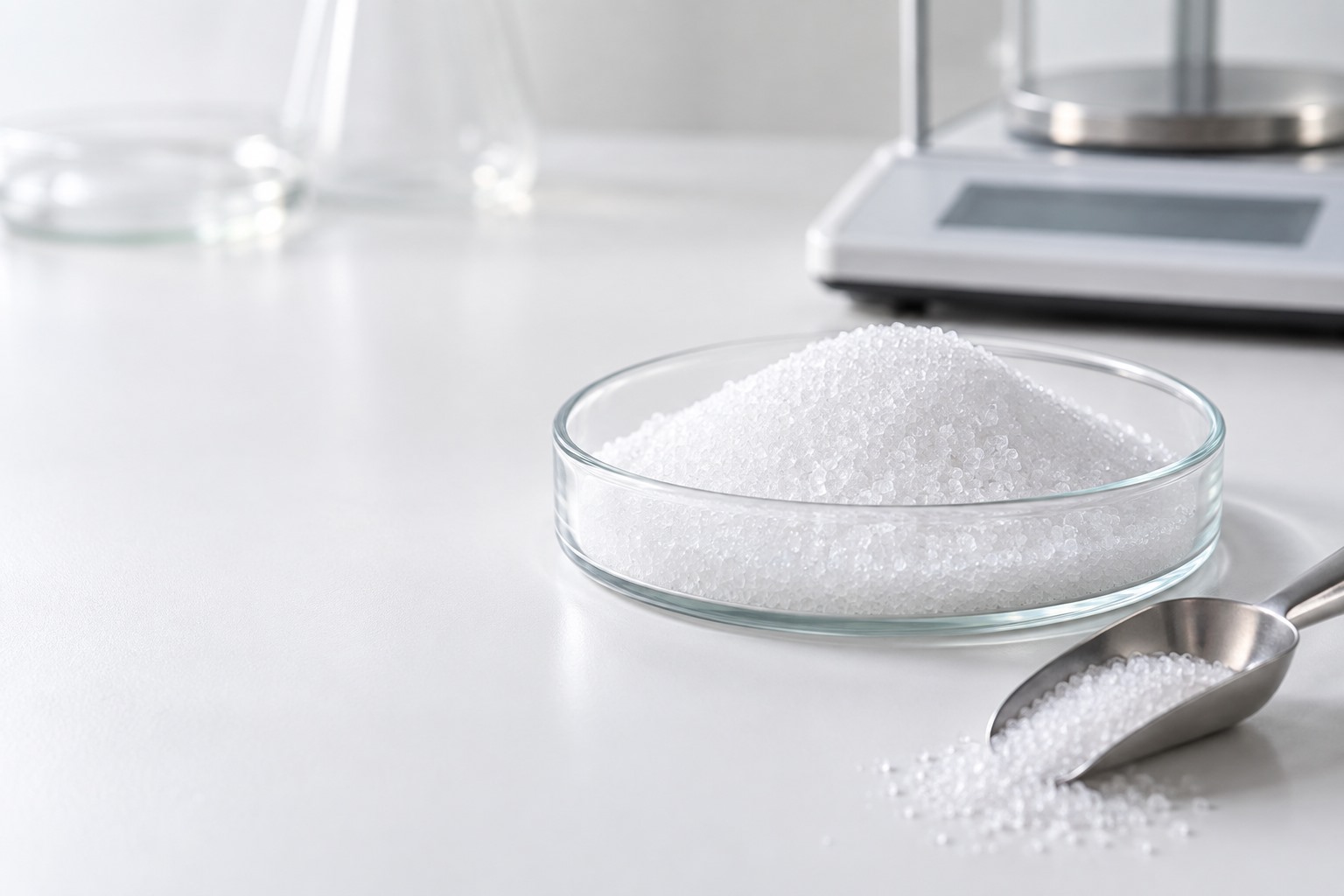
If the recipe list only says three words “xylitol”, and if the purchase is true, just make a purchase requisition to buy it as is, then the work is really a bit rough.
You should know that this thing is a powder raw material. Whether the particles are large or small is directly related to whether the material in the workshop will be blocked, whether it will melt quickly, and even directly determines whether there will be any residual graininess in the mouth when chewing the product. Going deeper, the purity, moisture, and impurities are the bottom line to ensure that every batch of goods is stable and not a moth. Therefore, buying xylitol is by no means as simple as comparing prices with quotes from several suppliers and looking at the names of the packaging bags. You have to treat product classification, coarse and fine specifications, physical and chemical indicators and batch reports as a game.
Let’s get to the core first: Don’t get things wrong
Xylitol is a sugar alcohol. Although it often appears in sugar reduction plans of various companies, just like maltodextrin, allulose or glucose syrup, it should never be regarded as a category of things just because of similar uses. When asking the manufacturer for the price, you must have a few words stuck in your mouth “standard xylitol”. It’s best to ask one more question: Do you sell pure ingredients, or a blend of sweeteners or carriers?
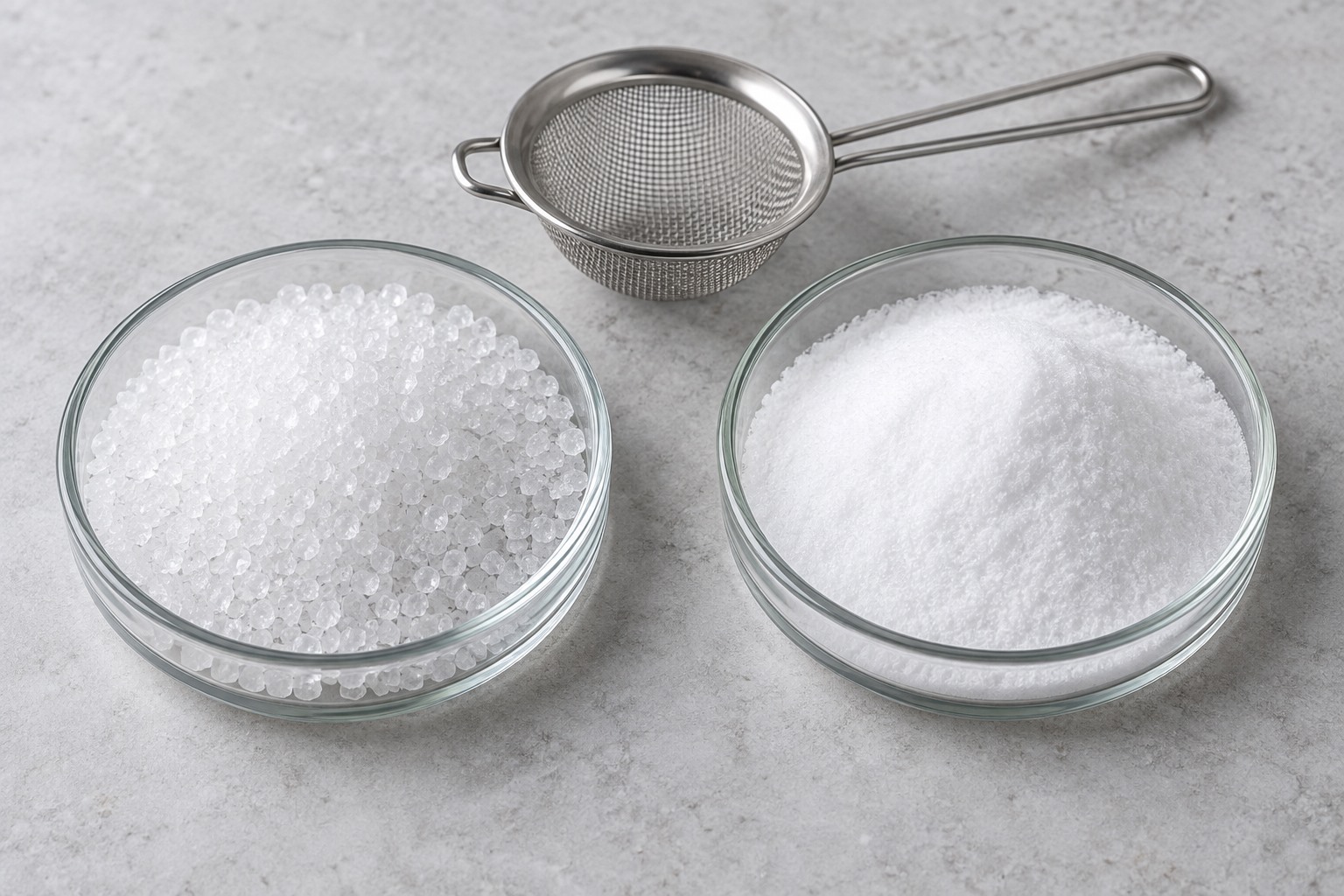
Taking Saigao’s (Saigao) products as an example, there are basically two mainstream products on the market: 20-purpose crystals and 100-purpose fine powder. In appearance, they are all white crystalline powders that dissolve easily when wet and dissolve slightly when exposed to alcohol. In terms of chemical composition and purity, they are exactly the same; the only difference is purely particle size.
How to choose between 20 eyes and 100 eyes?
Let’s talk about the data: for 20-mesh crystals, the standard card stipulates that the residue on the 850-micron (i.e. 20-mesh) screen cannot exceed 10%, and the residue on the 150-micron (100-mesh) screen cannot exceed 5%. This specification retains a distinct rusty crystalline granularity. When replacing it with 100-mesh fine powder, the requirement is that the residue on the 150-micron screen is less than 20%, and the main feature is fine powder.
But when setting the specifications, don’t think “the finer the powder, the better”. Be sure to pull the workshop director to confirm: Is the existing feeder suitable? Can a blender blend well? How are the dissolution parameters formulated? Is it good to remove dust from the workshop? And what exactly are graininess allowed or not allowed in end products? If the old production line has long been accustomed to a certain feeding rhythm, it is important to conduct a powder flowability test before changing the specifications. Don’t assume that the same weight of powder will make the machine run just as smoothly.
Physical and chemical indicators need to be linked together
Regardless of whether you buy coarse or fine xylitol, the bottom line of chemistry is consistent: the main content of xylitol must be stuck between 98.5% and 101.0%; other dry-based polyols cannot exceed 1.0%; reducing sugars must be firmly pressed within 0.2%; the maximum moisture content must not exceed 0.5%; the burning residue must be below 0.1%; and the melting point must be fixed in the range of 92°C to 96°C. In addition, infrared absorption spectroscopy is also required to verify the true body.
These indicators need to be treated as a combination of measures. If the content is sufficient, it means that the main body has not strayed; limiting other polyols and reducing sugars is to control the bottom line of impurities; trapping moisture makes it difficult for the powder to absorb moisture and clump after being left for a long time; burning residue blocks inorganic residues. Don’t just focus on one item “content” when buying, let alone treat the number of items as the entire purchasing standard.
Don’t forget the safety red line on the acceptance slip
The standards for heavy metals and microorganisms apply to all specifications: heavy metals ≤ 5 mg/kg, both lead and arsenic must be below 0.5 mg/kg, and nickel ≤ 1 mg/kg. For microorganisms, the total number of bacteria should not exceed 100 CFU/g, the coliform group should be <3 MPN/g, and molds and yeasts should not exceed 100 CFU/g.
In industrial procurement, no matter how beautiful the brochure printed by the manufacturer is, it cannot be taken seriously and a batch inspection report (COA) must be obtained. When receiving the goods, check the product name, batch number, inspection items, units and results one by one with COA. If the product is to be exported for foreign trade, or if downstream customers have high requirements, additional testing must be carried out according to the actual situation. Don’t just take a basic specification book and think you can get by with anything.

On-site verification cannot be eliminated before entering the warehouse and loading the machine
All xylitol is moisture-resistant, so the warehouse must be dry and well-ventilated. After the goods arrive, first check whether the outer bag is damaged, and then check whether the color of the powder is correct, whether there are foreign objects or lumps. If the workshop unpacks and takes samples, the workers will be quick to prick their mouths after taking them to avoid moisture absorption or odor contamination.
Before we can really put it into production in large quantities, it is strongly recommended to take the alternative materials and run a small sample on the production line first. Focus on a few details: Does it get stuck when pouring? Does it not easily clump when stirred? Is it smooth when the water is dissolved? Does the finished product taste right? Only by tying together these frontline operational records and specifications can we consider a truly effective procurement standard.
Finally, let’s talk about how to write an inquiry form
A reliable document must list all the elements: specify the standard xylitol, specifically whether it is a 20-mesh crystal or a 100-mesh fine powder; estimate the quantity to be purchased; what material to use for packaging; what scenarios the terminal will be used in; which market to sell to; where to deliver the goods, and what batch documents must be brought with the goods.
After collecting all the quotations from each company, we will separate the minimum order quantity, payment terms for the accounting period, shipping costs and delivery period and compare them one by one. If you directly compare the unit price with quotes for different mesh sizes and different transportation conditions, it is like a layman watching the excitement and there is no comparison.
In short, the way to purchase xylitol is not to search the entire Internet for a so-called “best” specification, but to find a material whose particle size and various indicators are most consistent with our own production line. Only by identifying the major categories, adhering to the bottom line of standardization and safety through inspection reports, and finally understanding its processing temperament through a small trial in the workshop can this procurement be truly understood.
관련 권장 사항
-

알룰로스가 우리 몸에 미치는 영향
552알룰로스의 작용 원리, 혈당을 급격히 올리지 않는 이유, 케토, 체중 감량 및 장 건강에 대한 알룰로스의 효능에 대해 알아보세요.
세부 정보 보기 -
프리바이오틱스 또는 프로바이오틱스를 섭취해야 할까?
513프리바이오틱스 VS. 프로바이오틱스? 균형 잡힌 식단이 중요한 이유와 최적의 장 건강을 위해 언제 보충제를 사용해야 하는지 알아보세요.
세부 정보 보기 -
프리바이오틱스는 수용성 또는 불용성 식이섬유인가요?
683대부분의 프리바이오틱스는 수용성 식이섬유로 분류됩니다. 불용성 식이섬유와 구별되는 기능적 하위 집합인 이유를 알아보세요.
세부 정보 보기 -
비타민 B12는 얼마나 빨리 작용하나요?
937B12의 작용 속도 알아보기: 주사의 경우 48-72시간, 경구용 알약의 경우 2-4주. 에너지 및 신경 회복 타임라인을 참조하세요.
세부 정보 보기