 SGNUTRI



البحث عن المنتج
Allulose and Monk Fruit Blend: What Each Ingredient Does
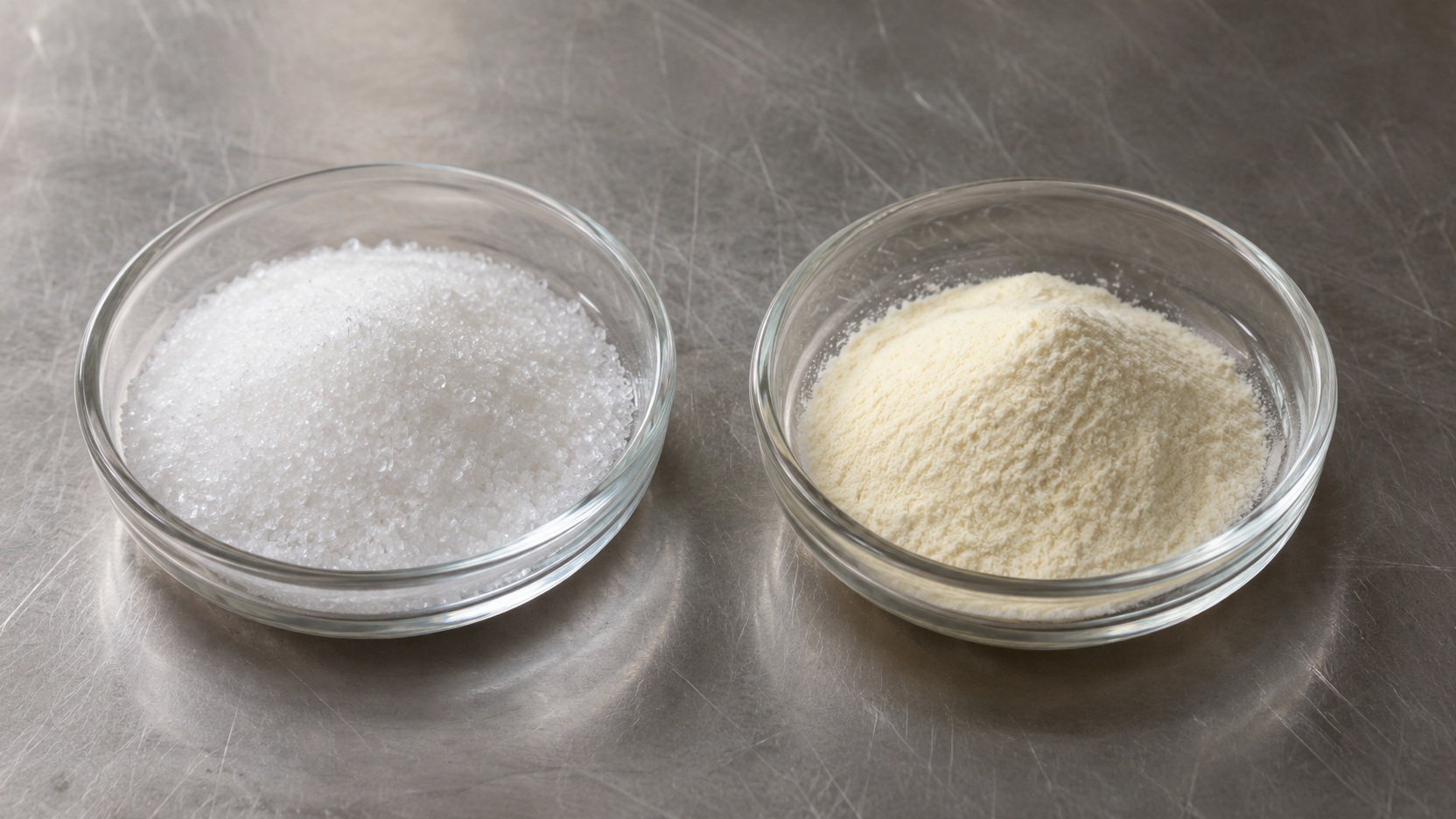
Two products labeled “monk fruit sweetener” can have very different ingredient lists. Monk fruit extract can be paired with allulose, erythritol, or dextrose. Granulated, powdered, brown sugar–flavored, and liquid products may share a name and still contain different ingredients. When swapping one into a recipe or formulation, check the full ingredient list to see which combination you have. The product’s form alone cannot tell you how much allulose it contains.
How a small amount of extract adds sweetness
An allulose and monk fruit blend combines allulose with monk fruit extract. Allulose is added as a separate ingredient, and both ingredients retain their chemical identities after mixing. The name of the blend gives no indication of how much of each ingredient it contains.
Allulose adds sweetness, bulk, and soluble solids to a formulation. Monk fruit extract is a high-intensity sweetener, so a small amount can increase sweetness. When you reduce the allulose, adding more monk fruit extract can make up for the lost sweetness. The soluble solids that the allulose supplied are still lost.
Use the conversion for the specific product
Pure allulose is about 70% as sweet as sucrose, which gives you a starting point for estimating how much of the pure ingredient to use. The sweetness of a blend also depends on the ingredient proportions and the potency of the extract. Applying that 70% figure to the blend leaves out the extract’s contribution. The ingredient names alone cannot give you a universal sucrose replacement ratio.
A sweetness conversion on the package applies to that product and the measurement method it specifies. The weight of a spoonful depends on particle size, bulk density, and how the spoon is filled. A spoon measure and a weight in grams need to be treated separately. When switching to allulose syrup, account for both the water and the solids it adds. Equal weights of syrup and dry ingredient can contribute different amounts of solids.
The proportions in a blend can change the initial sweetness, how long it lasts, and the aftertaste. Concentration, temperature, and acidity also affect those perceptions. A dose that works in a drink still needs to be evaluated for sweetness in yogurt or batter.
Check how the finished food turns out
Allulose is a reducing sugar that can react with amino compounds during baking through the Maillard reaction. Replacing more sucrose with allulose can make baked goods brown faster or develop a deeper color. Baking time, temperature, moisture, and the food matrix also affect the result. A sweetness conversion gives you an equivalent amount for sweetness. Color and moisture retention still depend on the formulation. Both products may contain monk fruit extract. When switching to a blend with erythritol, also consider its cooling effect and crystallization behavior.
In frozen desserts, the number of dissolved particles in the water affects the freezing point. Changing the amount of allulose can change how the formulation freezes. When two sweeteners give about the same sweetness, compare the solids in the formulation and the hardness of the finished dessert at serving temperature separately.
التوصيات ذات الصلة
-

فوائد سكريات غالاكتوليغوساكريدس
1694اكتشفي كيف تدعم البريبايوتكس GOS صحة أمعاء الرضع وتخفف من الإمساك وتعزز المناعة. تتضمن رؤى الخبراء.
عرض التفاصيل -
هل يمكن أن يكون المالتوديكسترين عضويًا
1652اكتشف فوائد المالتوديكسترين العضوي ومصادره غير المعدلة وراثيًا ومعايير النظام الغذائي النظيف الحقيقي.
عرض التفاصيل -
How to Cross-Check Bulk Organic Isomalt Quotes
309Check Bulk Organic Isomalt Quotes Against Certificate Scope, Production Sites, and Deliverable Quantities.
عرض التفاصيل -
مسحوق غالاكتو-أوليغوساكاريد: إطلاق العنان لحلول البريبايوتك الفائقة للابتكار في مجال الأغذية والمشروبات
2058استكشف العلم وراء مسحوق غالاكتو-أوليغوساكاريد ودوره المثبت في صحة الأمعاء ودعم الجهاز الهضمي.
عرض التفاصيل