 SGNUTRI



البحث عن المنتج
Is Cornstarch the Same as Maltodextrin?
No. Cornstarch is starch extracted from corn, and corn maltodextrin is made by partially breaking that starch into shorter glucose chains. The difference matters in a formula. Ordinary cornstarch thickens a sauce as it cooks, while maltodextrin can add soluble solids to a drink mix or carry flavor in a spray-dried powder. Even when both ingredients come from corn, an equal-weight swap can change how the finished product pours, sets, or mixes with water. U.S. maltodextrin definition, Cornstarch viscosity study, Food powder research
How cornstarch and maltodextrin behave in water
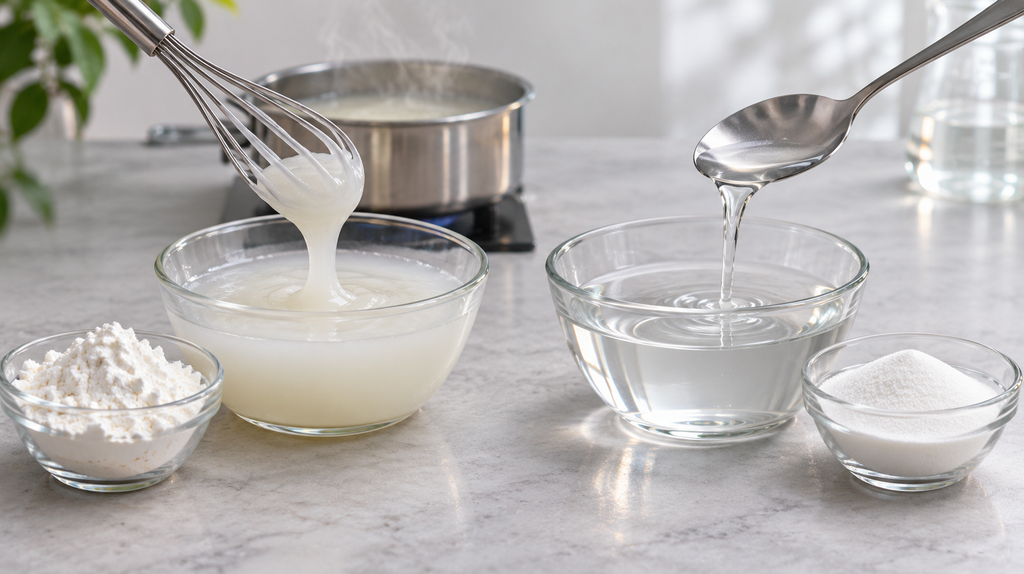
Ordinary cornstarch disperses in cold water and develops its cooking viscosity as it heats. With enough water and heat, the starch granules absorb water, swell, and lose their internal order. This change is called gelatinization. As cooking continues, the swollen granules and starch released into the surrounding liquid help build the consistency of a sauce or filling. A grade specified as pregelatinized can develop viscosity in cold water, so check the grade if the formula has no cooking step. Cornstarch viscosity study, Cold-water starch study
Maltodextrin dissolves in water, and the grade affects how much body it adds. Partial hydrolysis cuts the original starch chains into a mixture of shorter chains. Maltodextrin specifications usually give a dextrose equivalent (DE), which measures reducing power relative to glucose on a dry basis and indicates the extent of hydrolysis. The U.S. definition specifies a DE below 20. Lower-DE grades generally have longer chains and tend to give higher viscosity at the same solids concentration. Two grades with the same DE can still have different chain-length distributions, so use DE to shortlist a grade and confirm its behavior in the actual formula. U.S. maltodextrin definition, Food Standards Australia New Zealand technical assessment, Starch hydrolysate study
Can you substitute one for the other?
Start with the job the ingredient does in the formula. Match that job in a side-by-side trial before changing the specification.
| التطبيق | What to check before switching |
|---|---|
| Cooked sauce or filling | If cornstarch provides the thickness or cooled set, keep it as the reference. Run the candidate through the same cook and cool cycle, then compare viscosity at the same temperature and cooled firmness if the product needs to set. If the trial pours too freely or sets too softly, evaluate a starch grade designed for that process. |
| Cold-mixed drink powder | If maltodextrin supplies soluble bulk, compare the powders at the same dry-solids level, water temperature, and mixing time. Check for sediment and compare mouthfeel. If native cornstarch leaves sediment or changes the texture, screen another soluble carrier. |
| Spray-dried flavor powder | If maltodextrin carries the flavor through drying, test the candidate in the liquid feed and in the finished powder. Compare feed viscosity, powder recovery, and how the powder mixes back into water. A candidate that changes feed viscosity or reduces recovery needs a drying trial and may require reformulation. |
These checks reflect the different functions shown in starch pasting and spray-drying studies. Compare each trial with the current formula under the conditions the product will actually encounter. Native starch pasting study, Maltodextrin spray-drying study
التوصيات ذات الصلة
-

هل الإريثريتول وستيفيا متماثلان
2188هل الإريثريتول وستيفيا متماثلان؟ لا، اكتشف الاختلافات الرئيسية في المنشأ وفعالية الحلاوة واستخدامات الخبز هنا.
عرض التفاصيل -
هل شراب الملتيتول خالٍ من الغلوتين؟ كل ما يجب أن تعرفه
2114اكتشف ما إذا كان شراب المالتيتول خاليًا من الغلوتين، واستخداماته كمُحلي، وما إذا كان آمنًا للأشخاص الذين يعانون من حساسية الغلوتين.
عرض التفاصيل -
ماذا يفعل الآليلوز بجسمك
1749اكتشف كيف يعمل الألولوز، ولماذا لا يؤدي إلى ارتفاع نسبة السكر في الدم، وفوائده في الحمية الكيتونية وفقدان الوزن وصحة الأمعاء.
عرض التفاصيل -
Allulose and Microbiome: What Human Evidence Shows
485What Human And Ex Vivo Studies Say About Allulose And Microbiome Effects, Symptoms, And Evidence Limits.
عرض التفاصيل