 SGNUTRI



製品検索
Allulose Condensed Milk: Formula, Texture and Safety
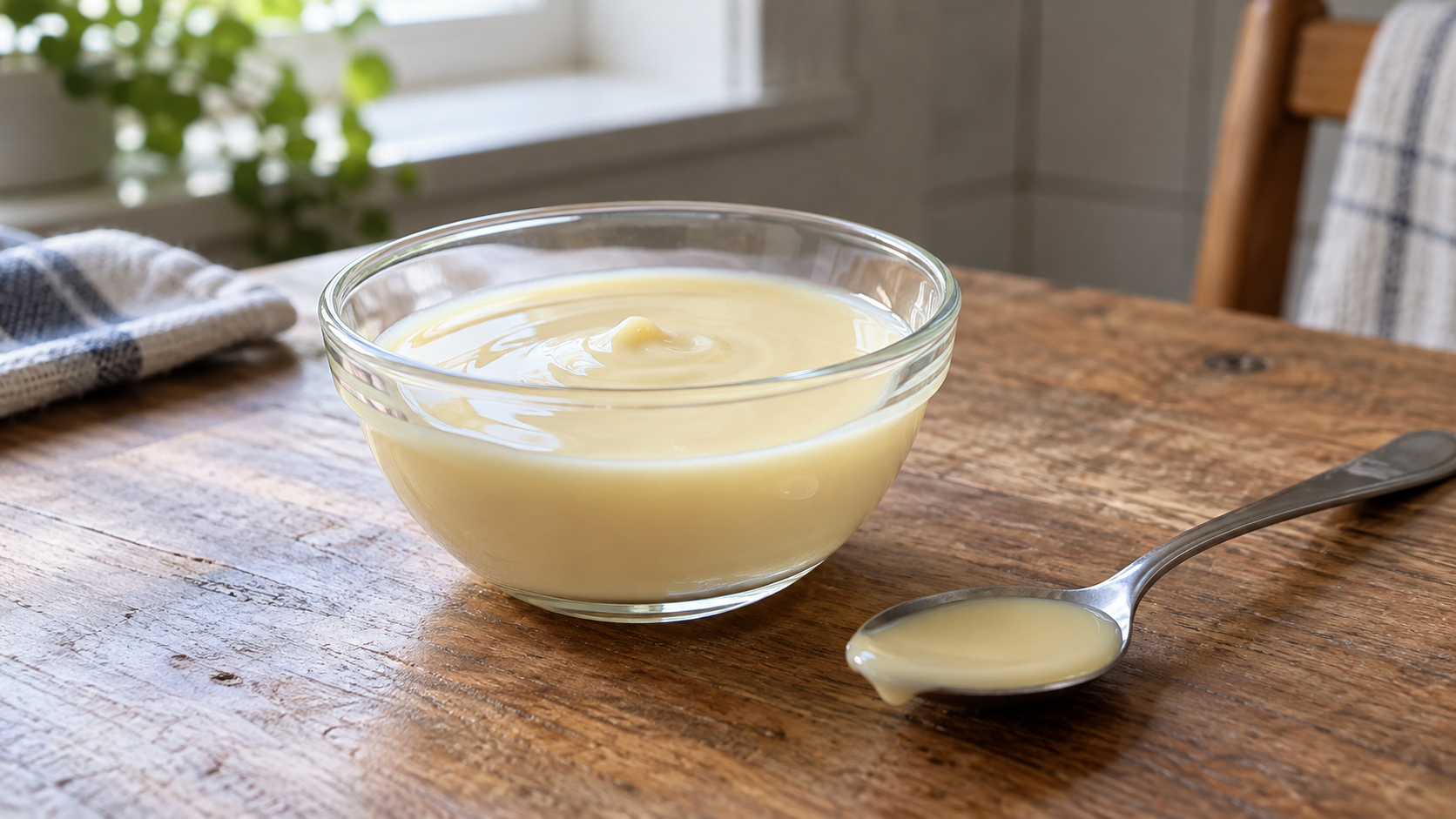
Condensed milk has always been a common ingredient when making desserts or milk tea at home. It not only adds sweetness but also makes the taste richer. However, as people become more concerned about sugar and calories, the high sugar content of traditional condensed milk has also become a problem. Allulose Condensed Milk (Allulose Condensed Milk) has therefore attracted attention.
But making low-sugar condensed milk isn’t as simple as replacing granulated sugar with allulose. Changes in sugar can affect sweetness, consistency, color, and even how the product is stored. To make these types of products well, the formula often needs to be readjusted.
Why can’t allulose condensed milk directly replace sucrose?
Looking at the ingredient list of low-sugar condensed milk on the market, you will find that in addition to milk and allulose, some products also contain soluble dietary fiber, maltodextrin, compound milk solids or other sweeteners. These ingredients are not only used for flavoring, but also to compensate for the structural changes brought about by the reduction of sucrose.
Effect of sucrose on condensed milk texture
The thick texture of traditional sweetened condensed milk largely comes from its high sugar content. Sucrose provides both sweetness and is an important source of soluble solids, affecting both viscosity and product fullness.
If you directly replace it with allulose without adjusting the milk solids content and concentration, the finished product may be too thin, which will not stick to the cup wall and will be difficult to spread evenly on bread like ordinary condensed milk.
The difference between sweetness and solids content
Sweetness and solids content are not the same thing. Sugar in food usually plays more than one role, and even if the sweetness is replenished by sweeteners, the original texture may not be preserved.
In addition, sucrose (Sucrose) should not be confused with iron sucrose (Iron Sucrose) in medicine. The latter is an intravenous iron supplement used to treat iron deficiency anemia. It is not a food ingredient and cannot be used in baking.
How should the formula of allulose condensed milk be adjusted?
Unlike high-potency sweeteners that only require a small amount of addition, allulose can be used as a volumetric sweetener, providing a certain amount of soluble solids. This is one of the reasons why it is suitable for the research and development of low-sugar condensed milk.
Sweetness and cost issues when using allulose
Allulose is generally less sweet than sucrose. If the sweetness of traditional condensed milk is achieved simply by increasing the amount used, the cost of raw materials may increase significantly, and the solid content ratio and taste of the product may also be changed.
Therefore, some formulations use compound sweeteners. For example, stevia allulose powder sugar sgnutri contains stevia. Stevia sweeteners only require a small amount to increase sweetness, while allulose can continue to play a role in both volume and solids. Using both together helps balance sweetness, texture, and cost.
How can I improve the color and flavor?
Traditional condensed milk is usually pale yellow in color, has a rich milky aroma, and sometimes has a hint of caramel. For consumers accustomed to this flavor, low-sugar condensed milk may feel like it’s missing something, even if it has the right sweetness but the wrong color and aroma.
Some recipes may consider using compound ingredients such as brown allulose powder sugar sgnutri, which have a brown appearance and special flavor. With appropriate heating conditions, the color and aroma of the finished product can be adjusted. The browning properties of allulose itself can also affect the final color, so the heating process also needs to be controlled.
Texture and storage stability of allulose condensed milk
Crystallization and viscosity changes of allulose
Just because condensed milk is made is very thick, which does not mean it will still be the same after a few days.
Alulose and sucrose differ in water interaction, crystallization behavior, and viscosity expression. If the ratio or concentration is not right, refrigerated condensed milk may become grainy, clump together, or even lose its original smooth taste.
The performance after freezing will need to be tested separately. Being able to remain stable under refrigeration does not mean that there will be no texture change after thawing.
Why is formulation and storage testing necessary?
Some problems were not apparent at all when they were first produced, and only gradually appeared a few days later. Therefore, a new formulation cannot be determined through just one test.
R&D personnel need to repeatedly adjust the raw material ratio, solid content and processing conditions, and observe changes in viscosity, crystallization and taste through storage tests. Only after these verifications can we determine whether the formula is stable enough.
Food safety and shelf life of allulose condensed milk
Relationship between sugar content and water activity
The reason why traditional sweetened condensed milk has good storage stability is related to its high sugar concentration. Large amounts of sucrose can reduce water activity, making it difficult for many microorganisms to grow.
But high sugar levels do not mean absolute safety. Processing environment, sterilization process, and packaging conditions remain important.
After replacing with allulose, the original storage conditions may not continue to apply. Although allulose can also affect water activity, it cannot be directly determined that it is completely consistent with the effect of sucrose.
Even if two types of condensed milk are similar in sweetness and appear to be the same consistency, their actual microbial stability may differ.
How to tell if allulose condensed milk needs to be refrigerated?
This cannot be judged solely by the ingredient list, nor by the taste.
Whether a product can be stored at room temperature needs to be determined by combining the final water activity, pH, heat treatment method, packaging conditions, and microbiological test results. The shelf life of traditional condensed milk cannot be directly applied to the low-sugar version without verification.
During the production process, heat treatment and hygiene control should not be omitted. Depending on the product process, aseptic operation or cold chain transportation may also be required. Allulose is only one ingredient in the formula and cannot replace these food safety measures.
For manufacturers, these tests can affect product transportation, sales, and storage arrangements. When making it at home, you should also pay special attention and do not assume that condensed milk can be stored at room temperature for a long time because of the use of sugar substitutes.
Summarize
The difficulty in making allulose condensed milk is not finding an ingredient with a sweetness close to that of white sugar, but how to preserve the original taste and quality as much as possible after the sugar content is reduced.
Sweetness, solids, viscosity, color, and flavor all need to be reconsidered, and crystallization and storage safety cannot be ignored.
When buying low-sugar condensed milk, in addition to looking at “Allulose” or “Reduced Sugar” on the packaging, you can also pay attention to the ingredients, nutritional information and preservation requirements. If you plan to make it yourself, it is important to distinguish between whether the taste is good and whether it can be safely stored.
After all, truly effective low-sugar condensed milk cannot just taste sweet; it should also have a smooth texture, stable quality, and meet relevant food safety requirements.
関連推奨品
-

Definition of Maltodextrin: Identity, DE and Uses
628Definition Of Maltodextrin Explained Through Starch Hydrolysis, DE, Formulation Roles And Resistant Products.
詳細を見る -
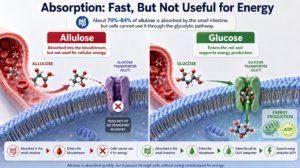
アルロースは糖類なのか? 珍しい単糖類の解説
2216アルロースは糖類ですか?はい、希少な単糖類です。なぜ代謝を迂回し、血糖値の急上昇を抑え、GLP-1を増加させるのか、その理由をご覧ください。.
詳細を見る -
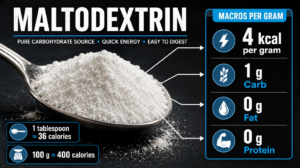
マルトデキストリンのカロリーは? 正確な食事のマクロ栄養素
2454マルトデキストリンのカロリー数を学びましょう。正確な食事のマクロ栄養素を把握し、隠れた炭水化物を排除し、ゼロカロリーの罠を見抜きましょう。.
詳細を見る -
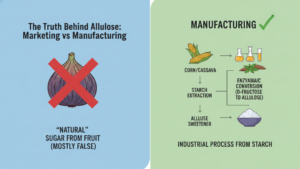
アルロース甘味料はどのように作られるのか?その製造工程の全貌を大公開
2791アルロースの製造に関する真実を明らかにします。このケト対応の砂糖代替品が、果物ではなくデンプンからどのように作られているのかを学びましょう。.
詳細を見る