 SGNUTRI


제품 검색
Can Maltodextrin Contain Gluten? Check the Source and Product
Seeing "maltodextrin" on an ingredient list does not establish that it contains gluten. Despite the word "malt" in its name, maltodextrin is a mixture of carbohydrates made by partially hydrolyzing starch. The name does not mean that the starch came from barley malt, and it does not tell you the gluten status of the finished food. The ingredient name alone usually does not identify the original starch source either.
The starch source is only part of the picture
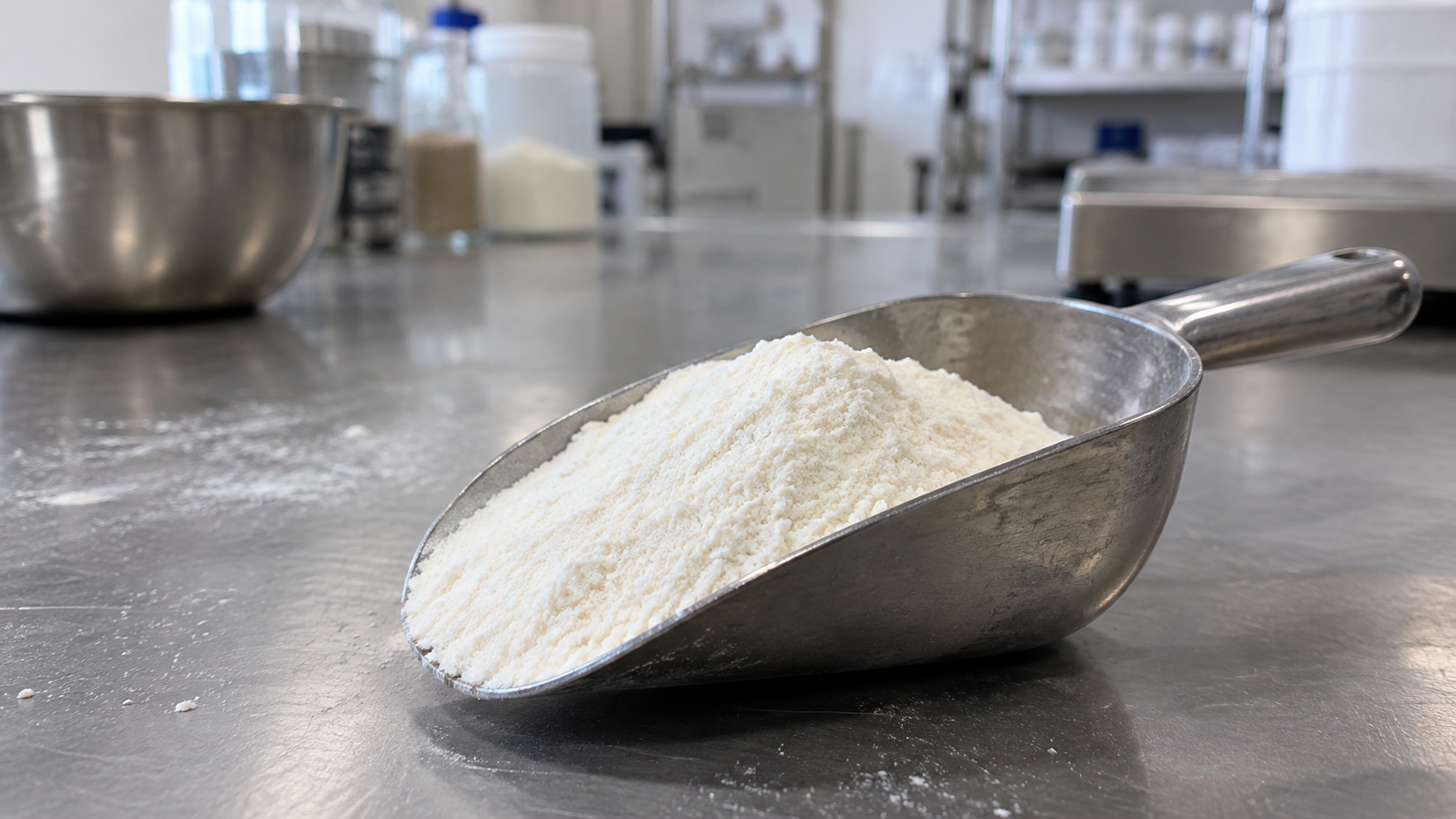
Maltodextrin may be made from corn, rice, potato, or tapioca starch, and wheat starch is another possible source. Products from different sources can share the same ingredient name. For a particular product, its specification or traceability information is needed to establish the source.
Even confirmation of a corn, rice, or tapioca source does not, by itself, establish that the finished food qualifies for a gluten-free claim. Cross-contact during production, other ingredients in a blend, and the status of the final food are separate considerations.
Wheat source and finished-food status are different questions
A wheat-starch source warrants closer examination, but it does not automatically mean that the finished food fails gluten-free conditions. Maltodextrin undergoes partial starch hydrolysis and further processing. The conclusion for a specific product depends on its processing, residual protein, cross-contact, and applicable testing. A description of the process is not a substitute for evidence about residual protein or gluten.
In the United States, "gluten-free" is a voluntary label claim. The absence of the claim alone does not prove that a food contains gluten. When a food carries the claim, it must meet the ingredient conditions and keep unavoidable gluten below 20 ppm. That threshold is not a blanket guarantee for every maltodextrin product. Whether a food containing maltodextrin meets the claim must be judged from the finished food and its supporting evidence.
Gluten-free is not the same as free of wheat allergens
Gluten status and wheat allergen labeling answer different questions. In the United States, wheat is a major food allergen. Whether wheat-derived maltodextrin requires a wheat-source declaration depends on the presence of wheat-derived protein and any applicable exemption or regulatory determination. A gluten-free claim should not automatically be read as a "no wheat allergen" claim.
If an ingredient list says only "maltodextrin," it identifies the ingredient, not its starch source. The source, the finished food's gluten-free claim, and its wheat allergen information each need to be understood separately.
관련 권장 사항
-

-
저항성 덱스트린은 케토 친화적입니까?
1178저항성 덱스트린은 케토? 저혈당지수, 제로 순 탄수화물 영향, 저탄수화물 다이어트에 대한 장 건강 혜택에 대해 알아보세요.
세부 정보 보기 -
알룰로스는 설탕을 1:1로 대체할 수 있을까? 진실은 무엇일까
1591알룰로스는 설탕을 1:1로 대체할 수 있을까요? 아닙니다. 오늘 바로 완벽한 케토 베이킹을 마스터할 수 있는 정확한 SMB 환산 비율을 알아보세요.
세부 정보 보기 -
알룰로스: 몸에 좋은가, 나쁜가? 건강에 이로운가, 아닌가?
1637알룰로스는 건강에 좋을까요, 나쁠까요? 실제 CGM 데이터와 A.I.M. 매트릭스를 통해 알룰로스가 건강에 유익한지 확인해 보세요.
세부 정보 보기