 SGNUTRI


Rechercher un produit
Can Maltodextrin Contain Gluten? Check the Source and Product
Seeing "maltodextrin" on an ingredient list does not establish that it contains gluten. Despite the word "malt" in its name, maltodextrin is a mixture of carbohydrates made by partially hydrolyzing starch. The name does not mean that the starch came from barley malt, and it does not tell you the gluten status of the finished food. The ingredient name alone usually does not identify the original starch source either.
The starch source is only part of the picture
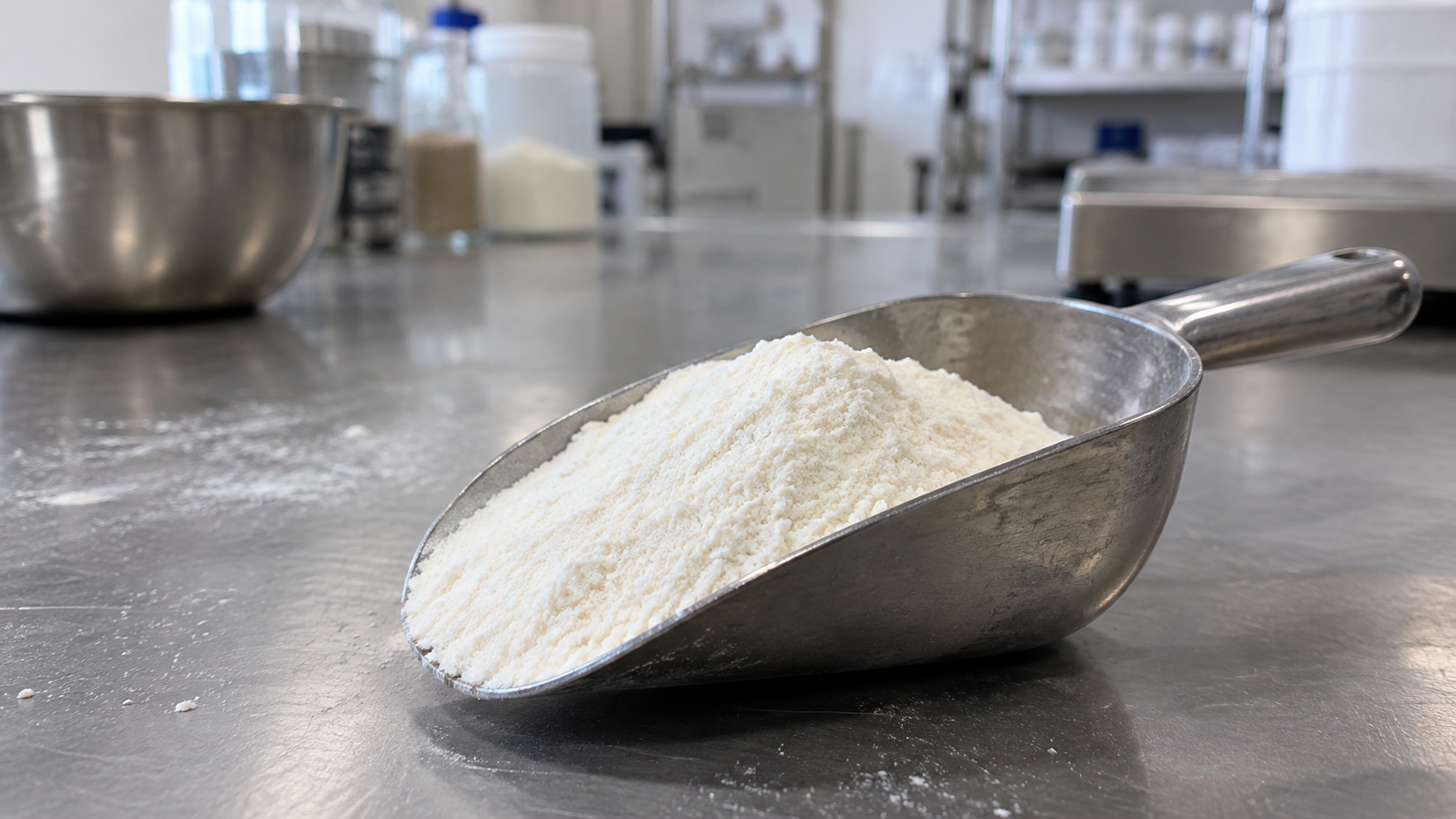
Maltodextrin may be made from corn, rice, potato, or tapioca starch, and wheat starch is another possible source. Products from different sources can share the same ingredient name. For a particular product, its specification or traceability information is needed to establish the source.
Even confirmation of a corn, rice, or tapioca source does not, by itself, establish that the finished food qualifies for a gluten-free claim. Cross-contact during production, other ingredients in a blend, and the status of the final food are separate considerations.
Wheat source and finished-food status are different questions
A wheat-starch source warrants closer examination, but it does not automatically mean that the finished food fails gluten-free conditions. Maltodextrin undergoes partial starch hydrolysis and further processing. The conclusion for a specific product depends on its processing, residual protein, cross-contact, and applicable testing. A description of the process is not a substitute for evidence about residual protein or gluten.
In the United States, "gluten-free" is a voluntary label claim. The absence of the claim alone does not prove that a food contains gluten. When a food carries the claim, it must meet the ingredient conditions and keep unavoidable gluten below 20 ppm. That threshold is not a blanket guarantee for every maltodextrin product. Whether a food containing maltodextrin meets the claim must be judged from the finished food and its supporting evidence.
Gluten-free is not the same as free of wheat allergens
Gluten status and wheat allergen labeling answer different questions. In the United States, wheat is a major food allergen. Whether wheat-derived maltodextrin requires a wheat-source declaration depends on the presence of wheat-derived protein and any applicable exemption or regulatory determination. A gluten-free claim should not automatically be read as a "no wheat allergen" claim.
If an ingredient list says only "maltodextrin," it identifies the ingredient, not its starch source. The source, the finished food's gluten-free claim, and its wheat allergen information each need to be understood separately.
Le précédent : Can Maltodextrin Be Organic? What the Label Must ProveLe suivant : Corn Maltodextrin: Source, De And Product Identity
Recommandations connexes
-

En quoi consiste le polydextrose ?
1149Découvrez les ingrédients et la synthèse du polydextrose dans cette analyse d'un expert en science alimentaire.
Voir les détails -
Quel est le rôle des fibres solubles ?
1420Découvrez les effets des fibres solubles : elles réduisent le taux de cholestérol LDL, stabilisent la glycémie et favorisent la santé intestinale grâce à un effet de gel.
Voir les détails -
De quoi est faite la dextrine résistante ?
1338Fabriquée à partir d'amidon de maïs non OGM par hydrolyse enzymatique, la dextrine résistante est une fibre soluble qui nourrit les bactéries intestinales.
Voir les détails -
Avantages des galactooligosaccharides
1135Découvrez comment les prébiotiques GOS soutiennent la santé intestinale des nourrissons, soulagent la constipation et renforcent l'immunité. Des idées d'experts sont incluses.
Voir les détails