 SGNUTRI


Produkt suchen
Can Maltodextrin Contain Gluten? Check the Source and Product
Seeing "maltodextrin" on an ingredient list does not establish that it contains gluten. Despite the word "malt" in its name, maltodextrin is a mixture of carbohydrates made by partially hydrolyzing starch. The name does not mean that the starch came from barley malt, and it does not tell you the gluten status of the finished food. The ingredient name alone usually does not identify the original starch source either.
The starch source is only part of the picture
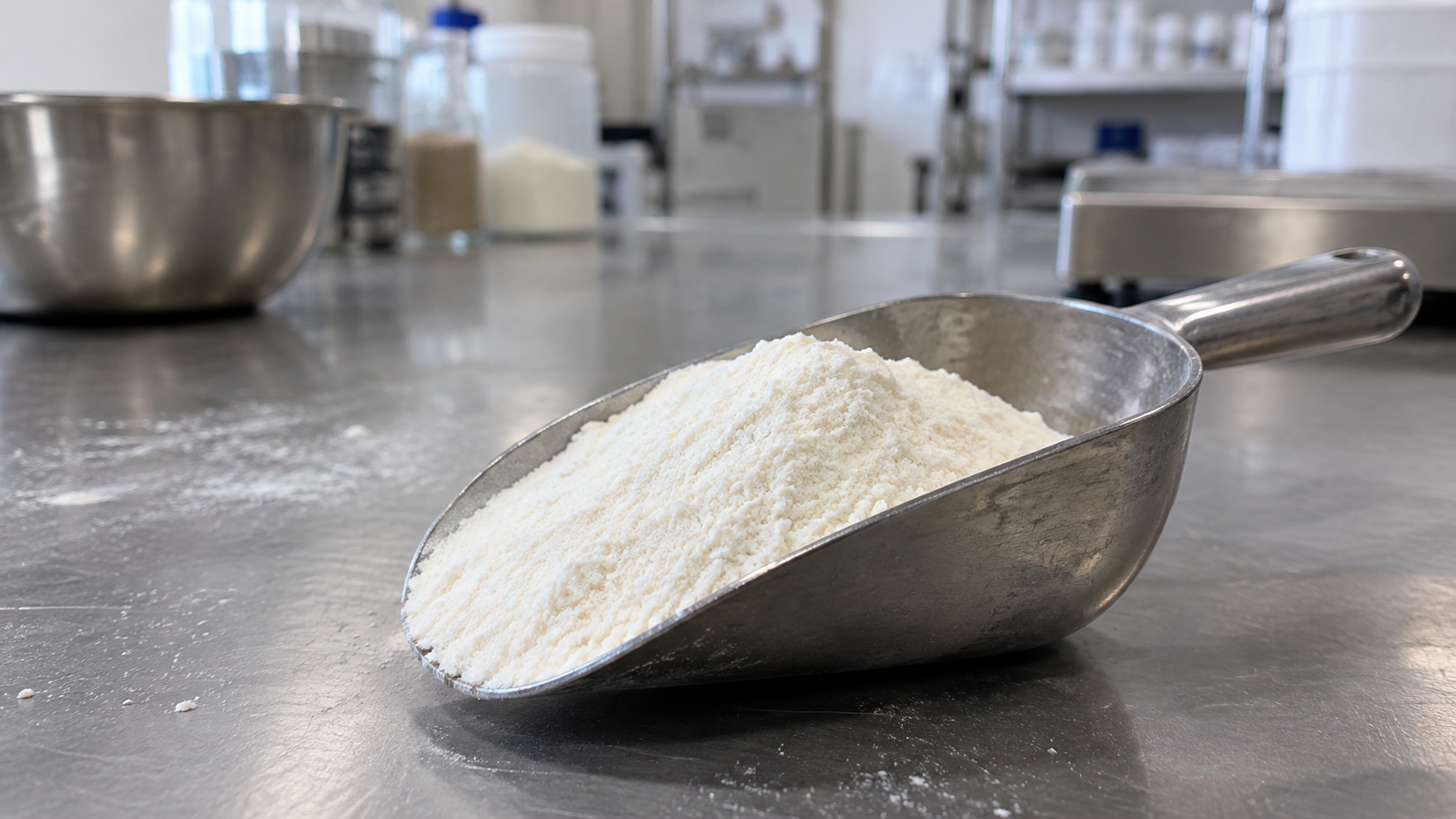
Maltodextrin may be made from corn, rice, potato, or tapioca starch, and wheat starch is another possible source. Products from different sources can share the same ingredient name. For a particular product, its specification or traceability information is needed to establish the source.
Even confirmation of a corn, rice, or tapioca source does not, by itself, establish that the finished food qualifies for a gluten-free claim. Cross-contact during production, other ingredients in a blend, and the status of the final food are separate considerations.
Wheat source and finished-food status are different questions
A wheat-starch source warrants closer examination, but it does not automatically mean that the finished food fails gluten-free conditions. Maltodextrin undergoes partial starch hydrolysis and further processing. The conclusion for a specific product depends on its processing, residual protein, cross-contact, and applicable testing. A description of the process is not a substitute for evidence about residual protein or gluten.
In the United States, "gluten-free" is a voluntary label claim. The absence of the claim alone does not prove that a food contains gluten. When a food carries the claim, it must meet the ingredient conditions and keep unavoidable gluten below 20 ppm. That threshold is not a blanket guarantee for every maltodextrin product. Whether a food containing maltodextrin meets the claim must be judged from the finished food and its supporting evidence.
Gluten-free is not the same as free of wheat allergens
Gluten status and wheat allergen labeling answer different questions. In the United States, wheat is a major food allergen. Whether wheat-derived maltodextrin requires a wheat-source declaration depends on the presence of wheat-derived protein and any applicable exemption or regulatory determination. A gluten-free claim should not automatically be read as a "no wheat allergen" claim.
If an ingredient list says only "maltodextrin," it identifies the ingredient, not its starch source. The source, the finished food's gluten-free claim, and its wheat allergen information each need to be understood separately.
Verwandte Empfehlungen
-

Corn Maltodextrin: Source, De And Product Identity
38Learn What Corn Maltodextrin Means, How De Distinguishes It From Corn Syrup, And Which Product Claims Need Verification.
Details anzeigen -
Wie wirken Präbiotika?
1272Entdecken Sie, wie Präbiotika wirken: Sie produzieren Scfas, um einen undichten Darm zu reparieren, den pH-Wert zu senken und die Darmmotilität zu regulieren.
Details anzeigen -
Ist Glukose eine reine Substanz?
1383Ja, Glukose (C6h12o6) ist eine reine Substanz. Erfahren Sie, warum es sich um eine chemische Verbindung mit festen Eigenschaften handelt.
Details anzeigen -
Präbiotika vs. Probiotika: Ein umfassender Leitfaden zur Darmgesundheit, Wirksamkeit und modernen Trends
1005Probiotika sind lebende, nützliche Bakterien, die den Darm besiedeln, und Präbiotika sind die ballaststoffreiche "Nahrung", die diese Bakterien ernährt. Wenn Sie sich Ihren Darm als einen Garten vorstellen, sind Probiotika die Samen, die Sie säen, während Präbiotika der Dünger sind, der...
Details anzeigen