
 SGNUTRI


Search Product
How Long Does It Take For Vitamins To Start Working
Vitamins can start working very quickly, but the time it takes for you to feel a noticeable benefit depends on two key things: what kind of vitamin you are eating, and the extent of your body’s current deficit.
Water-soluble vitamins like B vitamins and vitamin C are usually put to work within a few hours to a few days, and you may soon feel a boost in energy or a change in immune function. In contrast, fat-soluble vitamins (A, D, E, K) are “slow-heating”, which take days or even weeks to accumulate in the body’s tissues before reaching effective concentrations. However, the most critical factor is actually your starting point. Correcting obvious nutritional deficiencies is a gradual process. It usually takes several weeks to several months to completely fill the body’s deficit. At that stage, when your internal levels return to normal, you will really feel those deep, lasting benefits—such as continued energy, shinier skin or more stable moods.
Water-Soluble Vs. Fat-Soluble
Water-Soluble Vitamins Rapid Response
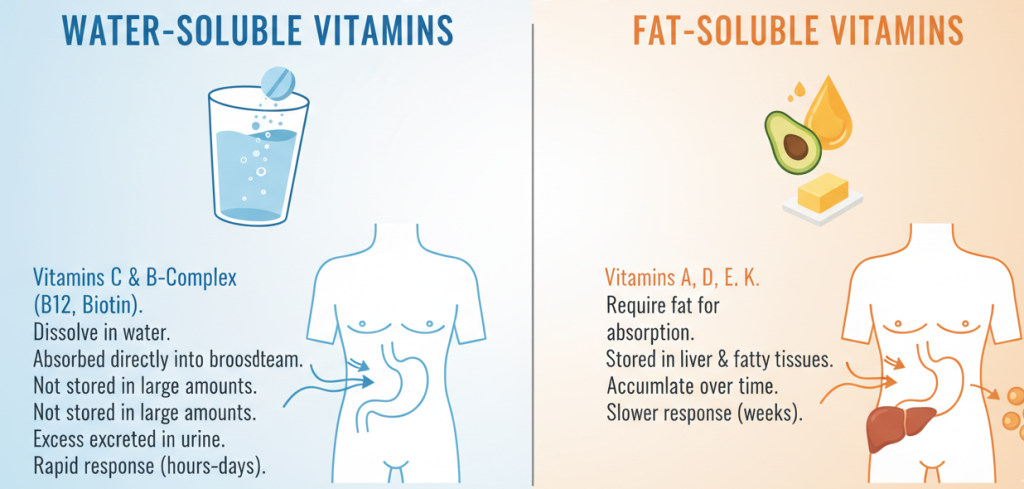
This group includes vitamin C and B complex vitamins (such as B12 and biotin). As the name implies, they are soluble in water, which means they can be absorbed directly into the blood circulation. Because the body does not store large amounts of these vitamins (the excess is usually excreted in the urine), if you happen to be in a state of deficiency, the somatosensory response to supplementation will be relatively rapid—sometimes within a few hours or days.
Fat-Soluble Vitamins React Slowly
Vitamins A, D, E and K fall into this category. These need the participation of fat to be absorbed, and will be stored in the liver and adipose tissue. This storage mechanism means that they take a longer, more sustained time to accumulate until they reach a threshold where you can feel a significant benefit. In this category, you often have to wait a few weeks to see changes.
The Deficiency Factor
The biggest variable in how often you can feel a change is actually your initial vitamin level. If you have severe nutritional deficiencies, you are more likely to see significant improvement in a short period of time. It’s like watering a plant that’s completely withered, and the effect is dramatic because the need is so urgent.
But we have to understand that most vitamin deficiencies take weeks or even months to develop, and logically, correcting them follows the same gradual timetable. For example, when deal with brittle nails caused by a lack of biotin, it takes at least six weeks before you see signs of skin improvement or nail hardening.
A Realistic Timeline And Influencing Factors
While vitamin type and initial level are key, in practice, there are other factors that interfere with the speed of results.
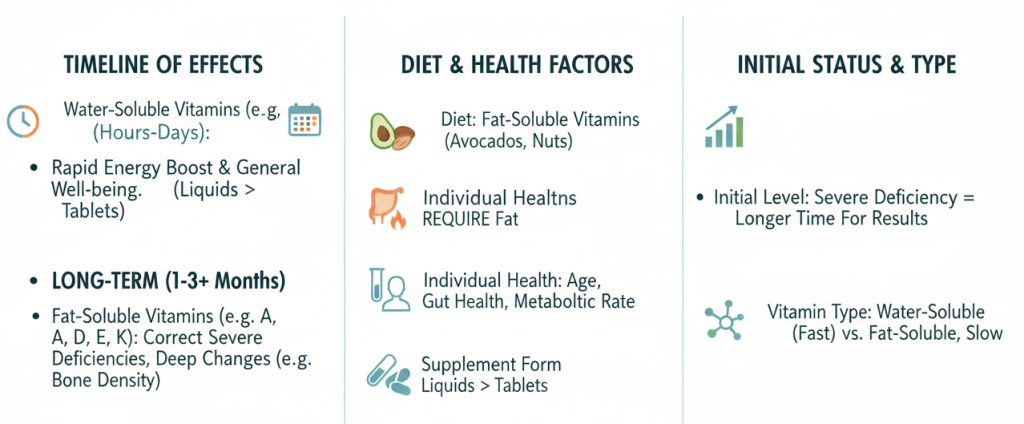
Short-term effects (hours to days): You are most likely to feel a rapid boost in energy and overall status from water-soluble vitamins.
Long-term benefits (over 1-3 months): To correct a severe deficiency and see deep changes (such as increased bone density through vitamin D supplementation) requires several months of patience and continuous supplementation.
Your diet and overall health also play a role. The fat-soluble vitamins must be eaten with fatty foods (such as avocados or nuts) in order to be properly absorbed. In addition, age, gut health and metabolic rate all affect how efficiently you absorb nutrients. Even the supplement forms are fastidious—liquids are usually absorbed faster than traditional tablets.
Vitamins are not “quick-acting” drugs, but a tool to support the long-term functioning of the body. Those long-lasting health benefits are the result of your ongoing supply of nutrients that your body needs to repair and maintain optimal health.
Author:Frank
As a wellness advocate, I’ve always been fascinated by how our bodies respond to nutrition. For years, I’ve explored the science behind supplements, and one question I’m asked constantly is, “How long until I feel a difference?” My goal is to help you understand the intricate process of how vitamins work, from the immediate effects of water-soluble types to the long-term benefits of fat-soluble ones. I believe that by setting clear and realistic expectations, you can better navigate your personal health journey with confidence and patience.