 SGNUTRI


Search Product
What Is Organic Maltodextrin
Organic maltodextrin is a plant-based, white powder that comes from a process called enzymatic hydrolysis—a fancy way of saying they use natural enzymes and water to break down organic starches. We’re usually talking about starches from non-GMO corn, organic rice, or sometimes organic tapioca, which comes from the cassava root.
But the real story for anyone reading the label carefully is that word: “Organic.” It’s a guarantee that the plant it came from was grown the right way. No synthetic pesticides, no glyphosate, and absolutely no genetic modification (non-GMO).
In the food world, it’s a workhorse. A totally safe, neutral-tasting ingredient used to thicken things up, act as a preservative, or just as a filler. It’s all about improving the texture and making products last longer on the shelf. You’ll find it in everything from infant formula to organic protein powders.
Organic Maltodextrin Production Process
To really get what it is, you have to look at how it’s made. That process, the enzymatic hydrolysis, is pretty clever. It uses what’s already found in nature—enzymes and water—to break apart the complex structure of an organic starch. This turns it, well, partially, into a simpler carbohydrate. What you get at the end is a fine white powder that dissolves really easily in water. Because they control the hydrolysis, the organic maltodextrin keeps its useful properties without becoming just another sugar. This is what makes it such an ideal, neutral base for so many different foods.
Common Sources Of Organic Maltodextrin
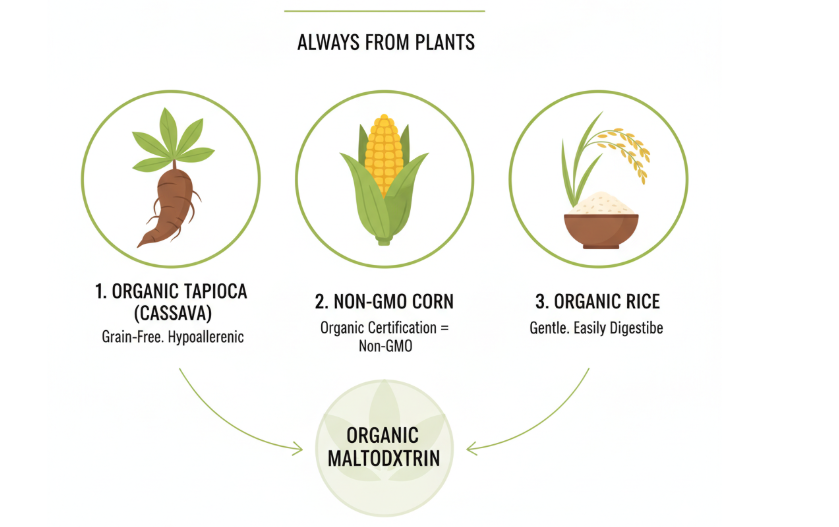
It’s always from plants, and usually one of three main organic crops:
Organic Tapioca (Cassava): This is a go-to for anyone looking for a grain-free option. It’s derived from the cassava root, it’s hypoallergenic, and you see it popping up more and more in clean-label products.
Non-GMO Corn: Corn is a really common source for maltodextrin in general, but when it’s organic corn, that’s a different story. The organic label is your assurance that it’s non-GMO. This is a big deal for a lot of people, considering how prevalent GMOs are in regular corn farming.
Organic Rice: Maltodextrin from rice is a gentler, very digestible option. You’ll often find it in things designed for sensitive stomachs.
Organic Vs. Conventional
And for people who care about their health, the most critical thing to understand about organic maltodextrin is the farming. The distinction between the organic and conventional stuff isn’t about the final powder so much as how the original crop was grown. That “Organic” certification is a promise against all those modern agricultural chemicals. Choosing organic means the product is free from a few things you might be trying to avoid:
Synthetic Pesticides: The chemicals typically used in industrial farming to kill pests.
Glyphosate: A very common herbicide that a lot of consumers are actively avoiding because of health concerns.
Genetic Modification (GMOs): Organic standards are strict—no genetically engineered crops allowed.
This “clean source” guarantee is everything. It makes organic maltodextrin the preferred ingredient for people trying to cut down their exposure to agricultural residues.
Functional Role Of Organic Maltodextrin
Inside the food industry, organic maltodextrin isn’t really valued for being nutritious. It’s prized for its functional versatility. It has three main jobs:
Thickener: It gives body and viscosity to liquids. This helps create that smooth, nice mouthfeel in a sauce or a drink, and it does it without changing the flavor at all.
Preservative: It actually binds with moisture, which is a neat trick to extend the shelf-life of processed foods. Helps keep them fresh for longer.
Filler (or Bulking Agent): It increases a product’s volume but doesn’t add much in the way of calories or fat. This is super important for things like powdered supplements, where you need to make sure every scoop is consistent.
And crucially, it’s neutral-tasting. This characteristic is key. It allows a manufacturer to use it in a savory soup or a sweet dessert without getting in the way of the actual taste they want you to experience.
Applications Of Organic Maltodextrin
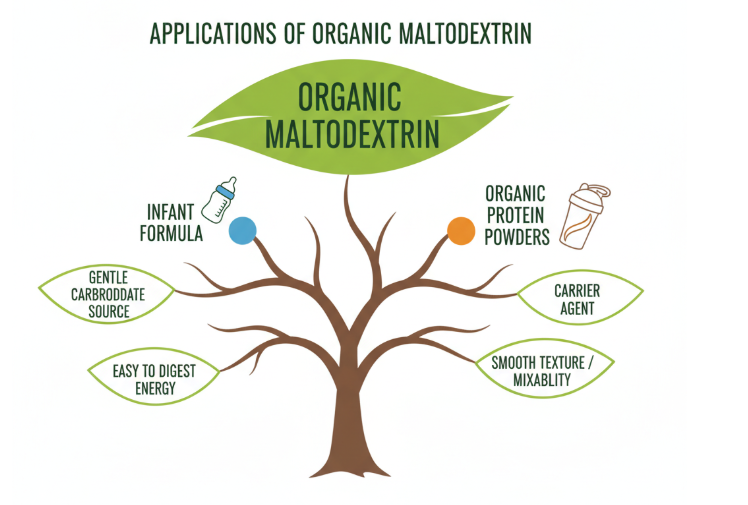
Given its safety and how easy it is to digest, organic maltodextrin is pretty much everywhere in health-focused foods.
Infant Formula: Here, it provides a source of carbohydrates that growing babies can digest without a problem. It’s all about energy that’s gentle on a developing digestive system.
Organic Protein Powders: It often acts as a carrier agent. You know, the stuff that helps the protein powder actually mix with your water or milk instead of just sitting there in clumps. It ensures you get a smooth texture every time.
Author:Brandon
I am a food ingredient specialist dedicated to decoding clean labels for health-conscious consumers. With a focus on organic sourcing and production methods, I help analyze the science behind plant-based additives like organic maltodextrin to ensure you understand exactly what goes into your infant formula and protein supplements.