
 SGNUTRI


Search Product
Does Low Vitamin D Make You Dizzy
The answer is yes, vitamin D deficiency does cause dizziness.
This condition is usually achieved by inducing benign paroxysmal positional vertigo (BPPV)-also known as “otolith disease”-and affecting overall balance. Although everyone mentions vitamin D deficiency, the first reaction is often fatigue, bone pain or mood swings, but from the perspective of functional medicine, inexplicable dizziness is also a signal of great reference value.
Now that the link between low levels of vitamin D and BPPV is very clear, vitamin D supplementation does help reduce the frequency of vertigo attacks.
Here are the specific paths that vitamin D deficiency causes dizziness:
- Association with BPPV (otolith): Vitamin D is responsible for regulating calcium, which is essential for the balance of crystals in the inner ear (I. e. otolith). A lack of vitamin D disrupts the stability of these crystals, leading to BPPV, which triggers the vertigo that whirles around the head.
- Balance and neuromuscular function: This deficiency can also lead to muscle weakness and impaired neuromuscular function, which directly affects your overall sense of balance and stability.
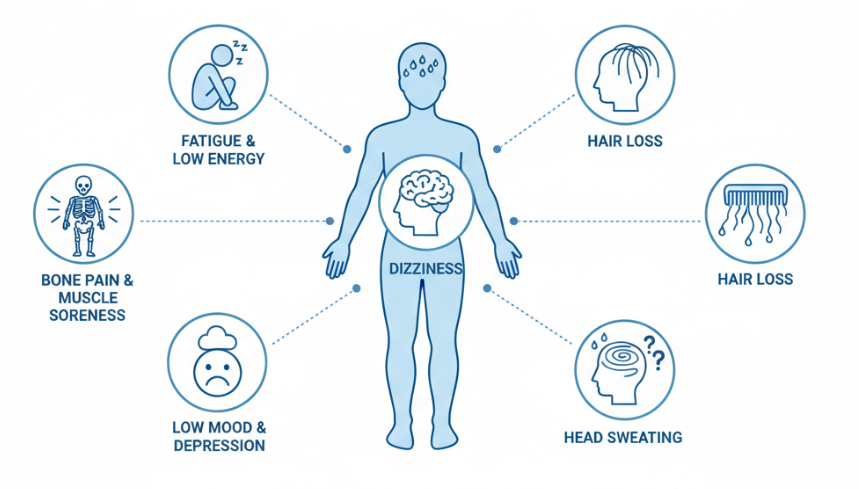
- Other accompanying signs: such as extreme fatigue, musculoskeletal pain, low mood, hair loss, and love sweating in the head.

The Link Between Vitamin D And BPPV (Vertigo)
To understand why the lack of D makes you dizzy, we need to look at the mechanism of BPPV first. This is one of the most common causes of vertigo-you feel yourself or your surroundings spinning.
The key behind this lies in the regulation of calcium:
- The role of crystals: Your inner ear contains tiny calcium carbonate crystals, known as otoliths. They are key to the perception of gravity and body movement.
- The work of vitamin D: one of its main duties is to absorb and regulate calcium in the body.
- Interference occurs: When vitamin D levels are too low, calcium metabolism is disturbed. This causes the otoliths in the inner ear to degenerate or become unstable. These unstable crystals may “run away from home” and float into the ear canal where they are not supposed to go.
- Consequences: When you turn your head, these misaligned crystals stimulate nerve endings, sending false movement signals to the brain. The result is a brief but intense feeling of dizziness and rotation.
Clinical studies have shown that correcting this deficiency with supplements helps stabilize these crystals, thereby reducing the frequency of BPPV attacks.
To the forefront of nutrition
Soluble Fiber
Soluble fiber is a highly stable, indigestible dietary ingredient that promotes weight control by increasing satiety and reducing food intake. Versatile in application, it is widely used to enhance the nutritional profile and texture of foods, beverages, and health products.
Soluble Fiber
Prebiotic
A prebiotic functions as a proliferation factor that is selectively degraded and utilized by beneficial intestinal bacteria, such as Bifidobacteria. This process exerts a positive effect on overall human health, often accompanied by metabolic advantages such as low caloric impact and minimal blood sugar fluctuations due to their unique digestive stability.
Prebiotic
Vitamins
Vitamins are essential organic micronutrients, categorized into water-soluble and fat-soluble forms, that regulate critical physiological processes such as metabolism, immunity, and coagulation. Due to their sensitivity to light, heat, and moisture,
Vitamins
Effects On Balance And Neuromuscular Function
Although inner ear problems are the main factor, vitamin D deficiency can also make you feel “dizzy” through other physiological pathways “.
You should know that vitamin D receptors are found throughout the body, including skeletal muscle. The lack of it will affect your stability in the following ways:
- Muscle weakness: Inadequate vitamin D intake can lead to proximal muscle weakness. This condition usually affects the legs and hips, making it difficult for you to maintain a stable posture.
- Neuromuscular impairment: The optimal functioning of the nervous system depends on vitamin D. Lack of it slows down reaction time and impairs the body’s ability to quickly correct balance.
This type of “dizziness” feels less like “the room is turning” (typical vertigo), but more a feeling of unsteadiness, top-heaviness, or the feeling that you are about to fall.
Identify Other Symptoms Of Vitamin D Deficiency
If you are experiencing dizziness and suspect that this is related to nutrient levels, it can be very helpful to see if there are other co-existing symptoms. In case of systemic nutritional deficiency, dizziness rarely occurs in isolation.
Frequently accompanying signs include:
- Fatigue and low energy: the kind of constant fatigue that no amount of sleep can relieve.
- Bone pain and muscle soreness: Deep bone pain or muscle soreness throughout the body without a clear cause.
- Low mood or depression: Vitamin D is involved in brain chemistry; low levels are often associated with mood swings.
- Hair loss: Thinning hair can be a sign of severe nutritional deficiencies.
- Sweating on the head: this is a more subtle but classic indicator. Historically, doctors have used excessive forehead sweating as an early sign of vitamin D deficiency.
Diagnosis And Intervention
If you suspect that low vitamin D is to blame for your dizziness, taking the right steps is essential.
Consult A Doctor For Testing
Please do not self-diagnose based on symptoms alone. You must go to the hospital for a specific blood test (25-hydroxyvitamin D test).
Strategic Supplement
If a blood test confirms the deficiency, the doctor will usually recommend a set of recovery plans:
- Vitamin D supplements: boost levels throughout the body.
- Calcium supplements: Because vitamin D and calcium have a synergistic effect on bone and inner ear health, a combined supplement is usually recommended.
Solve The Vertigo Itself
It should be noted that although supplements can solve the root cause, they cannot instantly “change” the misplaced otolith back. Standard BPPV treatment, such as otolith reduction maneuvers (eg, the Epley maneuver), usually requires simultaneous nutritional supplementation. Manipulations are used to stop vertigo immediately, while vitamins are used to prevent it from coming back.
Disclaimer: This post is for informational purposes only and is not medical advice. Dizziness and vertigo have many causes. Please consult a healthcare professional before starting any new vitamin or supplement regimen to ensure it is safe and appropriate for your specific health needs. If you experience severe dizziness or fainting, seek medical attention immediately.
sources
1,Kong, T. H., Jung, S. Y., Seo, Y. J., & Shim, D. B. (2024). Vitamin D supplementation in preventing the recurrence of benign paroxysmal positional vertigo. Laryngoscope Investigative Otolaryngology, 9(1), e1225.https://pmc.ncbi.nlm.nih.gov/articles/PMC10880126/
Author:Sarah Jenkins
I’m a health researcher dedicated to explaining how nutritional deficiencies impact daily life. In this article, I explore the critical link between Vitamin D, inner ear crystals, and BPPV, aiming to help you understand the root causes of your dizziness and how to restore your balance through proper supplementation.