 SGNUTRI


Search Product

This Maltodextrin Organic is made of non-genetically modified organic corn or tapioca starch by controlled enzymatic hydrolysis process, with an accurate DE value of 10 to 20 and excellent cold water solubility. As the 1 cleaning label ingredient, it can provide a pure filling carrier for infant food and sports nutrition, increase the solid content of the product without changing the original flavor, and meet the large-scale demand.
Non-GMO organic corn
Source
10 to 15DE
Glucose value
cold water fully soluble
Dissolution characteristics
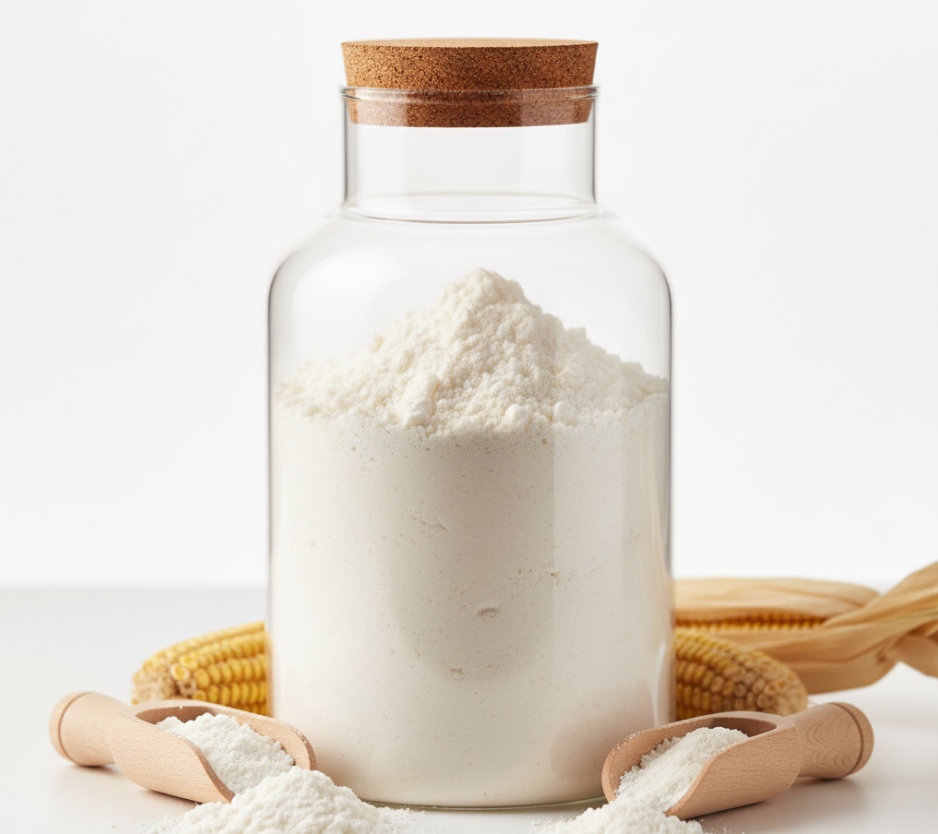

Using advanced spray drying and controlled enzymatic hydrolysis technology, the final product moisture is controlled below 6%. This low moisture absorption significantly reduces the agglomeration of the powder during storage and transportation, ensuring excellent free fluidity in an environment with a relative humidity of 60%, which is conducive to automated feeding production.
Unlike conventional starch derivatives, the organic maltodextrins are more than 98% soluble in cold water at 20°C. After dissolution, the solution shows high transparency and no precipitation, which can be perfectly integrated into transparent beverage or high water system, and will not cause turbidity or graininess of the finished product, thus improving the sensory quality of the final product.
After multi-stage filtration and decolorization, the product is not only white in color, but also extremely light in taste, with a sweetness of only 10% to 15% of sucrose. This neutral flavor characteristic makes it not interfere with or mask the main flavor substances in food when used as a carrier, and is particularly suitable for flavor-sensitive seasoning powders and flavors and fragrances.
Strictly follow the USDA organic agriculture standard planting and processing, the whole process of production without synthetic pesticides, no fertilizer, no ionizing radiation. For R & D projects pursuing “clean label”, the raw material can directly support the packaging claims of “100 percent organic” or “organically made” and meet the strict compliance requirements for natural ingredients in the high-end market.
By precisely controlling the degree of hydrolysis, the DE value was stabilized between 10 and 20. This range of molecular weight distribution provides ideal thickening and film-forming properties, providing a fine and smooth texture in soup and sauce applications, while simulating a fat-like mellow taste as a fat substitute.
As the 1 efficient filler and stabilizer, its unique branched chain structure helps to build a stable emulsion system. When used as a microcapsule wall material in the spray drying process, it can effectively encapsulate sensitive active ingredients (such as probiotics or vitamins), reduce the oxidation rate of the core ingredients by more than 30%, thereby extending the shelf life.
| Technical indicators | Specifications | Test methods |
| Appearance | White or slightly yellow powder, free of impurities | Visual inspection |
| Smell and taste | Typical maltodextrin odor, slightly sweet, no off-flavors. | Sensory analysis |
| Glucose equivalent (DE value) | 10.0 – 15.0 (or customizable to 15-20) | Lan-Ainonfa |
| Moisture content | ≤ 6.0% | Loss on drying |
| pH value (10% solution) | 4.0 – 6.0 | potentiometer method |
| solubility | ≥ 98% | Gravimetric method |
| Ash | ≤ 0.5% | Burning method |
| Sulfur dioxide residue | ≤ 10 mg/kg | Distillation titration |
| Total heavy metals (as Pb) | ≤ 0.5 mg/kg | Atomic absorption spectrometry |
| As | ≤ 0.5 mg/kg | Atomic fluorescence spectrometry |
| Total bacterial count | ≤ 1,000 CFU/g | Plate counting method |
| E. coli | Not detectable | Microbial culture method |
Compared with the traditional ordinary maltodextrin, this organic maltodextrin achieves a double upgrade in safety and functionality. Common products often use sulfuric acid to catalyze hydrolysis, which may leave trace acidic substances and the raw materials are mostly common genetically modified corn. However, this product adopts pure enzymatic hydrolysis process, which not only eliminates the risk of chemical residues, but also retains the natural molecular structure of raw materials more completely, thus increasing the thickening and stabilizing effect by about 15% under the same addition amount. In terms of powder engineering, ordinary maltodextrin often has the problem of dust flying and slow dissolution due to uneven particle size. This product optimizes the porosity and bulk density of the granules through a specific granulation process, resulting in a 40% reduction in wetting time. This not only significantly reduces dust pollution in the production workshop, but also significantly improves the efficiency of the mixing process on the production line.
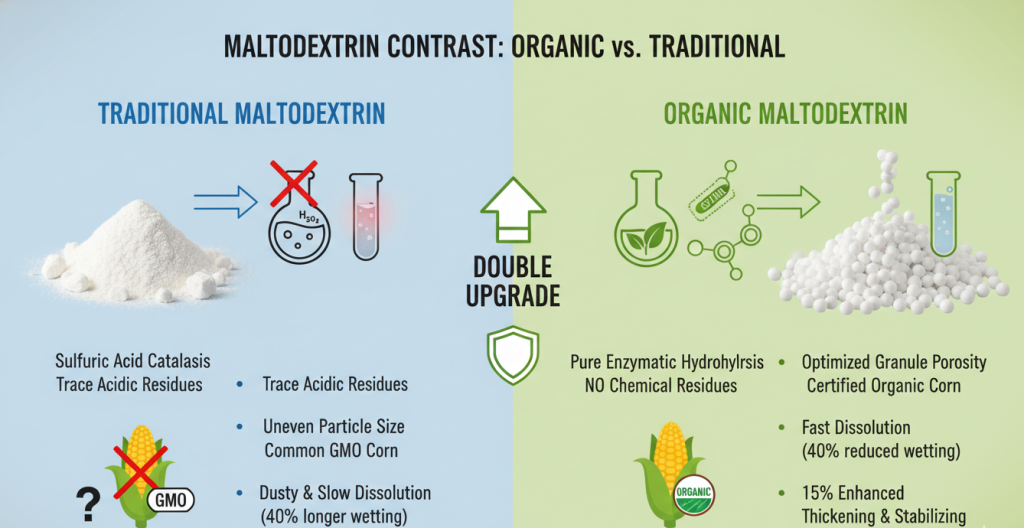

Aiming at the research and development of export-oriented food enterprises and high-end organic food, the problem that the whole product cannot pass the organic certification due to the inability of auxiliary materials to provide complete organic traceability certificate is solved, ensuring the transparency and compliance of the supply chain.
For solid beverage and premix manufacturers, the problem of hardening caused by excessive hygroscopicity in the storage and transportation of raw materials is solved, and the additional costs caused by the scrapping or re-crushing of raw materials are reduced.
For the application of probiotic powder and functional nutrition embedding, the problem of rapid oxidation failure of active ingredients caused by poor barrier properties of common carriers is solved, and the performance stability of end products is effectively guaranteed.
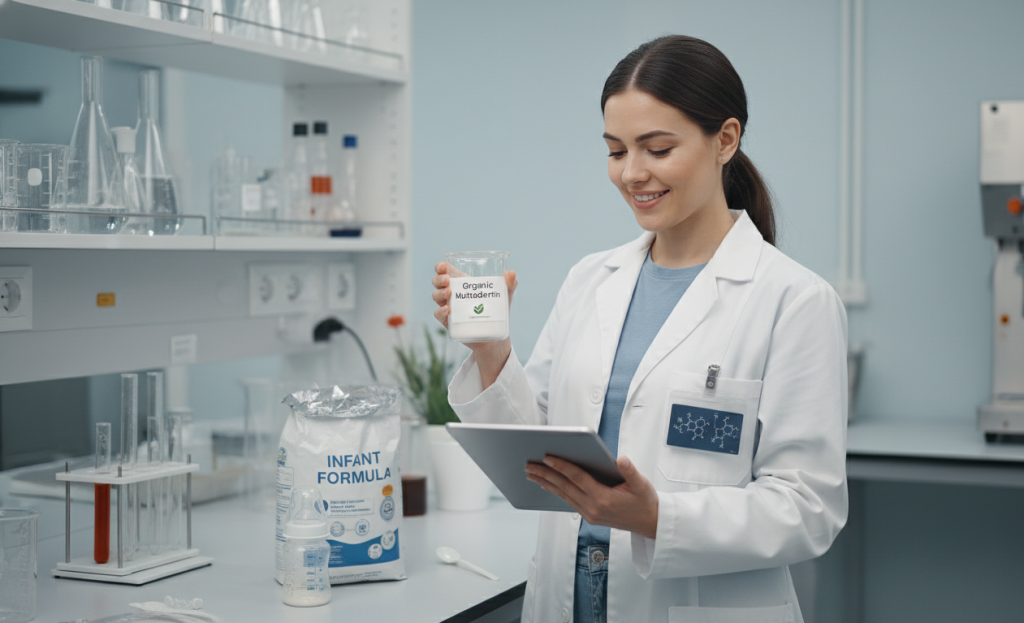
Designed for developers of infant milk powder and complementary foods who need to strictly comply with food safety regulations. The high digestibility and low osmotic pressure characteristics of the organic maltodextrin make it an easily absorbed carbohydrate source for infants and young children, and there is no risk of pesticide residues in accordance with infant food standards.
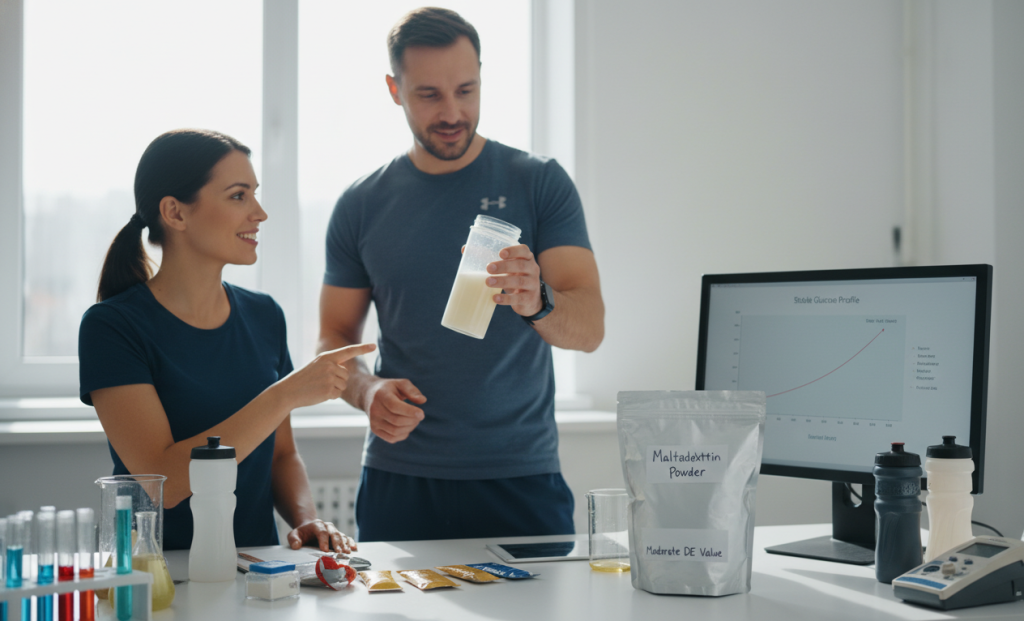
For professionals who develop energy supplements, isotonic drinks and energy gels. The moderate DE value of the product can provide continuous and stable energy release, avoid severe fluctuations in blood sugar, and its excellent solubility solves the common problems of precipitation and sticky taste in high-concentration energy drinks.
Suitable for seasoning specialists who require high quality carriers for microencapsulation or spray drying. Using its good film-forming and low hygroscopicity, it can effectively lock the volatile flavor substances and solve the problem of aroma emission and oxidation deterioration in the process of processing and storage.
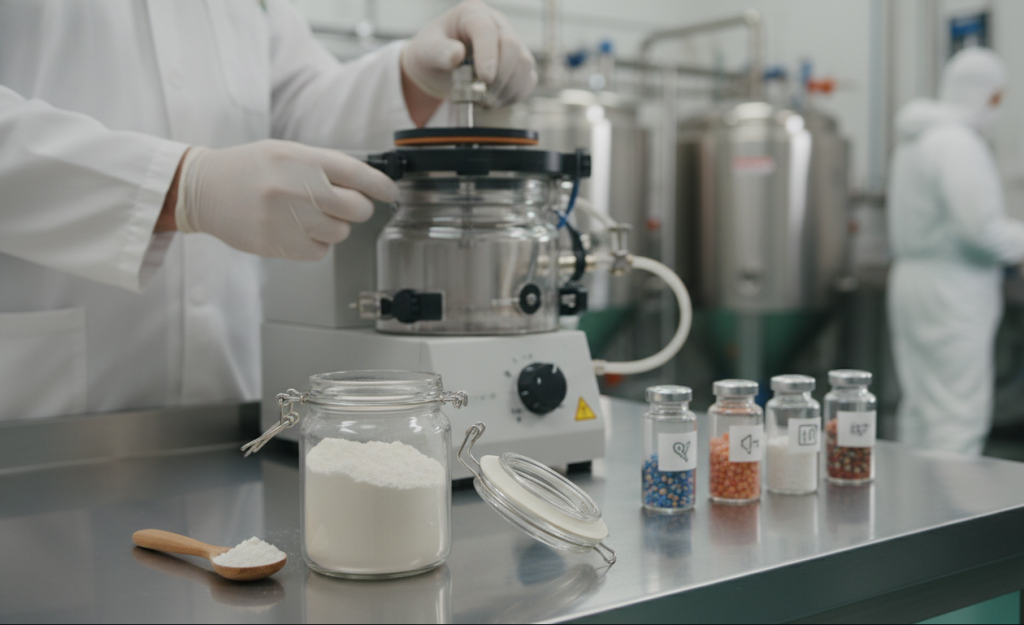
For food technologists working to develop low-fat or low-sugar products. The product can be used as a fat substitute to simulate the smooth taste and creamy texture of fat in low-fat ice cream or baked goods, solving the problem of rough taste and weak flavor that usually occurs in reduced-fat products.
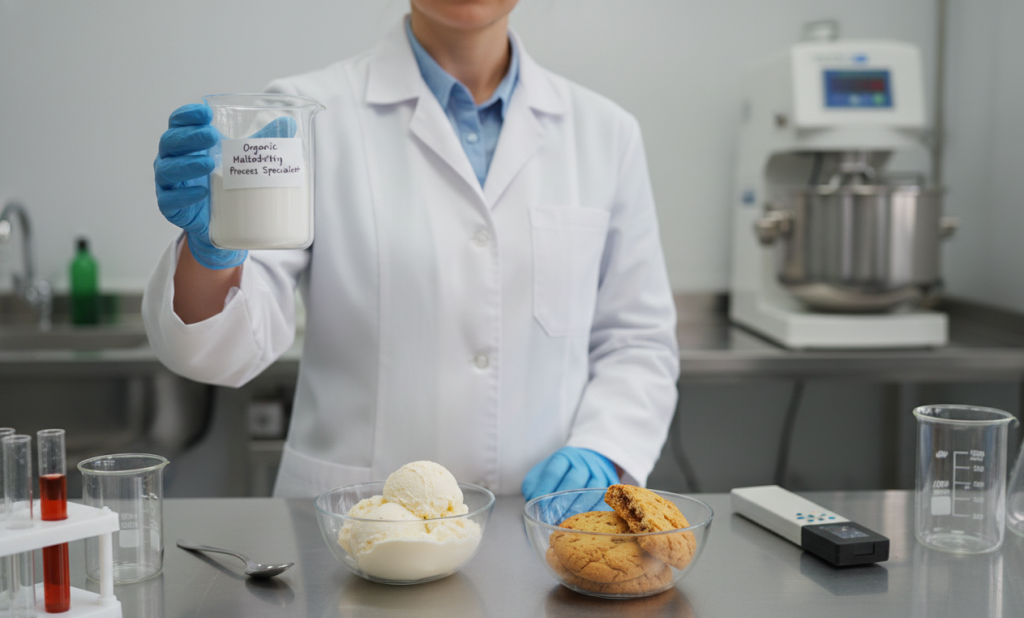

It is recommended to pre-disperse this product with other powdered raw materials (such as sugar and protein powder) according to the proportion of the formula before adding the liquid solvent. This can effectively prevent the surface of the maltodextrin particles from instantly gelatinizing with water to form “fish eyes” or insoluble lumps, and improve the dissolution efficiency.

Although the product has good cold water solubility, but in industrial production, it is recommended to heat the solvent water temperature to 50 ℃ to 60 ℃. In this temperature range, the stirring dissolution time can be shortened to less than 5 minutes, and the best transparency and solution stability can be obtained.

When used as a filler, the recommended addition amount is 10% to 30%; when used as a fat substitute, it is recommended to control the replacement ratio at 15% to 25% of the total fat. The specific amount should be tested in a laboratory test according to the viscosity requirement and solid content target of the final product.

After opening the bag should be used immediately or sealed preservation. Because maltodextrin is hygroscopic, it must be stored in a cool and dry place at a temperature below 25°C and a relative humidity below 60%. Packaging damage or prolonged exposure to humid air will cause the powder to absorb moisture and agglomerate, affecting the fluidity.

certificate

Welcome to our Frequently Asked Questions page. We have compiled answers to common questions you may have, hoping to provide you with clear and quick solutions. If you cannot find the information you need here, please feel free to contact our customer support team.
This Maltodextrin Organic is made of non-genetically modified organic corn or tapioca starch by controlled enzymatic hydrolysis process, with an accurate DE value of 10 to 20 and excellent cold water solubility. As the 1 cleaning label ingredient, it can provide a pure filling carrier for infant food and sports nutrition, increase the solid content of the product without changing the original flavor, and meet the large-scale demand.
Source
Non-GMO organic corn
Glucose value
10 to 15DE
Dissolution characteristics
cold water fully soluble

Using advanced spray drying and controlled enzymatic hydrolysis technology, the final product moisture is controlled below 6%. This low moisture absorption significantly reduces the agglomeration of the powder during storage and transportation, ensuring excellent free fluidity in an environment with a relative humidity of 60%, which is conducive to automated feeding production.
Unlike conventional starch derivatives, the organic maltodextrins are more than 98% soluble in cold water at 20°C. After dissolution, the solution shows high transparency and no precipitation, which can be perfectly integrated into transparent beverage or high water system, and will not cause turbidity or graininess of the finished product, thus improving the sensory quality of the final product.
After multi-stage filtration and decolorization, the product is not only white in color, but also extremely light in taste, with a sweetness of only 10% to 15% of sucrose. This neutral flavor characteristic makes it not interfere with or mask the main flavor substances in food when used as a carrier, and is particularly suitable for flavor-sensitive seasoning powders and flavors and fragrances.
Strictly follow the USDA organic agriculture standard planting and processing, the whole process of production without synthetic pesticides, no fertilizer, no ionizing radiation. For R & D projects pursuing “clean label”, the raw material can directly support the packaging claims of “100 percent organic” or “organically made” and meet the strict compliance requirements for natural ingredients in the high-end market.
By precisely controlling the degree of hydrolysis, the DE value was stabilized between 10 and 20. This range of molecular weight distribution provides ideal thickening and film-forming properties, providing a fine and smooth texture in soup and sauce applications, while simulating a fat-like mellow taste as a fat substitute.
As the 1 efficient filler and stabilizer, its unique branched chain structure helps to build a stable emulsion system. When used as a microcapsule wall material in the spray drying process, it can effectively encapsulate sensitive active ingredients (such as probiotics or vitamins), reduce the oxidation rate of the core ingredients by more than 30%, thereby extending the shelf life.
| Technical indicators | Specifications | Test methods |
| Appearance | White or slightly yellow powder, free of impurities | Visual inspection |
| Smell and taste | Typical maltodextrin odor, slightly sweet, no off-flavors. | Sensory analysis |
| Glucose equivalent (DE value) | 10.0 – 15.0 (or customizable to 15-20) | Lan-Ainonfa |
| Moisture content | ≤ 6.0% | Loss on drying |
| pH value (10% solution) | 4.0 – 6.0 | potentiometer method |
| solubility | ≥ 98% | Gravimetric method |
| Ash | ≤ 0.5% | Burning method |
| Sulfur dioxide residue | ≤ 10 mg/kg | Distillation titration |
| Total heavy metals (as Pb) | ≤ 0.5 mg/kg | Atomic absorption spectrometry |
| As | ≤ 0.5 mg/kg | Atomic fluorescence spectrometry |
| Total bacterial count | ≤ 1,000 CFU/g | Plate counting method |
| E. coli | Not detectable | Microbial culture method |
Aiming at the research and development of export-oriented food enterprises and high-end organic food, the problem that the whole product cannot pass the organic certification due to the inability of auxiliary materials to provide complete organic traceability certificate is solved, ensuring the transparency and compliance of the supply chain.
For solid beverage and premix manufacturers, the problem of hardening caused by excessive hygroscopicity in the storage and transportation of raw materials is solved, and the additional costs caused by the scrapping or re-crushing of raw materials are reduced.
For the application of probiotic powder and functional nutrition embedding, the problem of rapid oxidation failure of active ingredients caused by poor barrier properties of common carriers is solved, and the performance stability of end products is effectively guaranteed.
Designed for developers of infant milk powder and complementary foods who need to strictly comply with food safety regulations. The high digestibility and low osmotic pressure characteristics of the organic maltodextrin make it an easily absorbed carbohydrate source for infants and young children, and there is no risk of pesticide residues in accordance with infant food standards.
For professionals who develop energy supplements, isotonic drinks and energy gels. The moderate DE value of the product can provide continuous and stable energy release, avoid severe fluctuations in blood sugar, and its excellent solubility solves the common problems of precipitation and sticky taste in high-concentration energy drinks.
Suitable for seasoning specialists who require high quality carriers for microencapsulation or spray drying. Using its good film-forming and low hygroscopicity, it can effectively lock the volatile flavor substances and solve the problem of aroma emission and oxidation deterioration in the process of processing and storage.
For food technologists working to develop low-fat or low-sugar products. The product can be used as a fat substitute to simulate the smooth taste and creamy texture of fat in low-fat ice cream or baked goods, solving the problem of rough taste and weak flavor that usually occurs in reduced-fat products.
It is recommended to pre-disperse this product with other powdered raw materials (such as sugar and protein powder) according to the proportion of the formula before adding the liquid solvent. This can effectively prevent the surface of the maltodextrin particles from instantly gelatinizing with water to form “fish eyes” or insoluble lumps, and improve the dissolution efficiency.
Although the product has good cold water solubility, but in industrial production, it is recommended to heat the solvent water temperature to 50 ℃ to 60 ℃. In this temperature range, the stirring dissolution time can be shortened to less than 5 minutes, and the best transparency and solution stability can be obtained.
When used as a filler, the recommended addition amount is 10% to 30%; when used as a fat substitute, it is recommended to control the replacement ratio at 15% to 25% of the total fat. The specific amount should be tested in a laboratory test according to the viscosity requirement and solid content target of the final product.
After opening the bag should be used immediately or sealed preservation. Because maltodextrin is hygroscopic, it must be stored in a cool and dry place at a temperature below 25°C and a relative humidity below 60%. Packaging damage or prolonged exposure to humid air will cause the powder to absorb moisture and agglomerate, affecting the fluidity.