 SGNUTRI


Search Product
How Does Erythritol Compare To Sugar
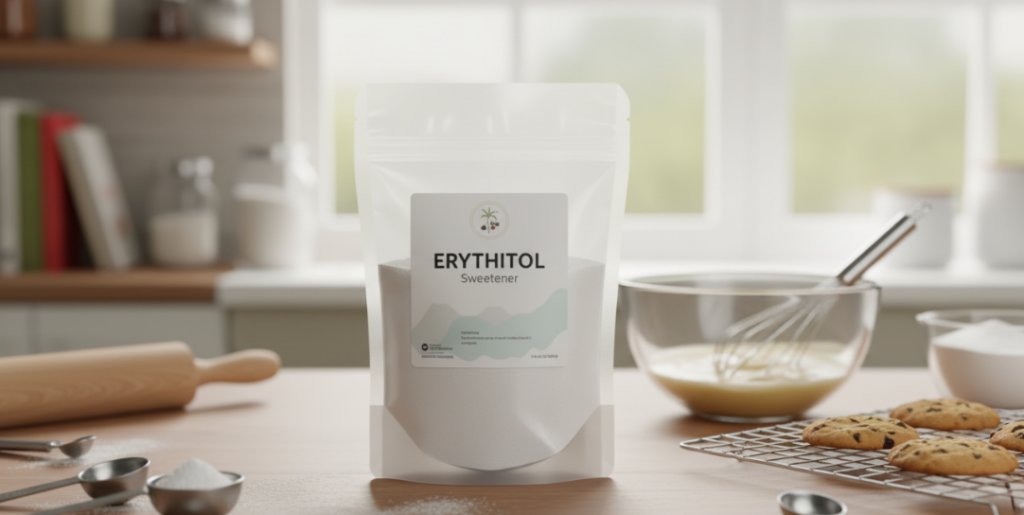
I have always believed that erythritol is the best substitute for white granulated sugar, not one of them. Its sweetness is about 70% that of white sugar, but the most important thing is that its calories and glycemic index (GI) are all zero.
In contrast, white granulated sugar (sucrose) will cause blood sugar to soar as soon as it enters the stomach, and then insulin will begin to secrete in large quantities-this is the “culprit” of fat accumulation. Erythritol as the kind of sugar alcohol, the human body can not completely metabolize it. After it is absorbed by the small intestine, most of it will be excreted intact through the urine, making almost no contribution to the daily net carbohydrate intake. White sugar brings you four calories per gram and also gives you body inflammation, while erythritol can stabilize your blood sugar and ketogenic state without sacrificing sweetness and happiness.
The Essential Difference Between Calories And Sugar
When comparing erythritol with white sugar, the most eye-catching differences are caloric density and glycemic response. White sugar is a high-energy carbohydrate, four calories per gram.When you eat it, it quickly breaks down into glucose and fructose, blood sugar directly on the roller coaster, forcing the pancreas to rush out of insulin.
The nature of erythritol is completely different. Its polyol is only 0.24 kcal per gram, which is basically negligible on the label. Because it does not stimulate insulin secretion, it is a savior for people with diabetes or strict ketogenic. It avoids the “blood sugar roller coaster” that comes with traditional sugar and the fat storage signal that comes with it.
Why Is Erythritol Special?
The way the body processes these two substances determines their status. Sugar is broken down by enzymes in the digestive tract and either becomes instant fuel or stored as glycogen and fat.
The molecular structure of erythritol is very special. About 90% of the erythritol you eat is absorbed by the small intestine before it enters the large intestine. Unlike xylitol or sorbitol, which can cause diarrhea or gastrointestinal discomfort, erythritol travels circles in the blood and is finally excreted directly in the urine.
Inflammation And Long-Term Health
The effects of sugar and sugar substitutes on body inflammation are also very different. Long-term excessive intake of sugar is the driving force of chronic inflammation, and metabolic syndrome can not be separated. Sugar promotes the production of free fatty acids by the liver, triggering various markers of inflammation.
But one thing I like about erythritol is that not only does it not cause inflammation, there are even studies that say it can also play an antioxidant role in the vascular system. Using it to replace sugar, in fact, is to meet the sweet instinct at the same time, turn off the body’s inflammatory switch.
Soluble Fiber
Wholesale soluble dietary fiber, suitable for dietary supplements, food products, etc.
Prebiotic
Offer prebiotic dietary fiber supplements and sugar substitute products.
Starch Sugar
Made from maltodextrin and glucose, suitable for use in food and beverages.
Soy Fiber
High-quality Soy Fiber provides raw materials for industries such as nutritional supplements.
Protein
Seeking ultra-low parasitics and signal integrity for 100 GHz+applications.
Vitamins
A high-quality vitamin manufacturer serving the food and nutritional supplement industry.
Kitchen Practice
When operating in the kitchen, you have to pay attention to their physical characteristics. Because erythritol is only seventy percent sweet, you can’t replace it 1:1. If you want the sweetness of cup of white sugar, add about 1.3 cups of erythritol.
Although it is resistant to high temperatures and will not deteriorate in the oven, there are some “tempers” you need to know in advance:
Coolness: It has a slight coolness in the mouth similar to mint, which is its unique physical properties.
Can’t caramelize: white sugar can bake an attractive golden caramel, erythritol can’t. It doesn’t produce the Maillard reaction that sugar does, so the resulting cookies may lack that sticky and burnt flavor.
Easy to crystallize: After cooling, erythritol is easier to precipitate crystals than white sugar. If you make sauces or fudge, there may be fine graininess if you don’t handle it properly.
Who Needs Erythritol?
If your goal is metabolic health, erythritol will definitely win. While white sugar gives the perfect caramel color and traditional flavor, it comes at the cost of skyrocketing blood sugar and potential inflammation. Erythritol provides you with a shortcut to ketogenic and weight loss. As long as you fine-tune the proportion when baking and get used to its unique cooling feeling, it is the most reliable sweetening scheme at present.
Author: Alex Reed
“Hi, I’m a health and nutrition enthusiast dedicated to exploring how dietary choices impact metabolic wellness. Having spent years researching the ‘blood sugar roller coaster’ and its effects on inflammation, I’ve become a firm advocate for smart, science-backed sugar alternatives. When I’m not analyzing molecular structures of polyols, you’ll find me in the kitchen fine-tuning low-carb recipes to prove that healthy eating can be just as delicious as the traditional way.”
The prev: What Is Polydextrose Used ForThe next: Are There Any Negative Effects Of Sucralose
Related recommendations
-

What’s The Difference Between Dietary Fiber And Soluble Fiber
451Learn The Difference Between Dietary Fiber And Soluble Fiber, How They Work, And Their Unique Health Benefits.
View details -
Crystalline Maltitol Syrup: A Comprehensive Guide
1582Explore the features, benefits, and applications of crystalline maltitol syrup in this complete guide from SGNUTRI.
View details -
Is Maltitol Syrup Gluten Free? Everything You Should Know
1020Find out if maltitol syrup is gluten-free, its uses as a sweetener, and whether it’s safe for people with gluten sensitivity.
View details -
Is Allulose a Prebiotic Fiber? Real Gut Health Benefits
88:Is Allulose A Fiber? No. Is Allulose A Prebiotic? Yes. Learn Real Gut Health Benefits And Avoid Formulation Traps.
View details