
 SGNUTRI


Search Product
Best Vitamins For Dry Eyes
For the relief of dry eye syndrome, the optimal vitamin regimen is: daily high-dose intake of omega-3 fatty acids (must be recombinant triglycerides, that is, fish oil with rTG structure), and combined use of vitamin A and vitamin D3.
Clinical data show that, especially for volatile dry eyes caused by meibomian gland dysfunction (MGD), supplementing 2000mg to 3000mg of Omega-3 per day (wherein the ratio of EPA to DHA should reach at least 3:1) can significantly improve the quality of tear film oil layer, thereby reducing tear volatilization. At the same time, vitamin A is essential for repairing damaged corneal epithelial cells and promoting mucin secretion, while vitamin D3 helps to relieve systemic inflammation that leads to damage to the lacrimal gland—this is especially important in postmenopausal women.
In short, although ordinary eye drops can only temporarily “replenish water”, this set of vitamin combination fist is to restore the “water-locking” function and anti-inflammatory ability of the tear film from the inside.
Daily Vitamin Regimen
The Omega-3 Protocol
This is the most critical part of the entire treatment plan, so I require that the type and dosage must be strictly adhered.
- Daily Dose: A total intake of 2000mg to 3000mg of Omega-3 per day.
- Form selection: Turn over the bottle and look carefully at the label to ensure that the product is in the form of recombinant triglyceride (rTG), not ethyl ester (ethyl ester).
- Ratio key: verify the concentration ratio of EPA to DHA, at least 3:1 (for example, 1500mg EPA with 500mg DHA).
- When to take it: Be sure to take it with your meal, and the meal should be greased (like avocado, nuts or olive oil) for maximum absorption. If the high dose makes you feel a slight digestive discomfort, take it twice in the morning and evening.
Pairing with Vitamin A and D3
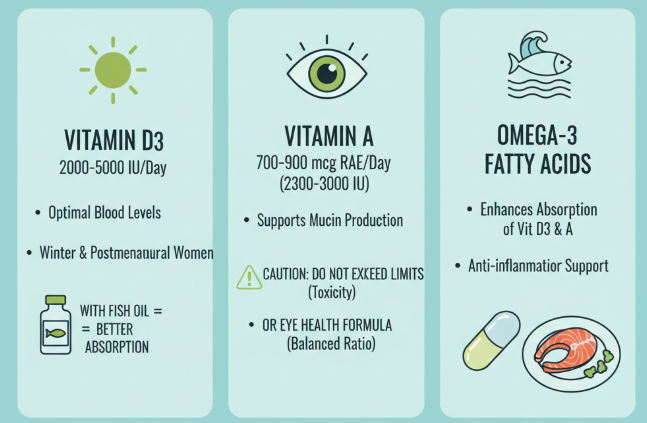
These two are fat-soluble vitamins, with Omega-3 fatty acids to eat the best effect, can play a synergistic effect.
- Vitamin D3: A supplement of 2000 IU to 5000 IU per day is recommended to maintain optimal levels in the blood. This is particularly important in winter or for the control of systemic inflammation in postmenopausal women. And fish oil at the same time, the body will absorb it more efficiently.
- Vitamin A: The goal is to consume 700 mcg to 900 mcg RAE per day (about 2300 IU to 3000 IU). Look for that high quality supplement and make sure to include this dose to support mucin production. Be careful, however, to try to stay within the recommended limits to avoid toxicity, or simply choose a formula specifically designed for eye health, which usually balances the safe ratio of these three nutrients.
High Doses of Omega-3 Are Important for Dry Eye
Omega-3 fatty acids are absolutely central when evaluating vitamins for the treatment of dry eye. But in my experience, the quality of fish oil on the market varies. To effectively treat volatile dry eye (usually caused by meibomian gland dysfunction, MGD), these 3 criteria must be adhered to: form, dose and ratio.
The Importance of the rTG Form
To see real clinical improvement, choosing the rTG format is a must. Many common, inexpensive supplements use the ethyl ester (EE) form, which is difficult for the body to absorb. The rTG form has superior bioavailability, allowing the fatty acids to effectively integrate into the cell membrane and eventually reach the meibomian glands at the edge of the eyelid.
Dosage and EPA:DHA Ratio
Clinical studies have shown that ordinary “maintenance grade” doses are simply not enough to treat dry eye. The recommended regimen for improving tear film involves a daily intake of 2000mg to 3000mg of Omega-3. In addition, the composition is also very particular: EPA (eicosapentaenoic acid) and DHA (docosahexaenoic acid) ratio of at least 3:1. High levels of EPA provide potent anti-inflammatory effects, while lipids help improve the quality of the oil layer in the tear film. When the oil layer is repaired, tears will not volatilize too quickly, which is the main cause of volatile dry eyes.
Vitamin A Repairing the Cornea and Boosting Mucin
If Omega-3 is the “oil layer”, then vitamin A is responsible for the health of ocular surface cells. It has a place on the list of dry eye vitamins because of its regenerative properties. Vitamin A is essential for the repair and maintenance of corneal epithelial cells. When the eye dries, the surface cells tend to become damaged and rough. Vitamin A supports the healing of these cells and restores a smooth surface. In addition, it can also promote the secretion of mucin. You can think of mucin as a hydrophilic (water-loving) “glue” that helps the water layer of tear fluid adhere firmly to the surface of the eye. If there is not enough mucin, the tears will not spread evenly, even if your tear secretion is normal, there will still be dry spots on the eyes.
Vitamin D3 Systemic Inflammation and Tear Gland Protection
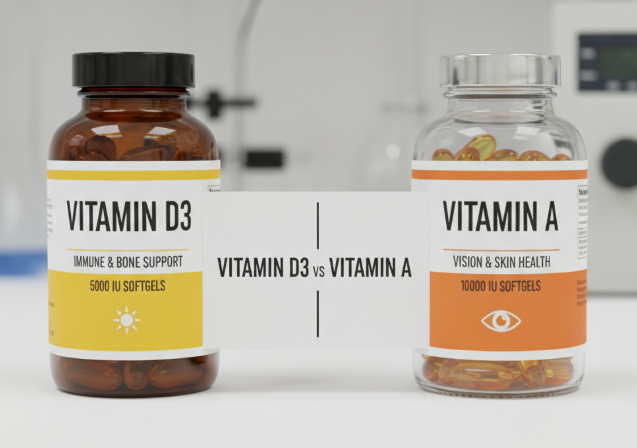
This is often overlooked, but vitamin D3 plays a key role in eye health through immune regulation. Dry eye syndrome is often driven by inflammation. Vitamin D3 helps reduce systemic inflammation that can attack the lacrimal glands (the glands responsible for producing the water-like part of tears). By reducing inflammation levels, vitamin D3 is actually protecting the function of the gland. This is especially urgent for postmenopausal women. The study highlights a strong correlation between hormonal changes, vitamin D deficiency and outbreaks of dry eye symptoms. Ensuring adequate D3 levels in the body helps to offset the risk of inflammation caused by these hormonal fluctuations, thereby preserving your ability to produce tears.
Author:Daniel
As a specialized researcher in eye health nutrition, I focus on treating the root causes of Dry Eye Syndrome and MGD. My work moves beyond temporary eye drops, advocating for clinical-grade nutritional protocols—specifically rTG Omega-3s combined with Vitamins A and D3—to restore the eye’s natural lipid barrier and long-term comfort.”