
 SGNUTRI


Search Product
How Long Does It Take For Vitamins To Start Working
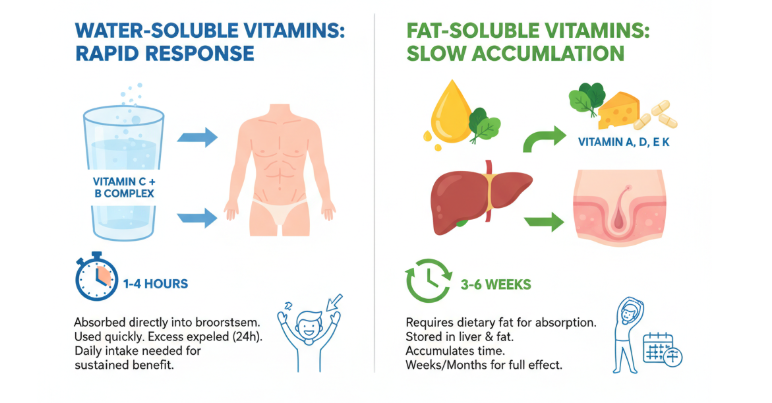
Water-soluble vitamins (such as B complex and vitamin C) enter the bloodstream very quickly and are usually in place in the body within a few hours, but you can really feel the benefits of your body. It usually takes a few days. In contrast, fat-soluble vitamins (A, D, E, and K) are rely on fat for absorption, and they usually need to be taken continuously for 3 to 6 weeks. After sufficient reserves have been built up in your system, you can notice substantial changes.
In addition, if you are dealing with a severe nutrient deficiency, the acute symptoms may improve within 1 to 2 weeks, if it is to correct a minor deficiency and reach the desired “optimal level”, the process can take up to 3 months.
The Type Of Vitamin Determines The Rate Of Absorption
The speed of onset depends to a large extent on whether it is water-soluble or fat-soluble, which is the most basic biochemical logic.
Water-Soluble Vitamins Rapid Response
These groups mainly include vitamin C and the entire B family. As the name suggests, these vitamins are soluble in water, which means they can be absorbed directly into the bloodstream. Once ingested, they begin to function at the biological level within 1 to 4 hours. However, although the biochemical reactions in the body begin almost immediately, it usually takes several days of continuous intake to feel a significant difference in energy level or immunity.
There is a problem with the metabolic mechanism: the body uses what it needs quickly and gets rid of the excess within 24 hours. Because they are not stored long-term in the body, you may feel a physiological “boost” soon after taking them, but for continued improvement, you must supplement them daily.
Fat-Soluble Vitamins React Slowly
This category includes vitamins A, D, E and K. These vitamins require fat from the diet to be absorbed and are stored in the liver and adipose tissue. Because they must accumulate to a “therapeutic threshold,” the process is slower. You usually don’t feel the effect immediately; instead, it usually takes 3 to 6 weeks of stable supplementation to replenish the storage level. I often use vitamin D as an example. When using it to correct a deficiency, it usually takes 2 to 3 months for blood levels to completely stabilize and you can experience the greatest benefits in terms of mood or bone health.
Your Body’s Current Nutrient Level
The second key factor that affects the timeline is the existing nutritional status of your body. If you do have a nutrient deficiency, your body will be in a state of “ready for efficient absorption. For people with significant deficiencies (such as fatigue due to vitamin B12 deficiency), the improvement in energy is often noticeable within the first 1 to 2 weeks of supplementation. Once the supply of cells that have been deprived of nutrients for a long time is restored, the reaction is very violent.
On the other hand, if your vitamin levels are already in the healthy range, you may not “feel” any difference after a few months of use. In this case, the role of the vitamin is maintenance-it’s trying to ensure that your levels are at their best and prevent future deficiencies, not to fix the current problem.
Author:Leon
As a health and wellness advocate, I’ve always been fascinated by the tangible effects of nutrition on our bodies. Over the years, I’ve spent countless hours researching supplements, and one question I’m constantly asked by friends and readers is, “How long will it take for my vitamins to actually do something?” I wrote this guide to demystify the process, drawing from my own experience and deep dives into nutritional science to give you a clear, straightforward answer on what to realistically expect when you start a new vitamin regimen.