
 SGNUTRI


Search Product
Is Glucose A Pure Substance
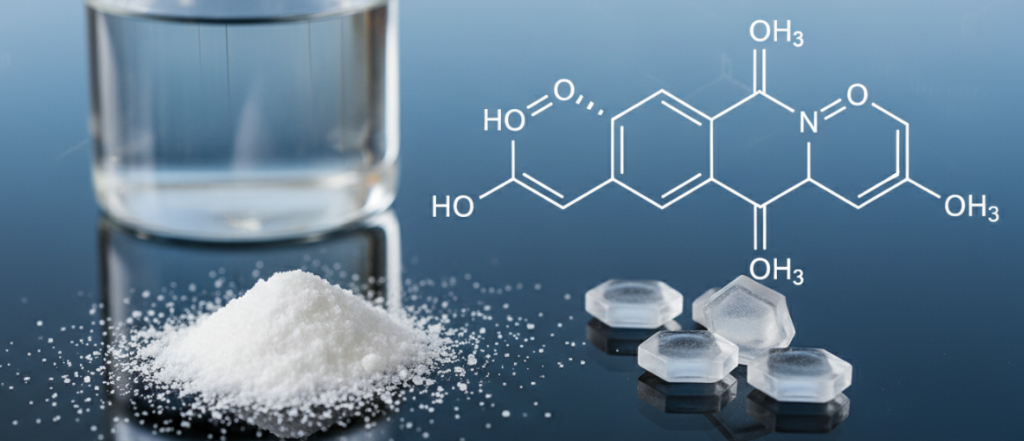
Yes, glucose is a pure substance. Specifically, it is classified as a pure chemical compound. This is because glucose has a definite and constant chemical composition, represented by the fixed formula C₆H₁₂O₆. Regardless of where the glucose comes from, its molecules always consist of exactly 6 carbon atoms, 12 hydrogen atoms, and 6 oxygen atoms bonded in a specific arrangement. Unlike mixtures, glucose cannot be separated into other substances by physical means, and it possesses distinct, constant physical properties (such as a specific melting point of approx. 146°C). Therefore, in any chemistry exam or classification test, glucose falls strictly under the category of a pure substance.
Glucose Is Absolutely Pure
To be precise, it is classified as a pure compound (Chemical Compound). Because glucose has a clear and constant chemical composition, which is our familiar fixed formula–C6H12O6.
Whether the glucose in your hand is synthesized in the laboratory or extracted from plant photosynthesis, its molecular composition will never be touched: 6 carbon atoms, 12 hydrogen atoms and 6 oxygen atoms, and they are bound together in a specific spatial structure. This is completely different from a mixture. You cannot “break” it into other substances by simple physical means. Moreover, it possesses unique physical properties (such as a specific melting point of about 146°C). Therefore, whether in the chemical examination, or in the rigorous scientific research classification, glucose is undisputed as a pure substance.
Why Does Glucose Meet The Criteria?
To really understand why glucose is pure, we have to look at the definition of “purity” in chemistry.
Pure substance refers to a substance form with constant chemical composition and characteristic properties. You can’t separate it into different components by physical separation methods such as filtration and evaporation.
Glucose fits this definition perfectly because it is the compound. In the field of chemistry, pure substances are usually divided into two categories:
Elements: A substance made up of 1 kinds of atoms (e. g., oxygen, gold).
Compound: A substance composed of two or more atoms bonded by chemical bonds in a fixed proportion.
Glucose clearly belongs to the latter. It is a unified chemical entity, not a random “hodgepodge” of 1 composition “.
Law Of Composition
The core reason why glucose is classified as a pure substance is that it strictly adheres to the “Law of Constant Composition” (also called the law of definite ratio).
The chemical formula of glucose is C6H12O6. It is a “dead order” at the molecular level “:
- It must contain carbon, hydrogen, and oxygen.
- The atomic ratio must always be 1:2:1 (I. e. 6:12:6).
- The structural arrangement of the atoms must be identical.
If you try to change the ratio — say, remove an oxygen atom and become C6H12O5
Instead of glucose, it becomes a completely different 1 of compounds. It is precisely because each glucose molecule is identical to another that we call this substance “pure”.
To the forefront of nutrition
Soluble Fiber
Soluble fiber is a highly stable, indigestible dietary ingredient that promotes weight control by increasing satiety and reducing food intake. Versatile in application, it is widely used to enhance the nutritional profile and texture of foods, beverages, and health products.
Soluble Fiber
Prebiotic
A prebiotic functions as a proliferation factor that is selectively degraded and utilized by beneficial intestinal bacteria, such as Bifidobacteria. This process exerts a positive effect on overall human health, often accompanied by metabolic advantages such as low caloric impact and minimal blood sugar fluctuations due to their unique digestive stability.
Prebiotic
Vitamins
Vitamins are essential organic micronutrients, categorized into water-soluble and fat-soluble forms, that regulate critical physiological processes such as metabolism, immunity, and coagulation. Due to their sensitivity to light, heat, and moisture,
Vitamins
Physical Properties
In the laboratory, the hardest evidence for determining whether glucose is pure often comes from its physical properties.
The nature of the mixture (impure substance) is usually floating, depending on the ratio of the ingredients. For example, the boiling point of salt water will change depending on how much salt you add, and there is never a fixed value.
But in the absence of contamination, the physical constants of glucose are fixed:
Melting Point: Pure α-D-Glucose has a melting point of about 146°C (295 °F). If a sample melts over a large temperature range (e. g., from 140°C to 150°C), the chemist immediately knows that it is an impure mixture. Sharp and fixed melting point (Sharp melting point) is the gold standard for pure substances.
Density: It has a specific density (approximately 1.54g/cm³).
These predictable properties allow scientists to lock in their identity simply by measuring it, which in reverse confirms its status as a pure substance.
Don’t Confuse Pure Substances And Mixtures
This is where students are most likely to step on the pit: often confuse “glucose” with “glucose solution” or “blood sugar.” The distinction here is crucial.
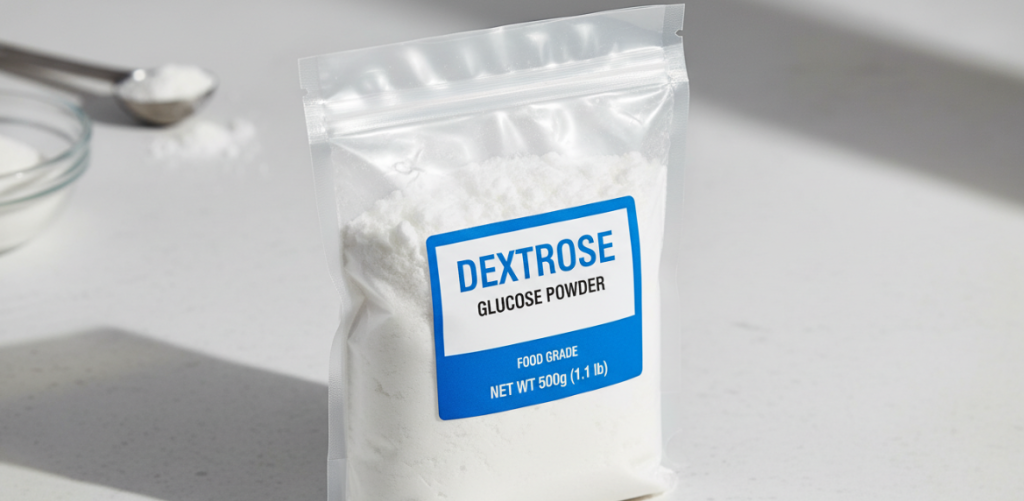
Glucose (pure): This refers to solid crystals or isolated single molecules. You can’t filter the carbon out of the hydrogen, and you can’t boil the oxygen out. Want to break them apart? You have to burn or breathe this chemical reaction in cells.
Glucose solution (mixture): When glucose is dissolved in water, a homogeneous mixture is formed. Although it appears to be one, it is not pure because you can separate glucose and water by physical means (evaporating water).
So, when we ask, “Is glucose pure?” we’re talking about the molecule itself, not its state when watered.
Author: Sarah Bennett
“With a Ph.D. in Organic Chemistry and over 10 years of teaching experience, I specialize in breaking down complex scientific concepts into clear, accurate answers for students and enthusiasts. I hope to make chemistry accessible and easy to understand.”