
 SGNUTRI


Search Product
Is Glucose The Same As Gluten
No, glucose is not the same as gluten. They are chemically distinct substances with entirely different functions in food and the human body. Glucose is a simple sugar (a carbohydrate) that serves as the body’s primary energy source, whereas gluten is a complex protein found in grains like wheat, barley, and rye. For those with Celiac disease or gluten sensitivity, glucose is safe to consume, even when it is derived from wheat. This is because the manufacturing process (hydrolysis) used to extract glucose from wheat starch is so rigorous that it removes the gluten protein to trace levels well below 20 ppm (parts per million), meeting the international safety standards for “gluten-free” labeling.
Carbohydrate VS Protein
To understand why they are different, we have to look at the essence—the chemical composition. They belong to two completely different classes of macronutrients:
- Glucose is a simple sugar.Glucose is the monosaccharide, the most basic form of carbohydrate. It has a simple molecular structure (Cexactly) and is the main fuel for human cells. It is widely found in fruits and honey, and it is also the noumenon of what we often call “blood sugar.”
- Gluten is a complex proteinGluten is not sugar, but a protein complex (mainly composed of gliadins and glutenins). It refers specifically to proteins found in grains such as wheat, barley and rye.
To compare the human body to a trolley and confuse glucose and gluten is like confusing gasoline (energy) with the metal building blocks of an engine (proteins). Glucose is extremely soluble and provides instant energy, while gluten is structural, and for some people, this protein is difficult to digest.
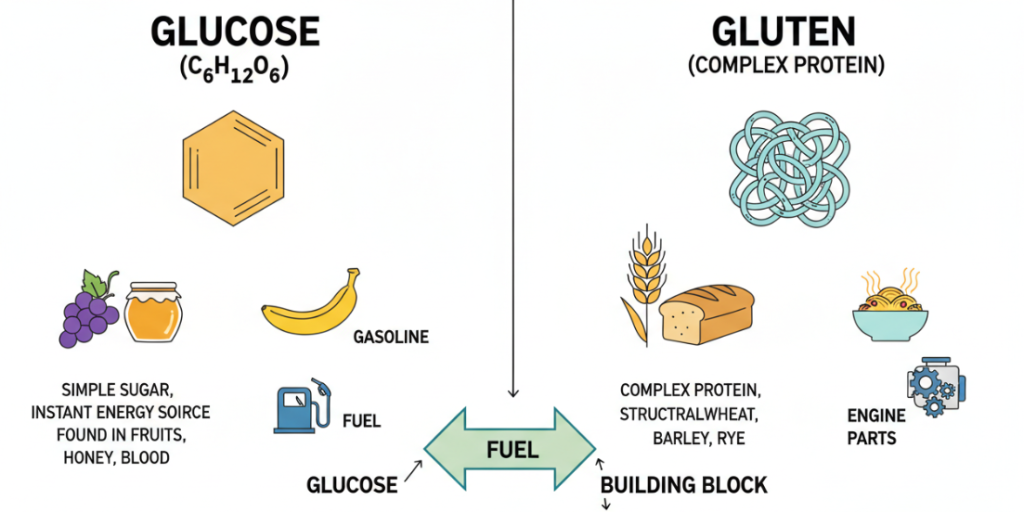
Functional Differences in the Body and Food
Because the chemical composition is different, their responsibilities in the “work” are completely different:
Role of Glucose: Energy
As the body’s primary source of energy, when you eat carbohydrates, the body breaks them down into glucose and enters the bloodstream. These “blood sugar” then enter the cells to power everything from thinking to running.
The Role of Gluten: Structure
Frankly speaking, gluten is more of a hero in the field of food science than a nutritional necessity for the human body. In baking, gluten acts as the “glue” (the word Gluten itself comes from Glue). It gives the dough elasticity, helps the bread expand and set, and provides that special chewiness.
To the forefront of nutrition
Soluble Fiber
Soluble fiber is a highly stable, indigestible dietary ingredient that promotes weight control by increasing satiety and reducing food intake. Versatile in application, it is widely used to enhance the nutritional profile and texture of foods, beverages, and health products.
Soluble Fiber
Prebiotic
A prebiotic functions as a proliferation factor that is selectively degraded and utilized by beneficial intestinal bacteria, such as Bifidobacteria. This process exerts a positive effect on overall human health, often accompanied by metabolic advantages such as low caloric impact and minimal blood sugar fluctuations due to their unique digestive stability.
Prebiotic
Vitamins
Vitamins are essential organic micronutrients, categorized into water-soluble and fat-soluble forms, that regulate critical physiological processes such as metabolism, immunity, and coagulation. Due to their sensitivity to light, heat, and moisture,
Vitamins
Can Celiac Patients Eat Glucose?
Many people search this question, in fact, not to learn biochemistry, but out of anxiety about food safety.
By definition, pure glucose is gluten-free. But what complicates matters is the raw material source—wheat-derived glucose.
Understanding the Source of Glucose in Wheat
In the food industry, glucose syrup is often extracted from wheat starch. Seeing the word “wheat”, people who need to avoid gluten usually have a big alarm. Because of the specific manufacturing process, glucose syrup derived from wheat is generally considered gluten-free and safe for people with celiac disease.
The Role of the Hydrolysis Process (Hydrolysis)
This safety is due to a extraction method called “hydrolysis.” This is a very violent chemical process that uses water and enzymes to break up the wheat starch to separate out the glucose molecules.
In this process:
- Starch is broken down into simple sugars (glucose).
- The protein component (gluten) is separated and eliminated.
- The final product is highly processed pure sugar.
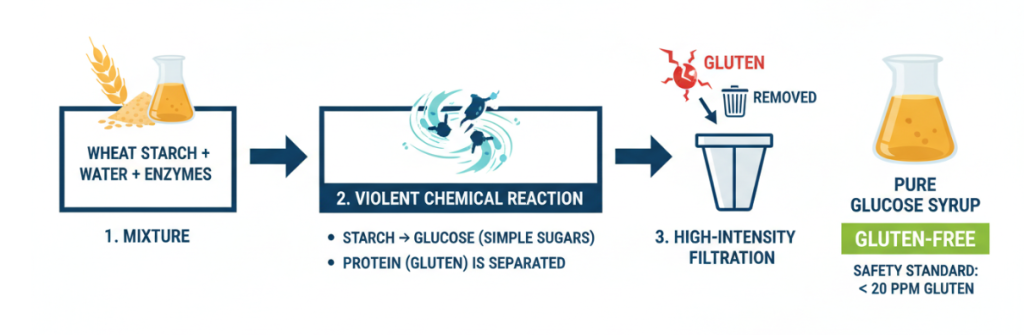
After this high-intensity filtration and chemical decomposition, the gluten protein is removed very cleanly, and the remaining glucose syrup no longer retains the harmful properties of the original wheat.
Safety Standard of 20 PPM
How do we make sure it’s really clean? Look at the data.
We rely on international food safety standards. In the United States, Canada and the European Union, for a product to be labeled “gluten-free”, it must contain less than 20 ppm (20 parts per million) of gluten. This is a safe threshold for the vast majority of patients with celiac disease, established through numerous studies.
The strict hydrolysis process ensures that the glucose is extracted from wheat, and its residue is usually well below this 20 ppm red line. As a result, you’ll find that European and international celiac disease society guidelines generally list glucose syrup and dextrose (another for glucose) as safe ingredients, regardless of its botanical origin from corn or wheat.
Author:Sarah Mitchell
I am a certified nutrition researcher and food science writer. With over 10 years of experience in dietary analysis, I specialize in decoding complex ingredient labels to help people with specific dietary needs—like Celiac disease—make safe and informed food choices.