
 SGNUTRI


Search Product
Is Resistant Dextrin Good For You
Simply put: Yes, resistant dextrins are generally considered to be beneficial to the human body.
It is the safe, water-soluble dietary fiber, and while it is usually extracted from non-GMO corn or wheat, the key is that it has been specifically processed to “resist” digestion. This means that, it is very different from ordinary starch or maltodextrin-it does not cause sharp fluctuations in blood sugar or insulin levels.
Instead, it can pass intact through the small intestine and directly into the large intestine. There, it acts as a prebiotic, providing “fuel” for your gut bacteria, supporting regular bowel movements, and helping to maintain healthy blood sugar levels.
For most people-especially those who are on a ketogenic diet or a low-carb diet-it’s an FDA-approved healthy ingredient. It allows you to effectively increase your fiber intake without the high calorie burden of sugar intake.
Resistant Dextrin Vs. Maltodextrin
People are most likely to confuse resistant dextrins with normal maltodextrins. While they may be derived from the same plant (such as corn or wheat), their effects on your body are worlds apart.
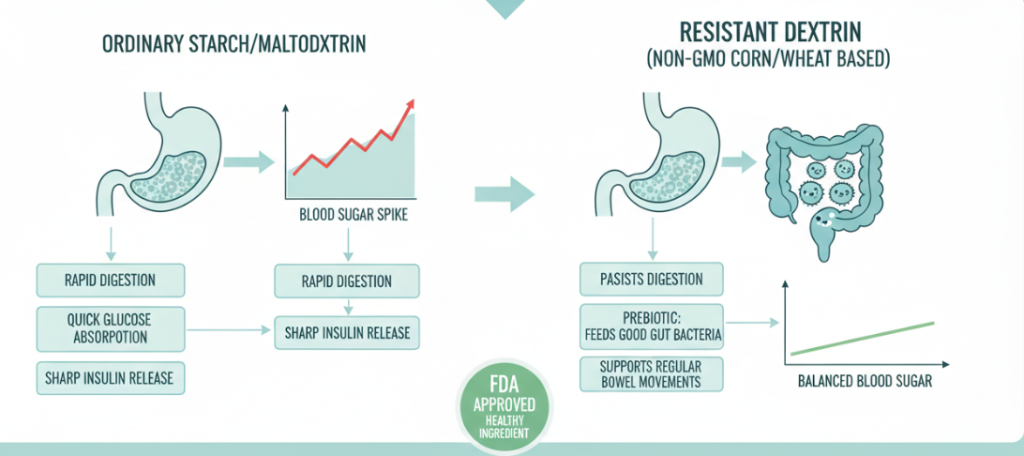
As mentioned earlier, resistant dextrins are created to “resist” digestion, while maltodextrins are designed for “rapid absorption”. This mechanistic difference determines why resistant amylin is a better choice for people with health concerns:
| Feature | Resistant Dextrin | Maltodextrin |
| Digestibility | Resists digestion (passes to the colon) | Rapidly digested (absorbed in small intestine) |
| Blood Sugar Impact | No spike (Maintains healthy levels) | High spike (High Glycemic Index) |
| Insulin Response | Minimal to none | High insulin trigger |
| Primary Function | Prebiotic fiber & digestive support | Quick energy source & thickener |
| Keto Friendly? | Yes (Fiber is deducted from net carbs) | No (High carb count) |
How It Supports Gut Health And Digestion
The health benefits of resistant dextrin are largely due to its “journey” in the human body “.
Because this molecular structure can bypass the digestion and absorption of the small intestine, it can reach the large intestine in an intact form. Based on my understanding of the gut microecology, it performs two key functions here:
- Prebiotic action: it is the food of intestinal beneficial bacteria. As I’m sure you know, a healthy microbiome is the foundation of overall health.
- Regularity: By increasing stool volume and water absorption, it can support regular defecation. I like this because it can help prevent the discomfort of constipation, but without the “irritating” or severe bloating sensation of some powerful fiber supplements.
Compatibility Of Blood Glucose Management With The Ketogenic Diet
Resistant dextrin is a fantastic tool for those who are managing their weight or blood sugar.
Since it does not break down into glucose, this allows us to increase fiber intake without stimulating insulin secretion.
- For ketogenic dieters: This is an extremely valuable ingredient. It adds volume and taste to low-carb foods, but does not increase the “net carbs” that disrupt ketogenesis.
- For blood sugar management: It helps maintain healthy blood sugar levels and is a safe additive for those who need to monitor their sugar intake at all times.
To the forefront of nutrition
Soluble Fiber
Soluble fiber is a highly stable, indigestible dietary ingredient that promotes weight control by increasing satiety and reducing food intake. Versatile in application, it is widely used to enhance the nutritional profile and texture of foods, beverages, and health products.
Soluble Fiber
Prebiotic
A prebiotic functions as a proliferation factor that is selectively degraded and utilized by beneficial intestinal bacteria, such as Bifidobacteria. This process exerts a positive effect on overall human health, often accompanied by metabolic advantages such as low caloric impact and minimal blood sugar fluctuations due to their unique digestive stability.
Prebiotic
Vitamins
Vitamins are essential organic micronutrients, categorized into water-soluble and fat-soluble forms, that regulate critical physiological processes such as metabolism, immunity, and coagulation. Due to their sensitivity to light, heat, and moisture,
Vitamins
FAQ: Frequently Asked Questions About Resistant Dextrin
A: Resistant dextrins are typically derived from natural sources, such as non-transgenic corn or wheat. However, it must be noted that it does undergo a specific process of changing molecular bonds, making it “resistant” to digestion. So while it comes from natural plants, in functional nutrition we see it more as a functional food ingredient that has been processed for health benefits.
A: Resistant dextrin is very safe and FDA approved for the vast majority of people. However, according to the principle of fermentation in the intestine to support defecation, if you suddenly ingest a very large amount in a short period of time, it may cause minor digestive adjustments (such as flatulence). But it is generally much better tolerated than other types of fiber.
Medical Disclaimer
The information provided in this article regarding resistant dextrin is for educational purposes only and is based on its general classification as a dietary fiber. While resistant dextrin is recognized by the FDA as a dietary fiber, this content is not intended to substitute for professional medical advice, diagnosis, or treatment. Always seek the advice of your physician or other qualified health provider with any questions you may have regarding a medical condition or dietary changes.
Author: Sarah Jenkins
“Hi, I’m a Certified Nutrition Specialist and food ingredient researcher. With over 10 years of experience in functional nutrition, I specialize in analyzing how dietary fibers like resistant dextrin impact gut health and metabolism. “