
 SGNUTRI


Search Product
Is Soluble Corn Fiber Good For You
Simple and direct answer: Yes, soluble corn fiber is generally considered to be beneficial to health, especially if you are on a strict ketogenic diet, a low-carb diet, or if you have diabetes and need to control your blood sugar.
While it does come from corn, don’t hear “corn” and think it’s a starch bomb. Soluble Corn Fiber (SCF) is essentially indigestible carbohydrate with a very low glycemic index (GI). It means that by the time it passes through your digestive system, it has little effect on blood sugar or insulin levels.
For those who are used to finely counting macronutrients, SCF is indeed a genuine “ketogenic-friendly” ingredient: it resists digestion in the small intestine, mainly fermentation in the colon. So when calculating Net Carbs, you can safely subtract it from your total carbs. This is the safe and stable ingredient, which can not only help you maintain the ketosis state, but also avoid the serious gastrointestinal discomfort often caused by sugar alcohol or chicory root fiber.
Why Is Soluble Corn Fiber “Ketogenic Friendly?”
Soluble corn fiber is good for you-especially in the context of a ketogenic lifestyle-thanks largely to its unique metabolic profile.
Ordinary corn starch or corn syrup is full of easily digestible carbohydrates, and you eat it, your blood sugar spikes. But SCF is different. It is enzymatically treated, and this treatment establishes a chemical bond that the human small intestine cannot break. Because it resists digestion, it doesn’t fill your glycogen stores like sugar or starch.

For ketogenic dieters, this is crucial in two ways:
Maintaining a ketosis state: Ingesting SCF will not kick you out of ketosis because it does not provide the glucose load required to shift the body’s metabolism back to “burning sugar mode.
Calculate net carbon: When you read the nutrition label and see the term “soluble corn fiber”, you can confidently deduct this part of the grams. A very common example: a protein bar that has 20 grams of total carbohydrate but 15 grams of soluble corn fiber actually produces only 5 grams of net carbohydrate.
Effects On Blood Glucose And Insulin Levels
For people with diabetes or pre-diabetes, the question of whether soluble corn fiber is healthy often lies at the heart of blood sugar control.
SCF has a very low glycemic index (GI). Clinical studies have also repeatedly confirmed this: the intake of soluble corn fiber causes a much lower glycemic response compared to standard carbohydrates.
Because it passes through the system mostly in an undigested state, it avoids triggering the kind of violent insulin spikes that are often the culprit for fat storage and post-meal energy collapse. This makes SCF an excellent sweetener carrier or filler in “sugar-free” or “diabetes-friendly” foods, allowing you to enjoy sweets without suffering the metabolic consequences of sugar.
To the forefront of nutrition
Soluble Fiber
Soluble fiber is a highly stable, indigestible dietary ingredient that promotes weight control by increasing satiety and reducing food intake. Versatile in application, it is widely used to enhance the nutritional profile and texture of foods, beverages, and health products.
Soluble Fiber
Prebiotic
A prebiotic functions as a proliferation factor that is selectively degraded and utilized by beneficial intestinal bacteria, such as Bifidobacteria. This process exerts a positive effect on overall human health, often accompanied by metabolic advantages such as low caloric impact and minimal blood sugar fluctuations due to their unique digestive stability.
Prebiotic
Vitamins
Vitamins are essential organic micronutrients, categorized into water-soluble and fat-soluble forms, that regulate critical physiological processes such as metabolism, immunity, and coagulation. Due to their sensitivity to light, heat, and moisture,
Vitamins
Soluble Corn Fiber Vs. Other Fibers: A Digestive Advantage
One of the biggest pain points for low-carb dieters is often the digestive distress caused by sugar and fiber substitutes.
Many of the so-called “healthy” snacks on the market rely heavily on sugar alcohols (such as maltitol and sorbitol) or inulin (chicory root fiber). While they are also technically low-carb, in the cases I ‘ve been exposed to, such ingredients often cause severe bloating, gas, and even diarrhea effects.
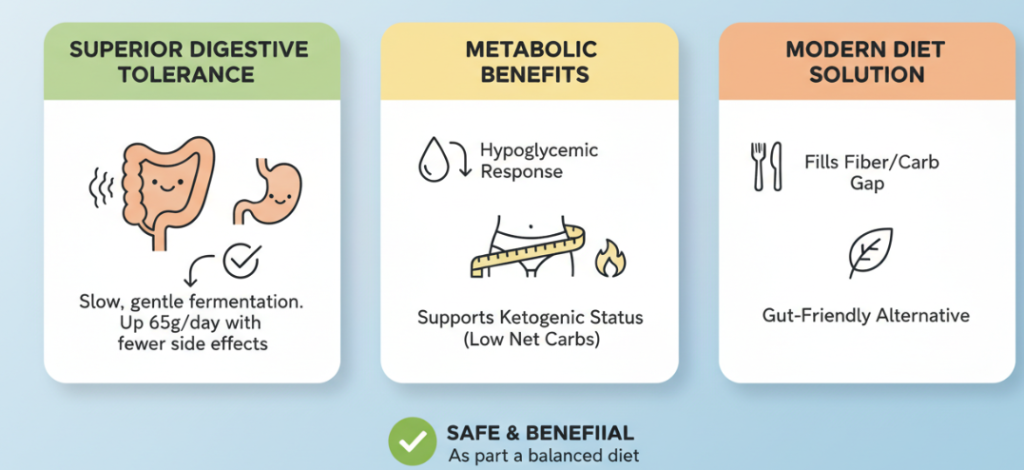
Soluble corn fiber stands out because of its superior digestive tolerance.
Fermentation rate: Although SCF is also fermented by bacteria in the colon (which is actually beneficial for gut health), the process is much slower and gentler than inulin.
Fewer side effects: Most people can tolerate high doses of soluble corn fiber (usually up to 65 grams per day) without experiencing the “harsh digestive side effects” I mentioned earlier “.
Is Soluble Corn Fiber A Safe Choice?
Based on its physiological effects, soluble corn fiber is indeed a very beneficial component of the modern diet.
It cleverly fills the gap between “needing dietary fiber” and “limiting carbohydrates. It provides a hypoglycemic response, supports ketogenic status with a low net carbohydrate count, and provides a more gastrointestinal alternative than other rough fibers. As long as it is part of a balanced, healthy diet, soluble corn fiber can do you more good than harm.
Frequently Asked Questions About Soluble Corn Fiber (FAQ)
A: No. SCF is the non-digestible carbohydrate. Because it resists digestion in the small intestine, it does not provide the glucose load required to disrupt ketosis. It is considered to be the safe, stable ingredient for people who strictly follow the ketogenic diet.
A: Soluble corn fiber has a very low glycemic index and has little effect on blood sugar or insulin levels. Unlike standard corn-based carbohydrates, SCF mostly passes through the system undigested, making it a suitable choice for people with diabetes or anyone monitoring blood glucose responses.
A: Generally not. Because soluble corn fiber is a non-digestible carbohydrate that is fermented in the colon rather than absorbed like sugar, it can usually be subtracted from the total carbohydrate count. This allows low-carb dieters to calculate lower “net carbon” values when eating foods containing this ingredient.
A: Soluble corn fiber is known for high digestive tolerance compared to other fibers. While fibers like chicory root or certain sugar alcohols often cause severe digestive side effects (such as severe bloating or flatulence), SCF ferments more gently in the colon. Most people find it much more comfortable to use it to supplement their fiber intake without causing stomach upset.
Sources
1.Tan, W. S. K., Chia, P. F. W., Ponnalagu, S., Karnik, K., & Henry, C. J. (2020). The role of soluble corn fiber on glycemic and insulin response. Nutrients, 12(4), 961.https://pmc.ncbi.nlm.nih.gov/articles/PMC7231297/
Author:Mark Stevens
“Hi, I’m a nutrition researcher specializing in metabolic health and the ketogenic diet. I focus on analyzing food ingredients to help you navigate low-carb living without compromising your blood sugar. I hope to provide science-backed insights on ingredients like soluble corn fiber, ensuring you can calculate net carbs confidently while maintaining optimal digestive health.”