
 SGNUTRI


Search Product
What Color Is Glucose
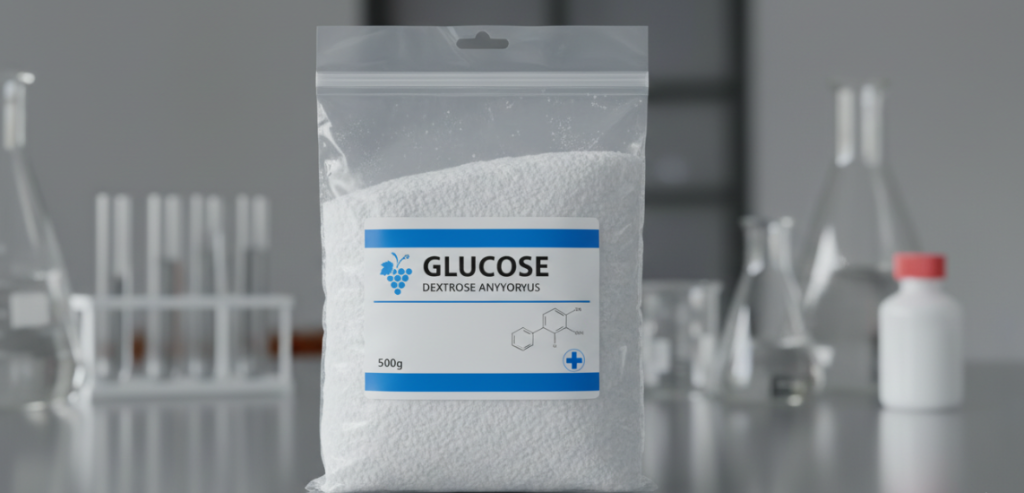
In pure physical form, glucose is a white crystalline solid or colorless powder. It is not naturally yellow, orange, or blue. Once dissolved in water to form an aqueous solution, glucose becomes completely transparent and colorless. The reason why people are confused about its color usually stems from three sources: chemical reactions (such as Benedict’s test that will turn it brick red), medical diagnostic test strips (which may turn green or brown), and illustrations in biology textbooks (often artificially painted yellow or orange for comparison).
Physical Appearance Of Pure Glucose
To understand the true color of glucose, we have to look at its segregation state, which is often referred to as D-glucose or dextrose in chemistry. In fact, just like the sucrose we usually eat, pure glucose exists in the form of a white crystalline solid. When we think it is “white,” it is because these crystals reflect all wavelengths of visible light equally. If you grind these crystals into a fine powder in the laboratory, it will still be white, just like flour or powdered sugar. It does not have any pigment of its own, so it is impossible to show blue, yellow, or any other bright color in the spectrum.
Glucose In Aqueous Solution
Once glucose is mixed into water, its physical appearance changes from white to colorless. As the glucose molecules dissolve, they disperse in the water, allowing light to pass through the liquid with little apparent scattering or absorption in the visible spectrum. A cup of pure glucose water looks exactly like a cup of ordinary tap water: clear and transparent. As long as it is completely dissolved, it will not make the water yellow or become cloudy and white.
Why Do People Always Think Glucose Has Color?
Since glucose is white or colorless in science, why do so many people search for its color and even have misunderstandings? This misunderstanding is actually not visual, but “contextual.” In everyday life, or in non-professional settings, we rarely stare at “pure” glucose; instead, we usually approach it through chemical indicators, medical tools, and instructional illustrations.
To the forefront of nutrition
Always provide high standards of food additives and nutrition.Delivering innovative solutions that enhance the flavor, texture, and nutritional profile of food,supporting healthier, sustainable products for the food industry.
Chemical Reaction: Benedict Test
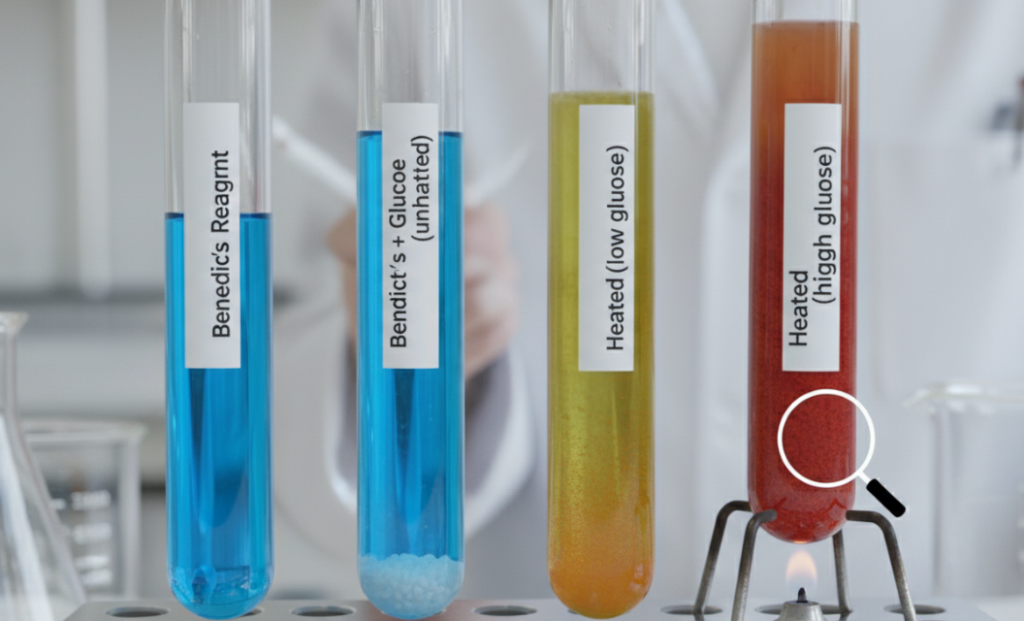
The most common reason students associate glucose with brick red or orange is the Benedict test. This is a standard chemical test for detecting the presence of reducing sugars.
- Reagent: The Benedict reagent itself is a bright blue liquid.
- Reaction: When it is mixed with glucose and heated, a chemical reaction occurs. The copper (II) ions in the blue reagent are reduced to copper (I) oxide.
- Result: This reaction produces a precipitate, which is usually brick red, orange, or yellow, depending on the sugar concentration.
I want to emphasize one point here: that red color is the result of copper deposits, not the discoloration of the glucose itself. Glucose is just the “pusher” that pulls the trigger and triggers change.
Medical Diagnostic Test Strips
For those who manage diabetes or work in the medical field like me, glucose is often associated with green, brown, or dark blue on diagnostic test strips. Urinalysis strips or blood glucose monitors use an enzymatic reaction (usually involving glucose oxidase or peroxidase) to detect sugar levels. When glucose interacts with chemicals embedded in the test paper, the dye changes color to indicate concentration. The appearance of dark brown or green patches on the test paper does mean that there is glucose, but this is purely the color after the reaction of chemical dyes, and it is by no means that glucose molecules appear there in their natural form.
Illustration Of Biology Textbook
This is probably the most common source of confusion—textbooks. In biology textbooks, diagrams of cellular respiration or photosynthesis often use arbitrary color codes to help students distinguish between different molecules. The carbon atoms are usually displayed in black. Oxygen atoms are usually red. Glucose molecules (often drawn as hexagons) are often painted yellow or orange. Publishers do this for visual contrast. Just imagine, if the textbook printed a white glucose molecule on white paper, then nothing can be seen. So while yellow is a useful teaching aid, it also creates the illusion that the molecule itself is that hue.
Author:Tom
“I am a science researcher and educator dedicated to demystifying complex chemical concepts. With a passion for accurate scientific communication, I focus on correcting common textbook misconceptions to provide clear, fact-based answers for students and curious minds.”