
 SGNUTRI


Search Product
What Does A Prebiotic Do
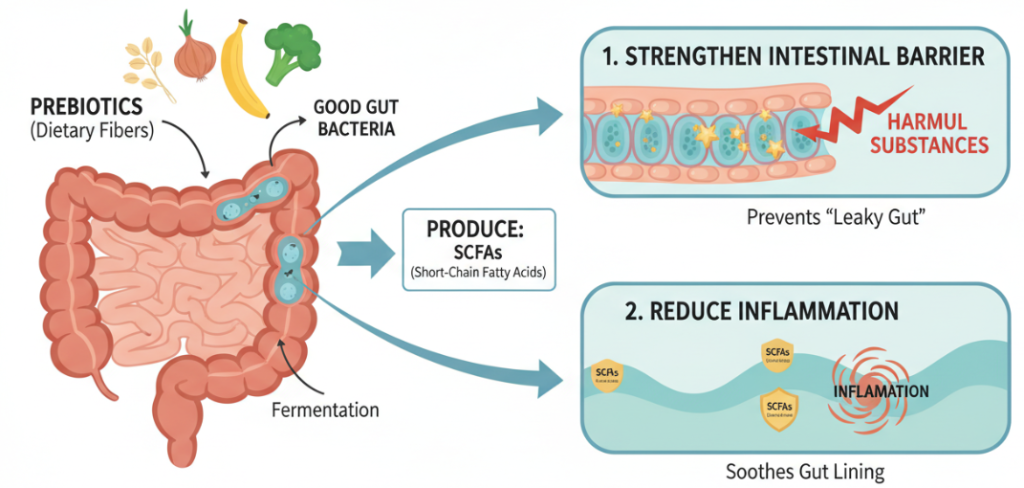
Simply put, a prebiotic acts as a specialized food source for the healthy bacteria already living in your gut. Unlike probiotics, which are live beneficial bacteria, prebiotics are types of dietary fiber (mostly carbohydrates) that the human body cannot digest. Instead, they travel intact through your digestive system to the colon, where they undergo fermentation. This fermentation process stimulates the growth and activity of good bacteria (like Bifidobacteria and Lactobacilli). Think of your gut microbiome as a garden: if probiotics are the “seeds” or “plants,” then prebiotics are the “fertilizer” that ensures those plants survive and thrive. By feeding your good bacteria, prebiotics help produce Short-Chain Fatty Acids (SCFAs), which are crucial for strengthening the gut barrier, reducing inflammation, regulating bowel movements, and even supporting immune system function.
Fantastic Drifting Of Fiber
To really understand what a prebiotic is doing, we have to look at its unique journey through the body.
The special thing about prebiotics is that it “resists” digestion. While the body secretes enzymes to break down most of the food in the stomach and small intestine, we lack the specific enzymes needed to break down prebiotic fiber.
Because they are not absorbed in the upper part of the digestive tract, these fibers reach the colon (large intestine) intact. This “safe passage” is extremely critical. It ensures that the fuel is delivered accurately to the base camp where your gut microbiome is concentrated.
Once in the colon, the process shifts from simple transport to biological activation.
Fermentation Process: Feeding Good Bacteria
When these intact fibers reach the colon, they initiate a crucial metabolic process called fermentation. This is the core answer to the biological role of prebiotics.
The good bacteria that live in your gut—especially strains like bifidobacteria and lactobacilli—have the ability to break down these fibers. By fermenting these fibers, prebiotics effectively stimulate the growth and activity of specific bacterial communities.
This process of “selective feeding” is important because it precisely targets beneficial microbes rather than harmful ones, helping to maintain the balance of the internal ecosystem.
To the forefront of nutrition
Soluble Fiber
Soluble fiber is a highly stable, indigestible dietary ingredient that promotes weight control by increasing satiety and reducing food intake. Versatile in application, it is widely used to enhance the nutritional profile and texture of foods, beverages, and health products.
Soluble Fiber
Prebiotic
A prebiotic functions as a proliferation factor that is selectively degraded and utilized by beneficial intestinal bacteria, such as Bifidobacteria. This process exerts a positive effect on overall human health, often accompanied by metabolic advantages such as low caloric impact and minimal blood sugar fluctuations due to their unique digestive stability.
Prebiotic
Vitamins
Vitamins are essential organic micronutrients, categorized into water-soluble and fat-soluble forms, that regulate critical physiological processes such as metabolism, immunity, and coagulation. Due to their sensitivity to light, heat, and moisture,
Vitamins
Distinguishing Prebiotics From Probiotics
The most confusing thing in the field of intestinal health is the difference between prebiotics and probiotics. To be honest, the garden analogy is often the most intelligible explanation:
Probiotics are “seeds” or “plants”: these are the living bacteria themselves. Replenishing them is like planting new flowers in the garden.
Prebiotics are “fertilizers”: the fuel that allows existing plants (bacteria) to grow strong and spread.
Without the “fertilizer” provided by prebiotics, those “seeds” (probiotics) may have a hard time surviving or being permanently settled in the intestinal environment. Therefore, the role of prebiotics is to ensure the sustainability of the microbiota by creating an environment conducive to the long-term prosperity of good bacteria.
Production Of Short Chain Fatty Acids (SCFAs)
The most significant result of the fermentation process is the production of short chain fatty acids (SCFAs). When you ask, “What do prebiotics do?”, the production of SCFAs may be the answer that has the greatest impact on your overall health.
These metabolic byproducts perform several of the key functions we mentioned at the beginning:
Strengthen the intestinal barrier
SCFAs are a major energy source for colon cells. By powering these cells, prebiotics help strengthen the physical barrier of the gut. A strong intestinal barrier is essential to prevent harmful substances from “leaking” out of the intestine into the bloodstream (also known as intestinal leakage).
Reduce inflammation
Fermentation of prebiotics helps regulate the inflammatory response. SCFAs have anti-inflammatory properties and can soothe the lining of the gut, which from a clinical perspective may help reduce the risk of chronic inflammation in the digestive tract.
Regulate defecation
Prebiotics play a role in maintaining regularity by affecting the intestinal environment and fecal volume through fiber content. They help regulate bowel movements and make the entire digestive process more comfortable.
Supports immune system function
Finally, don’t forget that a large part 1 the body’s immune system is actually located in the gut. By feeding good bacteria and strengthening the intestinal barrier through SCFAs, prebiotics indirectly support immune function, helping the body to more effectively defend against pathogens.
Medical Disclaimer
Disclaimer: The information provided in this article is for informational purposes only and is not intended to be a substitute for professional medical advice, diagnosis or treatment. If you have any questions about a medical condition or dietary change, always consult your doctor or other qualified health care provider. Do not neglect professional medical advice or delay seeking medical advice because of what you read on this website.
Sources
Carlson, J. L., Erickson, J. M., Lloyd, B. B., & Slavin, J. L. (2018). Health Effects and Sources of Prebiotic Dietary Fiber. Current Developments in Nutrition, 2(3). Available at: https://pmc.ncbi.nlm.nih.gov/articles/PMC6041804/
Gibson, G. R., et al. (2017). Expert consensus document: The International Scientific Association for Probiotics and Prebiotics (ISAPP) consensus statement on the definition and scope of prebiotics. Nature Reviews Gastroenterology & Hepatology, 14, 491–502. Available at: https://www.nature.com/articles/nrgastro.2017.75
Author: Sarah Mitchell
Hi, I’m a Certified Nutritionist and health writer specializing in gut microbiome science. I am passionate about bridging the gap between complex medical research and your daily diet. I hope to help you understand how simple dietary changes—like understanding what a prebiotic does—can act as the “fertilizer” for a healthier, happier life. I rely on peer-reviewed research to bring you accurate, actionable health advice.