
 SGNUTRI


Search Product
What Does Soluble Fiber Do
Soluble dietary fiber is a very powerful metabolic regulator in your digestive tract. Most of the time, people only know that fiber can “laxate”, but the mechanism of soluble fiber is much finer. Simply put, it dissolves in water when eaten and turns a sticky, gelatinous substance. Don’t underestimate this “gel effect”, which provides 3 very specific health solutions: it actively lowers LDL (bad cholesterol) by binding bile acids; it stabilizes blood sugar levels by preventing post-prandial insulin surges; and it feeds the beneficial bacteria in the gut through fermentation. If you are trying to manage cardiovascular risk or improve metabolic problems, this fiber is definitely a key nutrient for you to regain control of your body’s internal balance.

The Operating Mechanism Of The “Gel” Effect
To really understand what soluble fiber is doing, we have to look at its physical properties. The soluble fibers are particularly “hydrophilic”. Once in the digestive system, it absorbs water and transforms from a solid state into a thick, viscous gel. This physical transformation process is the underlying mechanism for all the metabolic benefits that follow. This gel increases the viscosity of the gastrointestinal contents and physically slows down the movement of food in the digestive tract. It not only increases the volume of stool, but more importantly, it fundamentally changes the rhythm of the body’s decomposition and absorption of nutrients.
1. Lowering LDL cholesterol by binding bile acids
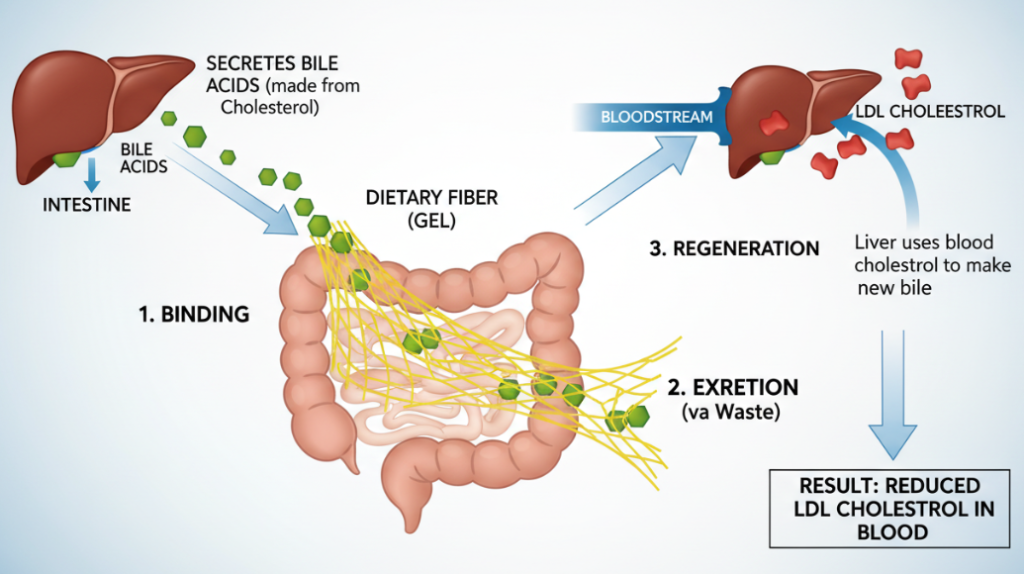
It can actively lower low-density lipoprotein (LDL), which is what we often call “bad” cholesterol. This process occurs entirely in the digestive tract, and the mechanism is called “bile acid sequestration”. Based on the “gel” effect, the process is as follows:
- Binding: When that gel-like mass of fiber flows through the intestine, it clings to bile acids. You know, bile acids are compounds made by the liver using cholesterol, which is originally used by the body to digest fat.
- Excretion: Because the fibers hold on to these bile acids, they cannot be reabsorbed by the blood and can only be excreted along with the waste products.
- Regeneration: This is when the liver finds that it has lost bile acids, and in order to replenish it, it must draw more cholesterol from the blood to make new bile.
The direct result of this cascade of biological reactions is a drop in the level of LDL cholesterol in the blood. So this is definitely a powerful dietary tool for managing cardiovascular risk.
2. Stabilize blood sugar and prevent insulin spikes
The second important metabolic task of soluble fiber is blood glucose control. For those concerned with metabolic balance, the speed at which sugar enters the bloodstream is crucial. Because the viscous gel formed by soluble fiber slows down digestion, it acts as a perfect “buffer zone” in the process of carbohydrate decomposition.
Without this buffer, carbohydrates are quickly digested, and glucose floods into the bloodstream, forcing the pancreas to release large amounts of insulin. By slowing this process, soluble fiber ensures that glucose is released more smoothly into the bloodstream. This can effectively prevent the dangerous “blood sugar roller coaster” (skyrocketing and plummeting), reduce the burden of the body’s insulin response, and allow the body to effectively maintain internal stability after meals.
3. Support gut health through fermentation
This last metabolic advantage occurs in the colon. Although our enzymes cannot digest this fiber, it is the top fuel for the intestinal flora. Once in the colon, soluble fiber undergoes “fermentation”-the process by which beneficial bacteria break down fiber. This fermentation step is crucial because it directly feeds and promotes the growth of “good” bacteria. A thriving probiotic community is fundamental to maintaining a healthy gut barrier and overall digestive health.
Regain Internal Balance
In general, when you ask “what is soluble fiber for”, the answer lies in its “triple hit” on the body’s metabolism. By dissolving in water to form that regulatory gel, it triggers a chain of positive health effects: catching bile acids to lower cholesterol, slowing absorption to stabilize blood sugar, and fermentation to nourish the gut. For those looking to manage metabolic problems, soluble fiber is your most indispensable lever to restore and maintain physiological balance within your body.
Author: James Thorne
“I’m a nutrition researcher dedicated to metabolic health. I focus on how specific nutrients, like soluble fiber, function as physiological regulators within the digestive tract. My work aims to help you understand the mechanics of digestion to regain control over your body’s internal balance.”
The prev: Does Soluble Fiber Increase SatietyThe next: Difference Soluble And Insoluble Fiber
Related recommendations
-

How Long Does It Take For Vitamins To Start Working
241Curious When You’ll Feel The Effects Of Your Vitamins? Learn How Vitamin Type And Deficiency Impact The Timeline For Results.
View details -

What Foods Contain Maltodextrin?
237See What Foods Contain Maltodextrin.This Article Reveals The Hidden List Causing Blood Sugar Spikes And Ruining Keto.
View details -
Is Glucose The Same As Gluten
249No, Glucose Is Not Gluten. Glucose Is A Sugar, While Gluten Is A Protein. Learn Why Glucose Is Safe For Celiacs.
View details -

Maltodextrin Before Workout Dosage & Timing
320Should You Use Maltodextrin Before Workout? Discover The Exact Dosage And Timing To Boost Energy And Avoid The Sugar Crash.
View details