
 SGNUTRI


Search Product
What Is Anhydrous Dextrose Made From
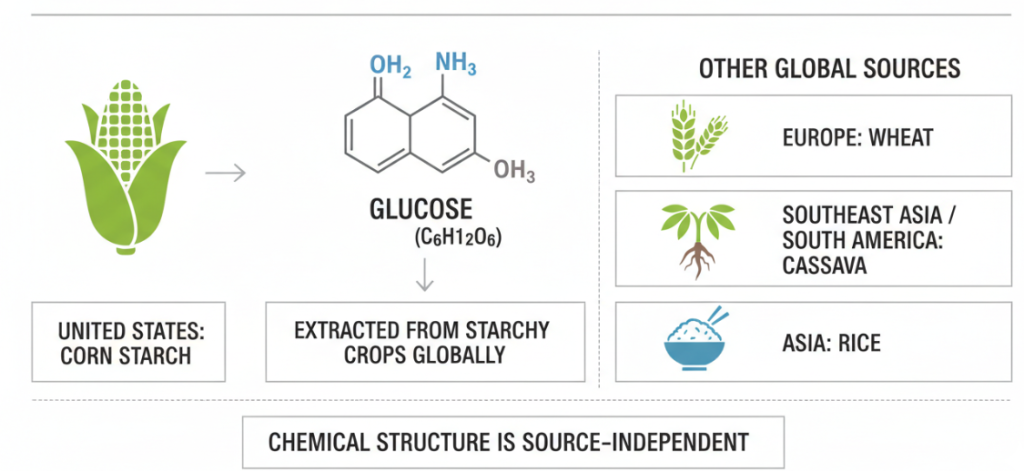
Anhydrous glucose is pure D-glucose extracted from plant starch by enzymatic hydrolysis process . While corn is the most common source, wheat, cassava, and even rice can be used as substrates, depending on the region of production.
The whole production process actually uses natural enzymes to “cut” long chains of starch molecules into simple sugar molecules, which are then highly refined and finally crystallized at high temperatures to remove all water molecules. The finished product is a fine white powder, 100 percent plant-based. Because the processing depth is very high, it is usually gluten-free , and the chemical structure is exactly the same as the blood sugar in our body, so the body absorbs it very quickly.
The Role Of Corn Starch And Plant Origins
While the simplest answer to the question “What is anhydrous glucose made of?” is “plants”, the specific origin of plants is greatly influenced by geographical location.In the United States, corn production is large, so corn starch is the absolute mainstream raw material. However, the chemical structure of glucose is not picky source, as long as it is rich in starch crops can be extracted. In some areas where corn is not so strong, factories will adapt to local conditions:
Wheat: very common in parts of Europe.
Cassava (and cassava root): Commonly used in parts of Southeast Asia and South America.
Rice: Specific markets in Asia will use this.
Regardless of the starting crop, our goal is the same: to isolate the starch component. From a chemical point of view, starch is essentially a complex carbohydrate composed of long chains of glucose molecules. Whether it is corn, wheat or cassava, for our research and development, they are just “carriers” that provide these starch chains, which will eventually be processed into anhydrous glucose.
Understanding Enzymatic Hydrolysis
From a starch-rich plant into a pile of fine white powder, the middle is enzymolysis. This is the central mechanism that defines the source of anhydrous glucose at the molecular level. Starch in the original state is a long chain molecule (polysaccharide), the human body is not directly absorbed. To convert these starches into glucose, the simple sugar, manufacturers use natural enzymes. These enzymes act as biocatalysts, responsible for “shearing” the bonds that connect the long starch chains. This process is generally divided into two steps:
Liquefaction : Mixing starch with water and adding specific enzymes to break up the solid starch into a liquid state.
Saccharification : The introduction of more enzymes to completely break down these chains into simple glucose units.
This is actually a simulation of the human digestive system breaking down food, but we are doing it in a highly controlled industrial environment to ensure that the purity is high enough.
The Refining Process
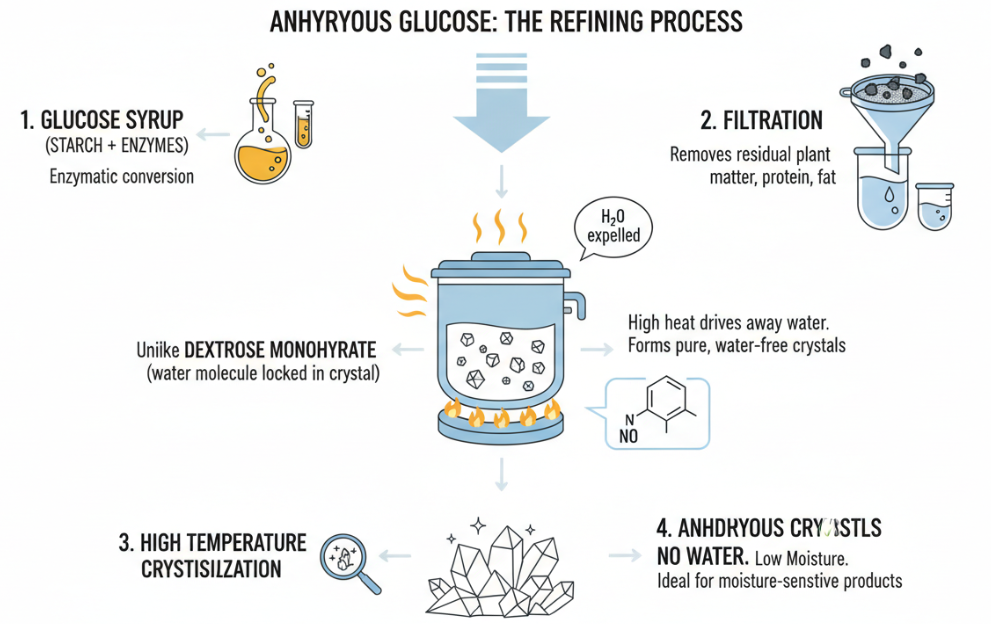
To truly understand anhydrous glucose, it is important to understand the term “anhydrous (Anhydrous). It literally means “no water”. When the enzymatic process turns the starch into glucose syrup, the liquid undergoes extremely rigorous refining. Usually includes:
Filtration: Thoroughly removes residual plant matter, protein or fat.
High temperature crystallization: this is the key watershed. Unlike glucose monohydrate (Dextrose Monohydrate, this sugar has a water molecule locked in its crystal structure), anhydrous glucose crystallizes at high temperatures. High temperatures drive away water, ensuring that the final crystal structure does not contain any water molecules. This results in a finished product with extremely high potency and a much lower moisture content than other forms of sugar. This is very important when formulating, especially for products that are sensitive to moisture.
Chemical Identity And Dietary Attributes
Because anhydrous glucose is a highly processed vegetable starch product, it has several properties that are critical to health and diet:
100 per cent plant-based: nothing but corn, wheat, rice or cassava, so it’s perfectly suited for vegetarians.
Gluten-free state: Even with a wheat base, the gluten protein is usually removed early after that thorough refining and hydrolysis. It is usually considered gluten-free, but for people with severe allergies, I still recommend checking the statement of the specific supplier.
Biological identity: This process produces D-glucose, which is chemically identical to glucose in human blood. This is why we call it “fast energy”-the body doesn’t have to work hard to digest it, it can recognize and absorb it directly.
Author:Jack
“I am a specialized food ingredient researcher dedicated to demystifying the science behind what we eat. With a focus on food manufacturing processes—from enzymatic hydrolysis to crystallization—I break down technical labels into clear, fact-based insights. I hope to help you understand the precise plant origins and chemical makeup of additives like anhydrous dextrose.”