
 SGNUTRI


Search Product
What Is The Difference Between Probiotic And Prebiotics
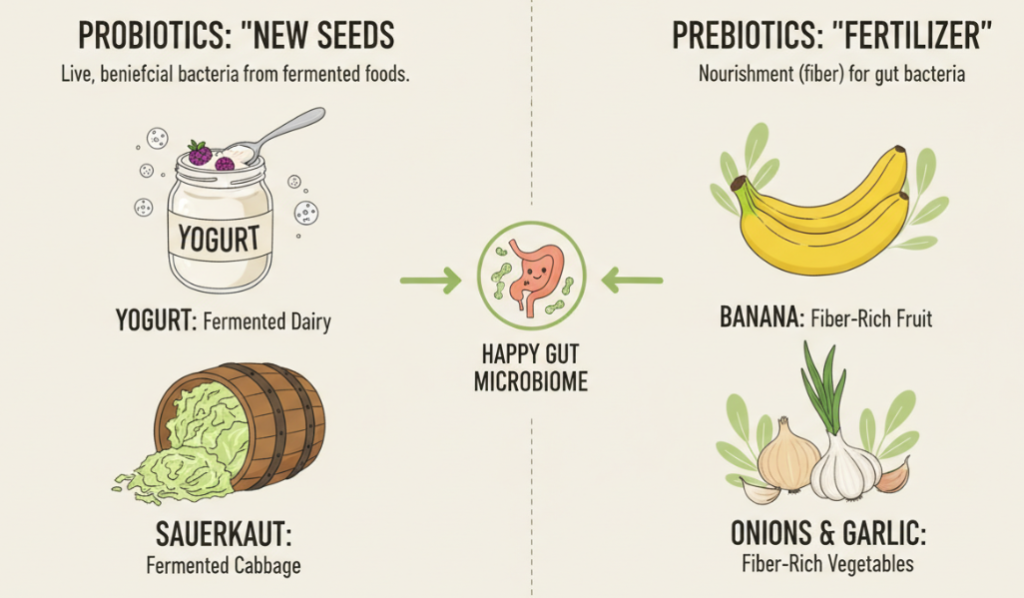
To put it simply, probiotics are the “living reinforcements” (beneficial bacteria) you consume to increase the absolute number of good bacteria in your intestines. Prebiotics are specific plant fibers that the human body cannot digest. They act as “food” and are specially used to nourish and stimulate the growth of good bacteria that have settled in your intestines.
In order to make it easy to understand, I usually recommend thinking of the gut microbiota as a garden when consulting:
- Probiotics are “seeds” (actual plants) that you need to sow into the soil.
- Prebiotics are “fertilizers” (fuel) that help these plants survive and thrive.
To maintain a balanced digestive system, the two are indispensable, but their sources are very different: probiotics are mainly found in fermented foods (such as yogurt and sauerkraut), while prebiotics are hidden in fiber-rich carbohydrates. In (such as bananas, onions and garlic).

Probiotics: It’s A ‘Seed’
To really understand “what is the difference between probiotic and prebiotics”, we have to take a closer look at “seeds”.
Probiotics are live microorganisms. When you ingest them, you’re essentially introducing new life forms into your digestive tract. Recall the garden metaphor, if your gut “soil” is empty or lacks the diversity of the flora, you need to sow seeds to bring it back to life.
From a biological point of view, these are the “recruits” who arrive on the front lines to support your immune system and digestive function “. They can increase the overall population of beneficial bacteria, crowd out harmful bacteria through the “occupancy effect” and maintain the order of the internal ecosystem. Without the introduction of these active strains, the garden itself may not be established.
Prebiotics: It Is “Fertilizer” And “Fuel”
Although probiotics are the “living creatures”, prebiotics play an equally critical role in supporting them.
They are special plant fibers that your body cannot digest on its own. Because they can avoid the decomposition of the digestive system, they can reach the lower digestive tract intact. Once they arrive, they act as “food” or “fuel”. Just as fertilizers provide essential nutrients to seeds, prebiotics stimulate the growth of good bacteria already present in your gut.
Prebiotics ensure that the soldiers who defend your health have enough energy to perform their duties. To be honest, without this fuel, even the highest quality probiotic supplements may be difficult to survive or effectively colonize due to “acclimatization.
To the forefront of nutrition
Soluble Fiber
Soluble fiber is a highly stable, indigestible dietary ingredient that promotes weight control by increasing satiety and reducing food intake. Versatile in application, it is widely used to enhance the nutritional profile and texture of foods, beverages, and health products.
Soluble Fiber
Prebiotic
A prebiotic functions as a proliferation factor that is selectively degraded and utilized by beneficial intestinal bacteria, such as Bifidobacteria. This process exerts a positive effect on overall human health, often accompanied by metabolic advantages such as low caloric impact and minimal blood sugar fluctuations due to their unique digestive stability.
Prebiotic
Vitamins
Vitamins are essential organic micronutrients, categorized into water-soluble and fat-soluble forms, that regulate critical physiological processes such as metabolism, immunity, and coagulation. Due to their sensitivity to light, heat, and moisture,
Vitamins
Food Sources: Fermented Foods Vs. Fiber-Rich Carbohydrates
Another key point in distinguishing between probiotics and prebiotics lies in dietary sources. Because of the different functional mechanisms, they hide completely different types of food.
Sources Of Probiotics:
To replenish your system with “new seeds”, you have to look at fermented foods. The fermentation process naturally produces these live, beneficial bacteria.
- Yogurt: One of the most common sources of active bacteria.
- Sauerkraut: fermented cabbage, rich in active microorganisms.
Sources Of Prebiotics:
To provide “fertilizer,” you need specific fiber-rich carbohydrates.
- Banana: a very convenient source of fiber for feeding the intestinal flora.
- Onions and garlic: the most common ingredients in the kitchen, but powerful fuels for the microbiome.
Building A Balanced Digestive System
Ultimately, our goal is to create a balanced digestive system. Understand this distinction-seed versus fertilizer, recruits versus grain-and you’ll see why single supplements often don’t work well.
Only seeds without fertilizer, the garden does not grow well. Only fertilizer without seeds, the garden cannot be built. Combine fermented foods with fiber-rich carbohydrates to ensure that your gut microbiome has both a “force supplement” and a “food supply” to maintain long-term health.
Frequently Asked Questions
A: The simplest is to use the “garden analogy”. Think of your gut as a garden. Probiotics act as “seeds” (plants), which you plant in the soil to increase vitality, while prebiotics act as “fertilizers”, which are fuel to help seeds and existing plants survive, grow and flourish.
A: Prebiotics are food. They are specific plant fibers that the body cannot digest. Because they are not digested, they remain as fuel to nourish and stimulate the growth of the original good bacteria in the intestines. Instead, probiotics are not food, they are live bacteria themselves.
A: Usually, they come from different sources because of different functions. Probiotics are usually found in fermented foods, such as yogurt and sauerkraut, which contain live microorganisms. Prebiotics are found in fiber-rich carbohydrates, such as bananas, onions and garlic. However, for the balance of the digestive system, you need both types of food.
A: To maintain a healthy internal ecosystem, both are indispensable. Probiotics introduce “recruits” to fight for you and increase the number of good bacteria. But without prebiotics, these soldiers would not be able to eat and drink enough to stay strong. Just as a garden needs both seeds and fertilizer to be successful, your gut needs both probiotics to replenish your flora and prebiotics to feed them.
Author: Sarah Jenkins
Hi, I’m a nutrition researcher dedicated to simplifying complex health topics. I believe understanding your body shouldn’t be hard—it’s just like gardening. I hope to help you cultivate a healthy gut microbiome by explaining how “seeds” (fermented foods) an d “fertilizer” (fiber-rich carbs) work together to keep your internal soldiers strong.