
 SGNUTRI


Search Product
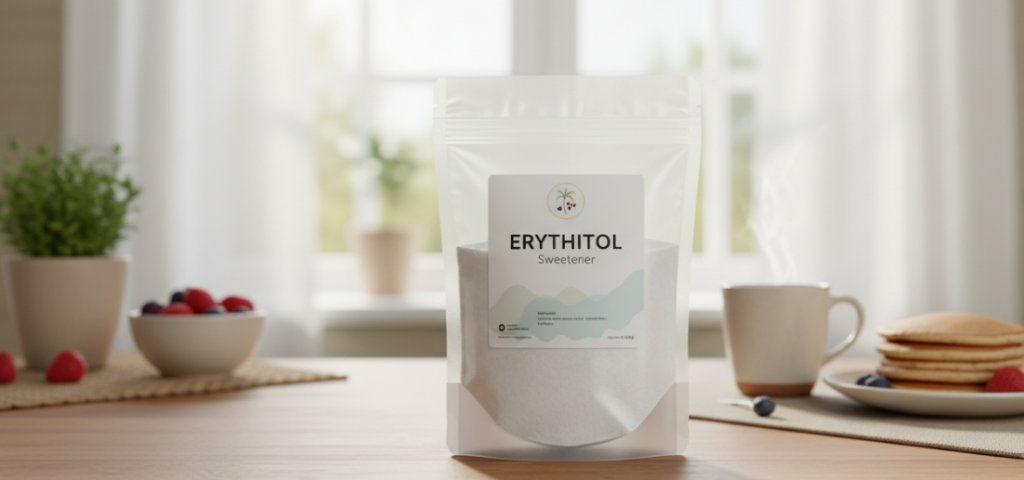
What Is The Sweetener Erythritol
Erythritol is essentially a 4 carbon sugar alcohol. It actually exists naturally in pears and grapes, which we often eat, but the products sold on a large scale on the market are usually obtained by fermenting glucose.
In the community of ketogenic diets, low-carb diets or diabetics, erythritol is considered the “gold standard” in sugar substitutes. The reason is simple: it has zero calories and a zero glycemic index (GI). This means it doesn’t cause a spike in blood sugar or insulin at all. Moreover, compared with other sugar alcohols, it is metabolized in a very unique way—about 90% of erythritol is absorbed by the small intestine and then excreted intact through the urine. This directly solves the problem of bloating and diarrhea that was easily caused by eating xylitol or maltitol. Its sweetness is about 70% of that of sucrose, and its clean and refreshing taste makes it an ideal tool to reduce sugar intake without sacrificing taste buds.
Chemical Background And Source Of Erythritol
To really understand what erythritol is, we need to take a little look at its chemical structure and source.
As just mentioned, it is classified as a 4 carbon sugar alcohol. But don’t be misled by the name “sugar alcohol”, which is neither sugar nor alcohol in the traditional sense. Its molecular structure just happens to stimulate the sweet receptors on your tongue, but the body can’t metabolize it like sugar.
Although erythritol is often found in the ingredient list of processed foods, its roots are actually very natural. It is found organically in specific fruits (such as pears and grapes) and in fermented foods such as soy sauce. However, in practical applications, in order to meet the demand for natural sugar substitutes, it is usually commercially produced by fermentation of glucose. This process typically uses native yeast or fungi to convert glucose from plant starches, such as corn, to pure erythritol. You can think of it as the bridge between “natural existence” and “mass production.
Why It Is The “Gold Standard” In The World Of Food
Erythritol is often considered a superior option for those who strictly follow a specific dietary regimen—especially ketogenic, low-carbohydrate, or diabetes management. The reason is mainly due to its metabolic effects:
- Zero calories: Unlike sucrose, which provides 4 calories per gram, erythritol contributes zero to the body’s energy intake.
- Zero glycemic index (GI): For diabetics and ketogenic practitioners, glycemic control is central. Erythritol has a GI value of zero. This means that taking it won’t make your blood sugar or insulin readings feel like a roller coaster, which can help the body stay in a state of ketosis or keep blood sugar stable, while some other sugar substitutes may accidentally trigger metabolic reactions.
To the forefront of nutrition
Soluble Fiber
Soluble fiber is a highly stable, indigestible dietary ingredient that promotes weight control by increasing satiety and reducing food intake. Versatile in application, it is widely used to enhance the nutritional profile and texture of foods, beverages, and health products.
Soluble Fiber
Prebiotic
A prebiotic functions as a proliferation factor that is selectively degraded and utilized by beneficial intestinal bacteria, such as Bifidobacteria. This process exerts a positive effect on overall human health, often accompanied by metabolic advantages such as low caloric impact and minimal blood sugar fluctuations due to their unique digestive stability.
Prebiotic
Vitamins
Vitamins are essential organic micronutrients, categorized into water-soluble and fat-soluble forms, that regulate critical physiological processes such as metabolism, immunity, and coagulation. Due to their sensitivity to light, heat, and moisture,
Vitamins
90% Absorption Rate
Too many complaints about sugar alcohols (such as xylitol, sorbitol or maltitol), the most common of which is gastrointestinal discomfort, such as gas, bloating, and even embarrassing diarrhea.
If you ask how erythritol is different, the answer lies in its unique absorption path. The special feature of erythritol is that 90% of intake is absorbed in the small intestine. Once in the bloodstream, it is not metabolized by the body to produce energy, but is filtered by the kidneys and eventually excreted as it is through the urine.
Because the vast majority of erythritol simply does not reach the large intestine, it perfectly avoids the fate of being fermented by intestinal bacteria. This mechanism significantly reduces the bloating and laxative effects common to other sweeteners, such as xylitol or maltitol, which tend to enter the colon and cause digestive disorders. This makes erythritol one of the best-tolerated polyols available today, making it ideal for daily consumption.
Taste And Sensory Experience
Of course, any sugar substitute wants to succeed, and finally has to watch whether it tastes good.
Erythritol is valued because it provides about 70% of the sweetness of sucrose. What’s more, it doesn’t have the unpleasant metallic bitterness or aftertaste of some high-intensity artificial sweeteners. In contrast, erythritol provides a clean mouthfeel, even with a slightly mint-like cooling sensation.
This trait makes it a great tool to reduce your sugar intake without making your food feel tasteless. It allows you to enjoy sweets, baked goods and drinks while completely cutting out sugar, ensuring that a healthy diet is still enjoyable, rather than a painful restriction.
Author:Sarah Jenkins
“Hi, I’m a certified nutritionist specializing in low-carb and ketogenic diets. My passion is breaking down the science of food to help you make healthier choices. I wrote this guide to explain exactly why erythritol is considered a game-changer for blood sugar management and sugar reduction.”