
 SGNUTRI


Search Product
When Is The Best Time To Take Prebiotics
The most reliable way is to take it at a fixed time every day, ideally 20 to 30 minutes before meals, or simply eat together with brunch.
The reason why it is recommended to eat before or during meals is that your digestive system is in the “excitement period”, and peristalsis and metabolism are very active. Throw in prebiotics, equivalent to the intestinal probiotics directly fed fresh “fuel”, can make the fermentation process and short chain fatty acids production efficiency to achieve the highest.
Why Is Meal Time Alignment Crucial?
From a physiological point of view, this suggestion is well founded. When you start eating, the digestive tract acts like a machine that starts to deliver nutrients efficiently. The introduction of prebiotic fibers at this juncture is just in time with the cycle of activity of the intestinal flora.
This synchronization maximizes the fermentation effect. When the gut microbiota (probiotics) breaks down these fibers, they produce butyric acid and acetic acid, which are very key short-chain fatty acids. These substances are essential for repairing the intestinal mucosa, reducing inflammation, and maintaining metabolic health. Taking time to brunch is essentially to let your intestinal “factory” get enough raw materials during peak output.

Gastrointestinal Sensitivity? Try The Evening Program
If you are prone to bloating and exhausting after eating fiber supplements, I suggest you move the time to the evening with a snack or two.
- The logic is actually very simple: when people sleep, gastrointestinal peristalsis will naturally slow down. Eating prebiotics at night can make the fiber fermentation more gentle and slower.
- Reduce the embarrassment during the day: moving the fermentation peak to late at night can effectively avoid the discomfort of “belly stuffed” when working or socializing during the day.
- Helps nocturnal repair: When the body is in the nocturnal self-repair mode, this sustained, slow release of short-chain fatty acids provides more stable support for the intestinal environment.
To the forefront of nutrition
Soluble Fiber
Soluble fiber is a highly stable, indigestible dietary ingredient that promotes weight control by increasing satiety and reducing food intake. Versatile in application, it is widely used to enhance the nutritional profile and texture of foods, beverages, and health products.
Soluble Fiber
Prebiotic
A prebiotic functions as a proliferation factor that is selectively degraded and utilized by beneficial intestinal bacteria, such as Bifidobacteria. This process exerts a positive effect on overall human health, often accompanied by metabolic advantages such as low caloric impact and minimal blood sugar fluctuations due to their unique digestive stability.
Prebiotic
Vitamins
Vitamins are essential organic micronutrients, categorized into water-soluble and fat-soluble forms, that regulate critical physiological processes such as metabolism, immunity, and coagulation. Due to their sensitivity to light, heat, and moisture,
Vitamins
In The Final Analysis, Persistence Is The Hard Truth.
In fact, the debate about sooner or later can be put aside. The cases I have handled tell me that it is not the exact “hour” that really determines the effect, but your “consistency”. The improvement of intestinal microecology can not be completed in a day or two, it is more like kind of long-term artificial cultivation.
Prebiotics are like rations for the flora. If your “supply” is intermittent, the growth and stability of the flora will be problematic. So, the most suitable time for you, in fact, is the time that you are not easy to forget, can be seamlessly embedded in your daily life. Whether it’s just coffee in the morning or as part of a bedtime ritual, as long as you stick to it every day, the intestinal flora can form a stable and prosperous situation.
Find Your “Prime Time”
Let’s talk about my final judgment. How to choose depends on your intestinal “temper”:
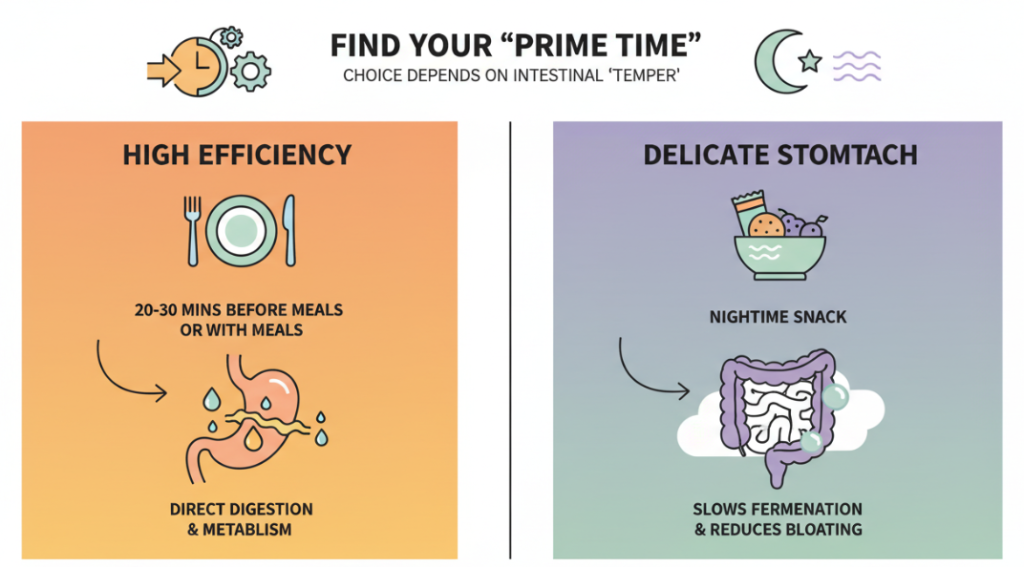
- The pursuit of high efficiency: 20-30 minutes before meals or meals to eat, directly to the digestion and metabolism of oil.
- The intestines and stomach are more “delicate”: eat snacks at night to slow down fermentation and reduce flatulence.
Don’t worry about the nuances of an hour or two. The habit that keeps you going is the most powerful support for your intestinal health.
Autho: Julian Reed
“Hi, I’m a certified clinical nutritionist and gut health researcher. I’ve spent the last decade studying the delicate balance of the human microbiome and how specific dietary habits influence bacterial fermentation. I wrote this guide because I believe that supplements are only as effective as the consistency with which they are taken. “