
 SGNUTRI


Search Product
What Foods Contain Maltodextrin?
The simple and straightforward answer is that about 60% of the packaged foods you see on supermarket shelves contain this ingredient. Most commonly found in places we mistakenly think of as “harmless”—artificial sweeteners (such as powdered sugar substitutes), salad dressings, powdered brewers, yogurt, energy bars, meal-replacement milkshakes, and salty snacks such as potato chips and dried meat.
Producers love it for a real reason: It’s the 1 extremely affordable filler. It can increase the volume of the product, improve the taste and texture, but also can extend the shelf life, and the best is that it does not need to be marked as “sugar” on the label “.
But as the 1 practitioner concerned about metabolic health, it is important to remind you that although it is an “additive” by law, maltodextrin has a glycemic index (GI) of 106 to 136—which is much higher than ordinary sucrose in our homes. If you are diabetic, pre-diabetic, or are implementing a ketogenic diet (Keto), this often overlooked “invisible” component may be the culprit of your blood sugar’s delay in stabilizing, or your inexplicable “ketogenic.
Where Maltodextrin is Hiding
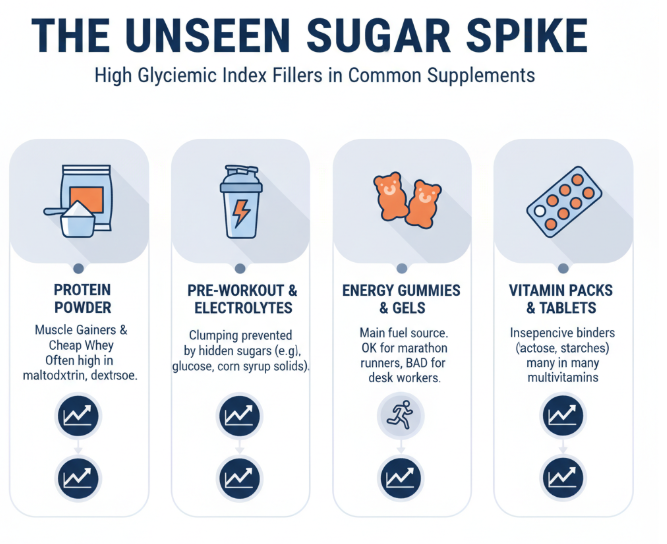
Supplements and sports nutrition
It’s really ironic that people who are trying to get healthier with supplements are often unknowingly ingesting large amounts of high GI fillers.
- Protein powder: especially those advertised as “muscle powder (Mass Gainers)” products, as well as some cheap whey protein isolate.
- Pre-training powder (Pre-Workout) and electrolyte powder: almost all powdered drinks are used it, mainly to prevent the powder from clumping.
- Energy Gum & Energy Gummy: It is the main fuel source for these products. For people who are running marathons, it’s okay to raise blood sugar in an instant; but for mental workers sitting at their desks, it’s a disaster.
- Vitamin packs: Many inexpensive multivitamin tablets use it as a binder.
Condiments, sauces and salad dressings
- Salad dressings: especially those that advertise “Light” or “Low Fat” (ranch sauces and Italian sauces are the hardest hit). If the fat is removed, the taste will be poor and only maltodextrin can be added to supplement it.
- BBQ sauce and tomato sauce: It is used to increase the consistency of the sauce so that manufacturers can use less expensive tomato paste.
- Mix spice powder: Look at the Taco seasoning bag or dry marinade in your hand, it is usually 30-40% maltodextrin.
Artificial sweeteners
Those small packages of yellow, blue and pink sugar substitutes: please read the ingredients list carefully. The first ingredient is usually glucose (Dextrose) or maltodextrin. Real sweeteners (such as sucralose or aspartame) account for only a tiny fraction; the rest is all “stuffed cotton” like maltodextrin, purely to make that small bag feel and easy for you to pour out.
Snacks and processed meat
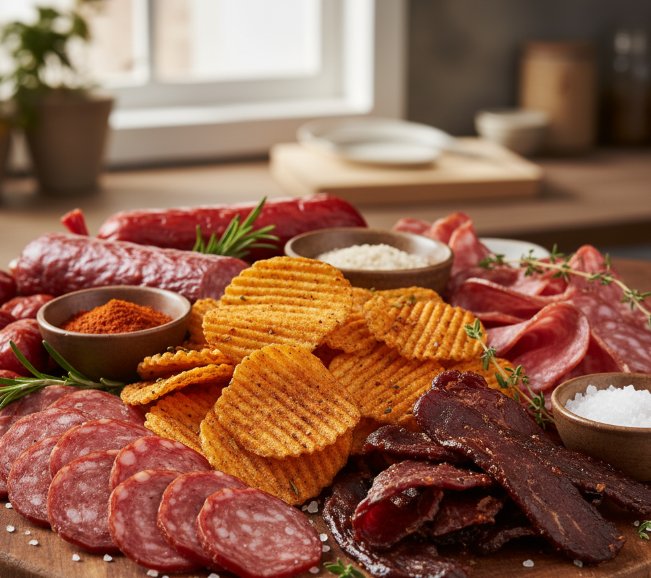
- Flavored potato chips: The attractive layer of powder on Doritos (Doritos) or barbecue flavor potato chips that needs a carrier to stick to the potato chips. That carrier is maltodextrin.
- Dried meat and sausages: used to lock in water and increase the weight of meat products (after all, meat is sold by weight).
- Canned Soup: Used instead of cream or real starch for thickening.
Why Diabetics and Keto Dieters Must Avoid It
Many top medical resources emphasize that maltodextrin is a 1 carbohydrate that is digested extremely quickly. In my clinical consultations, I often encounter situations where clients swear that they are eating “sugar-free” cookies or drinking “low-carbon” protein shakes, but when we look at their dynamic glucometer (CGM) data, the curve soars like they just ate a Snickers bar.
- For the ketogenic community: Maltodextrin is the ultimate “ketogenic trap”. Because it raises insulin levels even faster and more than glucose, even a little bit of electrolyte powder or beef jerky can instantly cut off your fat burning mode.
- For diabetics: Keep in mind that “Sugar-Free” does not mean “Glucose Impact Free”. Maltodextrin is often used to replace fat in low-fat products, which means that you may consume a few fewer calories in exchange for a huge insulin response.
A Note on Gluten (Celiacs):
Although in the United States, maltodextrins are usually extracted from corn or potatoes, they may also be derived from wheat. Even if the processing removes gluten protein, for highly sensitive individuals, I strongly recommend buying only certified “Gluten-Free” products, just in case.
Gut health effects
Now integrated medical research has shown that maltodextrin does not disappear after digestion. It changes your gut microbiome.
- Bacterial Overgrowth: Studies have found that it inhibits beneficial bacteria (probiotics) while providing fuel for harmful bacteria (such as E. coli).
- Intestinal inflammation: In patients with irritable bowel syndrome (IBS) or inflammatory bowel disease (Crohn’s disease/colitis), maltodextrin acts as a 1 irritant that may weaken the mucous barrier of the intestine.
I always tell my clients who insist on “clean eating”: if you’re eating healthily but still suffer from unexplained bloating, go look through your food labels and see if you have maltodextrin.
What to Use Instead
Aliases to be wary:
- Corn syrup solids (Corn syrup solids)
- Modified food starch (Modified food starch)
- Dextrin (Dextrin)
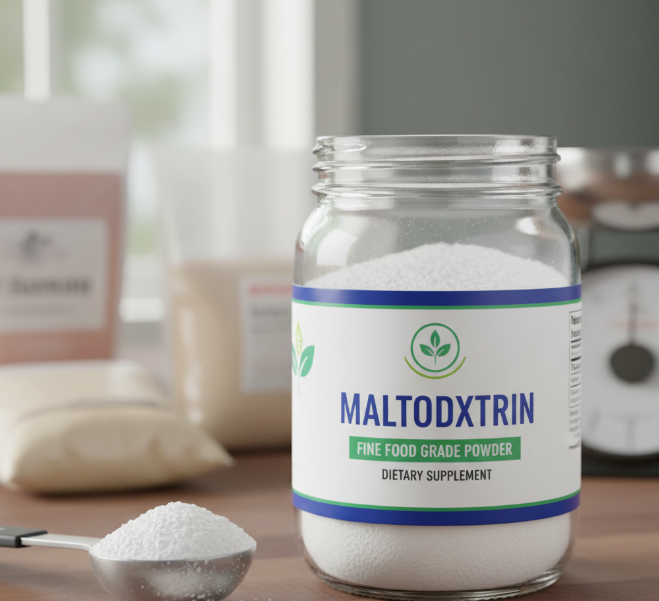
- Maltodextrin (source may be corn/wheat/potato/rice)
Nutritionist recommended safe replacement:
- Alternative to bagged sweeteners: Use liquid stevia (Stevia) or liquid mogroside (Monk Fruit). The liquid form does not require those fillers.
- Alternative to thickening sauces: Look for products thickened with kudzu powder (Arrowroot), tapioca starch (Tapioca Starch) or xanthan gum (Xanthan Gum).
The Golden Rule:
The only food guaranteed to be 100 percent free of maltodextrin is Whole Food. An apple, a piece of salmon or a handful of raw nuts do not need an ingredient list.
About the Author
“I am Davey, a Certified Holistic Nutritionist and Metabolic Health Specialist dedicated to helping you decode food labels. With a focus on blood sugar management and gut health, I bridge the gap between clinical science and the grocery aisle.