
 SGNUTRI


Search Product
Is Maltodextrin Monosodium Glutamate
Maltodextrin is definitely not MSG. Although these two things often appear in “pairs” in processed foods, they are completely different things from chemical essence to actual function. Maltodextrin is a kind of complex carbohydrate (polysaccharide) derived from corn, rice or potato starch, which mainly plays the role of filling and thickening; while monosodium glutamate is the sodium salt of glutamic acid, which is a kind of amino acid used to improve freshness.
For those who are sensitive to certain ingredients, it’s important to know that maltodextrin does not contain free glutamic acid. This means that it doesn’t trigger the typical “MSG allergy” reactions, such as headaches, facial flushing or heart palpitations. However, many people have misunderstandings because the appearance rate of these two in ultra-processed foods is too high. Although people who avoid MSG can safely eat maltodextrin, its high glycemic index (GI value as high as 105-136) has even more effect on blood sugar than white sugar, which is a bigger hidden danger in metabolic health.
Polysaccharide And Amino Acid Salt Against
Maltodextrins are essentially polysaccharides, i.e., chain-linked sugar molecules, produced by partial hydrolysis of starch. Because it comes down to carbohydrates, your body breaks it down directly into glucose.

In contrast, monosodium glutamate (MSG) is the sodium salt of glutamic acid. Glutamic acid itself is the naturally occurring amino acid. Unlike the sugar-based structure of maltodextrin, MSG is designed to be pure: to bind to the glutamate receptors on your tongue, giving you the illusion of “umami.”
Role Division In Food Processing
In the food production process, manufacturers use these two things for completely different purposes, depending on what kind of texture they want the product to present:
- Maltodextrin as a functional adjuvant: its main task is to improve the taste and extend the shelf life. It is more used as a “filler” to increase the volume, or as a thickener in the sauce to enhance the feeling of hanging cup, and even maintain the structural integrity of snacks.
- MSG as a flavor enhancer: MSG’s work is very single, is to provide “umami.” It doesn’t change the volume or texture of the food, it simply makes the taste of those soups, chips or frozen meals stronger and more enticing.
To the forefront of nutrition
Soluble Fiber
Soluble fiber is a highly stable, indigestible dietary ingredient that promotes weight control by increasing satiety and reducing food intake. Versatile in application, it is widely used to enhance the nutritional profile and texture of foods, beverages, and health products.
Soluble Fiber
Prebiotic
A prebiotic functions as a proliferation factor that is selectively degraded and utilized by beneficial intestinal bacteria, such as Bifidobacteria. This process exerts a positive effect on overall human health, often accompanied by metabolic advantages such as low caloric impact and minimal blood sugar fluctuations due to their unique digestive stability.
Prebiotic
Vitamins
Vitamins are essential organic micronutrients, categorized into water-soluble and fat-soluble forms, that regulate critical physiological processes such as metabolism, immunity, and coagulation. Due to their sensitivity to light, heat, and moisture,
Vitamins
The Misleading Label Of “Coexistence”
Many consumers will ask: “maltodextrin is monosodium glutamate?” This confusion is actually very normal. This is mainly because the two are almost inseparable in ultra-processed foods. You grab a bag of seasoned potato chips or a bag of ready-to-eat gravy, and the list of ingredients often contains both.
Because they all look like white powdery additives and appear in the so-called “junk food”, it is easy for health-conscious people to put them into one category. But in the actual production logic, they are in a bag is actually their own duties, do not interfere with each other.
Neurosensitivity Vs Metabolic Effects
For people with special reactions, it is important to recognize the difference between the two:
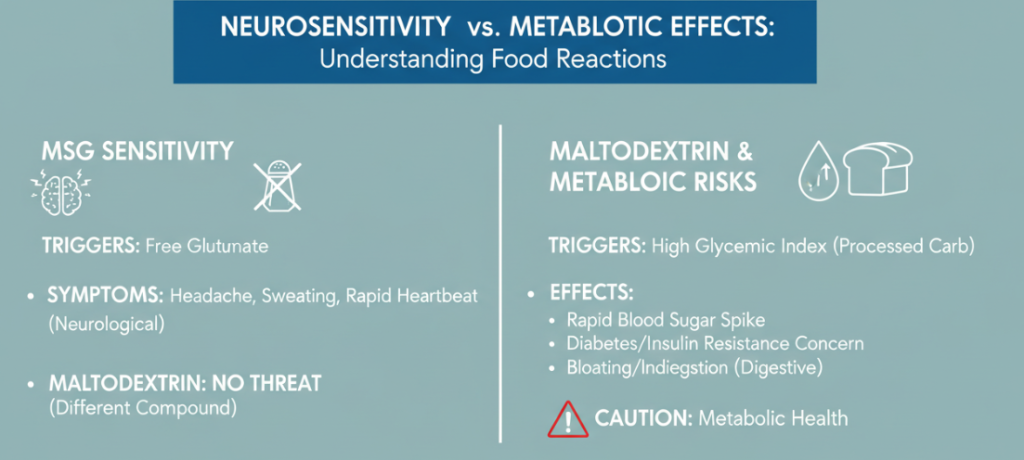
- MSG sensitivity: Some people have “MSG intolerance”, which can cause neurological symptoms such as headache, sweating or rapid heartbeat after ingesting free glutamate. Maltodextrin does not cause these problems because it does not contain such a specific component.
- Maltodextrin and its glycemic index: While maltodextrin is safe for those who avoid MSG, I must caution that its metabolic risks are not insignificant. Its glycemic index is higher than that of white sugar, causing blood sugar to spike rapidly. In my opinion, if you have diabetes or insulin resistance, maltodextrin is even more concerning than MSG. Furthermore, it can sometimes cause bloating or indigestion in people with sensitive stomachs.
In short, if you strictly avoid MSG for fear of headaches or nervous sensitivities, maltodextrin is no threat to you because it is not the same compound at all. However, given its dramatic effect on blood sugar and its high frequency in deeply processed foods, I still recommend that those who are concerned about metabolic health or intestinal function be careful when reading the label, and try to consume as few of these additives as possible.
Author:Sarah Jenkins
Hi, I’m a clinical nutritionist and food transparency advocate. With years of experience researching food additives, I specialize in helping individuals with food sensitivities navigate complex ingredient labels.