 SGNUTRI


Produkt suchen
Hat Allulose einen Nachgeschmack? 100% – Ehrliche Bewertung
Die nackte Wahrheit: Hinterlässt Allulose wirklich einen unangenehmen Nachgeschmack?
Reine Allulose weist weder den metallischen Nachgeschmack von Stevia noch das eigentümliche, minzartige Kühlgefühl von Erythrit auf; stattdessen hinterlässt sie nach dem Schlucken lediglich eine sehr zarte, reine Süße tief im Rachen. Falls Sie sich fragen: “Hat Allulose einen seltsamen Nachgeschmack?”, oder wenn Sie bei Ihrer Verkostung sogar einen kühlenden, leicht bitteren Abgang wahrgenommen haben, dann haben Sie wahrscheinlich kein Produkt aus reiner Allulose gekauft.
In den letzten fünf Jahren habe ich persönlich mehr als 30 Chargen kalorienfreier Zuckerersatzstoffe geprüft. Viele skrupellose Hersteller senken ihre Produktionskosten, indem sie große Mengen billiger Zuckerersatzstoffe beimischen, und schieben dann den gesamten Fehlegeschmack bequem auf Allulose. Als Nächstes werde ich Ihnen zeigen, wie Sie diese minderwertigen Mischungen auf einen Blick durchschauen können, und Ihnen einige praktische Tipps geben, mit denen sich der Geschmack zu 100 Prozent an den von Weißzucker angleichen lässt.
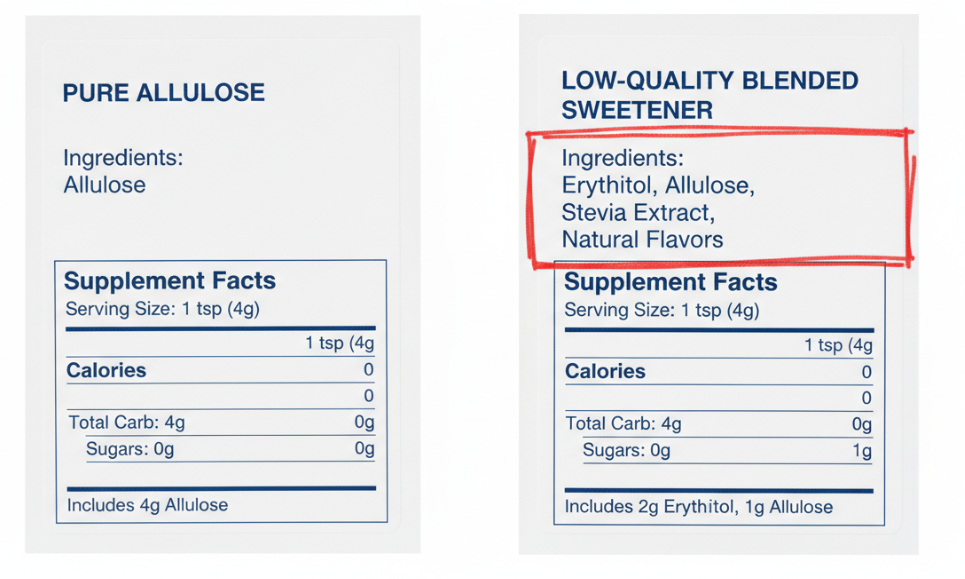
“Die ”Falschgeschmack“-Falle: Überprüfen Sie sofort die Zutatenliste auf dem Produkt, das Sie gerade in der Hand halten
Im Internet beschweren sich manche darüber, dass Allulose einen “Minzgeschmack” habe oder “nach dem Verzehr einen bitteren Nachgeschmack im Mund hinterlasse” – tatsächlich sind dafür jedoch die darin enthaltenen, nicht ausgewiesenen Zusatzstoffe verantwortlich. Der Geschmack von Allulose selbst entspricht fast perfekt dem von gewöhnlichem Saccharose, doch sie hat einen entscheidenden Nachteil: Sie ist zu teuer.
Um die Süße auszugleichen (reine Produkte erreichen nur 70% der Süße von Weißzucker) und dabei massiv Geld zu sparen, greift der Süßstoffhersteller gerne auf die bewährte “Süßegrad-Balance” zurück. Sie fügen wie wild Erythrit, Mogroside oder Stevia-Extrakt hinzu. Das anhaltende kühlende Gefühl im Mund wird durch Erythrit verursacht, und die hartnäckige metallische Bitterkeit ist auf Stevia zurückzuführen.
Schauen Sie sich doch gleich einmal die Packungen mit Zuckerersatzprodukten bei Ihnen zu Hause genauer an. Sehen Sie sich die Zutatenliste genau an. Wenn dort “Mischung” oder “Allulose-Aroma (natürliche Aromen)” steht, muss Ihre Zunge für diese billigen Zusatzstoffe bezahlen. Um wirklich sicherzugehen, dass es keinen Nachgeschmack hat, musst du ein Produkt kaufen, dessen Zutatenliste nur einen einzigen Inhaltsstoff enthält: “Gentechnikfreies D-Psicose (Gentechnikfreies D-Allulose)”.
Echter Geschmackstest: Die Temperatur ist der heimliche Ausschlaggeber
Die Temperatur kann den Geschmack von Allulose auf der Zunge stark beeinflussen. Wir haben im Küchenlabor Blindtests durchgeführt und dabei ein Muster entdeckt, das fast niemand erwähnt hat: die “temperaturabhängige Süßkurve”.
Wir haben 10 Personen genommen und 100 Prozent reine „Psicose“ in drei völlig unterschiedlichen Umgebungen getestet. Die Daten belegen, dass der Nachgeschmack davon abhängt, wie man das Gericht zubereitet.
Eiswasser (0 °C / 32 °F): Die Süße wird gedämpft, und nach dem Trinken bleibt ein klebriger Sirupgeschmack im Mund zurück. Durch die niedrigen Temperaturen kann sich dieses Zuckermolekül im vorderen Bereich des Mundes ansammeln, wodurch das Gefühl der Süße etwas länger anhält.
Heißer Kaffee (71 °C / 160 °F): absolut kein Nachgeschmack. Die Säure und die hohe Temperatur des Kaffees neutralisieren jegliche Restsüße sofort, sodass selbst die wählerischsten Menschen keinen Unterschied zu echtem Weißzucker schmecken können.
Das Pulver direkt verzehren: Die Auflösungsgeschwindigkeit ist um einen halben Takt etwas langsamer als die von Puderzucker, gefolgt von einer sehr sanften Süße, die sich nach etwa 5 Sekunden vollständig im Mund auflöst. Ohne jeglichen bitteren Nachgeschmack.
| Testmedium | Süßegrad (1–10) | Erkannter Nachgeschmackstyp |
| Heißer Kaffee | 8 | Keine (kein Nachgeschmack) |
| Eistee | 5 | Ein klebriges, anhaltendes, sirupartiges Gefühl |
| Direkte Verkostung | 6 | Mild, löst sich schnell auf (keine Bitterkeit) |
| Backwaren | 7 | Sauberer, leicht karamellisierter Abgang |
Mischdreieck ohne Nachgeschmack
Solange man die physikalischen Bedingungen unter Kontrolle hat, kann man selbst die letzten Spuren des Allulose-Nachgeschmacks vollständig beseitigen. Ich nutze dafür in der Regel ein mentales Modell, das als “Mischdreieck für null Nachgeschmack” bezeichnet wird.
Indem man die drei Kernbestandteile von Lebensmitteln manipuliert, kann man Allulose dazu bringen, sich genauso zu verhalten wie gewöhnliche Saccharose.
Säure („Radiergummi“): Säure kann die Anhaftung von seltenen Zuckern im Mund verhindern. Wenn Sie Eistee mit Allulose zubereiten, denken Sie daran, ein paar Tropfen Zitronensaft hinzuzugeben. Mit jedem Schluck beseitigt der saure Geschmack die süßen Rückstände auf der Zunge.
Lipid (Concealer): Fett überzieht die Geschmacksknospen. Wenn Sie Ihrem ketogenen Eis Sahne oder Butter hinzufügen, blockieren diese Fettmoleküle direkt Ihre Geschmacksrezeptoren, sodass Sie keinerlei ungenießen Geschmack mehr wahrnehmen können.
Temperatur (Beschleuniger): Heiß verzehren. Hohe Temperaturen können die Auflösungsgeschwindigkeit beschleunigen, wodurch sich der süße Geschmack schnell entfaltet und ebenso schnell wieder verfliegt.
Allulose beim Backen vermeiden: Nebenwirkung der Karamellisierungsreaktion
Allulose lässt sich im Ofen besonders leicht verbrennen, weshalb viele Menschen sie beim Backen als bitter empfinden. Aufgrund ihrer physikalischen Eigenschaften karamellisiert sie viel schneller als gewöhnlicher Weißzucker.
Wenn Sie sich beim Backen von Keksen törichterweise an die im Rezept angegebene Temperatur von 175 °C (350 °F) halten, entsteht nach längerer Backzeit mit Sicherheit ein bitterer “Verbranntgeruch”. Beachten Sie, dass dies kein Mangel des Zuckerersatzes selbst ist, sondern lediglich ein Fehler in der Küche, der auf einem mangelnden Verständnis der Maillard-Reaktion beruht. Reine Allulose beginnt bereits bei etwa 99 °C (210 °F) zu karamellisieren, was deutlich niedriger ist als bei Weißzucker.
Beachten Sie diesen wichtigen Tipp: Wenn Sie damit backen, senken Sie die Ofentemperatur um etwa 15 °C (oder 25 °F) und decken Sie es nach der Hälfte der Backzeit mit Alufolie ab. Auf diese Weise verbrennt es nicht und nimmt auch nicht den bitteren Geschmack an, der manchen Menschen Übelkeit bereitet.
Häufig gestellte Fragen
Verursacht der Verzehr von Allulose ein kühlendes Gefühl im Mund?
Auf keinen Fall. Dieses minzartige Kühlgefühl ist das Markenzeichen von Erythrit. Wenn sich Ihre Zunge beim Verzehr von Allulose kalt anfühlt, handelt es sich um 100%, das mit Zuckeralkohol versetzt ist.
Warum schmeckt die Allulose, die ich gekauft habe, bitter?
100 Prozent reine Allulose schmeckt niemals bitter. Es gibt nur zwei Gründe für einen bitteren Geschmack: Entweder hat der Hersteller heimlich Stevia-Zucker beigemischt, oder die Hitze beim Backen war zu hoch, sodass es verbrannt geschmeckt hat.
Schmeckt er genau wie echter weißer Zucker?
Es ist die Alternative, die dem echten Zucker auf dem heutigen Markt am nächsten kommt. Sein Geschmack und seine Konsistenz entsprechen fast perfekt denen von Saccharose, doch seine Süße beträgt nur 70% der von Weißzucker. Man muss etwa 30% mehr davon verwenden, um die gewohnte Süße zu erreichen.
Verursacht dieses Mittel Durchfall oder Blähungen?
Das gilt, wenn man zu viel auf einmal isst. Obwohl es keinen chemischen Geruch hat, zieht es Wasser in den Verdauungstrakt, wenn man mehr als 15 bis 20 Gramm auf einmal isst, was zu Blähungen und sogar Durchfall führen kann.
Ist er besser als Luo-Han-Guo-Zucker, wenn man ihn zum Zubereiten von Kaffee verwendet?
Die Löslichkeit ist gut. Luo-Han-Guo-Zucker hat immer einen fruchtigen oder an Hami-Melone erinnernden Nachgeschmack, der mit dem Geschmack von stark gerösteten Kaffeebohnen äußerst unvereinbar ist. Allulose löst sich sofort in heißem Kaffee auf und bewahrt das ursprüngliche, milde Aroma des Kaffees vollständig.
Wird am nächsten Morgen immer noch ein seltsamer Nachgeschmack im Mund zu spüren sein?
So etwas gibt es nicht. Ein rücksichtsloser Stoff wie Saccharin oder hochkonzentriertes Sucralose trocknet zwar den Mund aus und hinterlässt nach einigen Stunden das Gefühl eines metallischen Belags. Doch schon wenige Sekunden nach dem Schlucken verschwindet Allulose von den Speichelrezeptoren.
Verwandte Empfehlungen
-

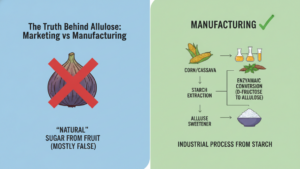
Wie wird der Süßstoff Allulose hergestellt? Der wahre Herstellungsprozess wird enthüllt
97Entdecken Sie die Wahrheit über die Herstellung von Allulose. Erfahren Sie, wie dieser Keto-Zuckerersatz aus Stärke und nicht aus Früchten hergestellt wird.
Details anzeigen -
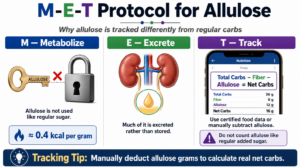
Ist Allulose ein Kohlenhydrat? Die Auswirkungen auf die Netto-Kohlenhydratmenge im Fokus
72Ist Allulose ein Kohlenhydrat? Ja, aber mit null Netto-Kohlenhydraten. Erfahren Sie mehr über die tatsächlichen Auswirkungen auf den Blutzucker und die Keto-Makros.
Details anzeigen -
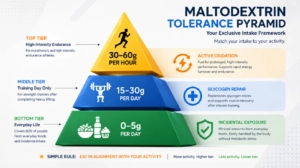
Wie viele Gramm Maltodextrin sind pro Tag unbedenklich? Höchstmenge
66Wie viele Gramm Maltodextrin sind pro Tag unbedenklich? Ermitteln Sie Ihre genaue Höchstmenge anhand Ihrer körperlichen Aktivität und Ihrer Darmgesundheit.
Details anzeigen -
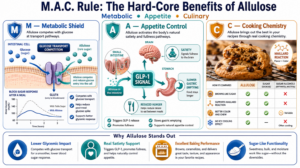
Gesundheitliche Vorteile von Allulose: Warum Sie jetzt Ihren Süßstoff wechseln sollten
77Entdecken Sie die gesundheitlichen Vorteile von Allulose. Wechseln Sie jetzt zu diesem Süßungsmittel, um GLP-1-Reize auszulösen, den Anstieg des Blutzuckerspiegels abzuflachen und echte CGM-Daten zu erhalten.
Details anzeigen