 SGNUTRI



Buscar producto
Allulose and Migraines: What Headache Reports Tell Us
Could a headache after eating a food containing allulose be related to the ingredient? One human study recorded headaches reported by participants. To see whether those findings tell us anything about migraines, it helps to look at what the study compared and how it recorded symptoms.
What the Study Recorded
In a 30-day study, 49 healthy adults who completed the trial took either 24 g or 36 g of D-allulose daily. During the study, 16% reported at least one headache and 14% reported nausea at least once. These percentages show how many participants reported each symptom. They do not tell us how many episodes occurred.
There was no significant difference between the two groups in the proportion reporting either symptom. Both groups took allulose, and the study had no placebo group that received no D-allulose. It could compare the proportions reporting symptoms at the two doses, but it could not determine how many headaches were caused by allulose.
Do Headache Reports Tell Us Anything About Migraines?
The study included headache on a symptom questionnaire. It did not assess migraine as a separate diagnostic outcome or verify the reports against migraine history, features of the attacks, or triggers. That distinction matters when discussing allulose and migraines. The questionnaire cannot tell us which reports involved migraine or whether allulose can trigger a migraine.
Which Product Was Consumed?
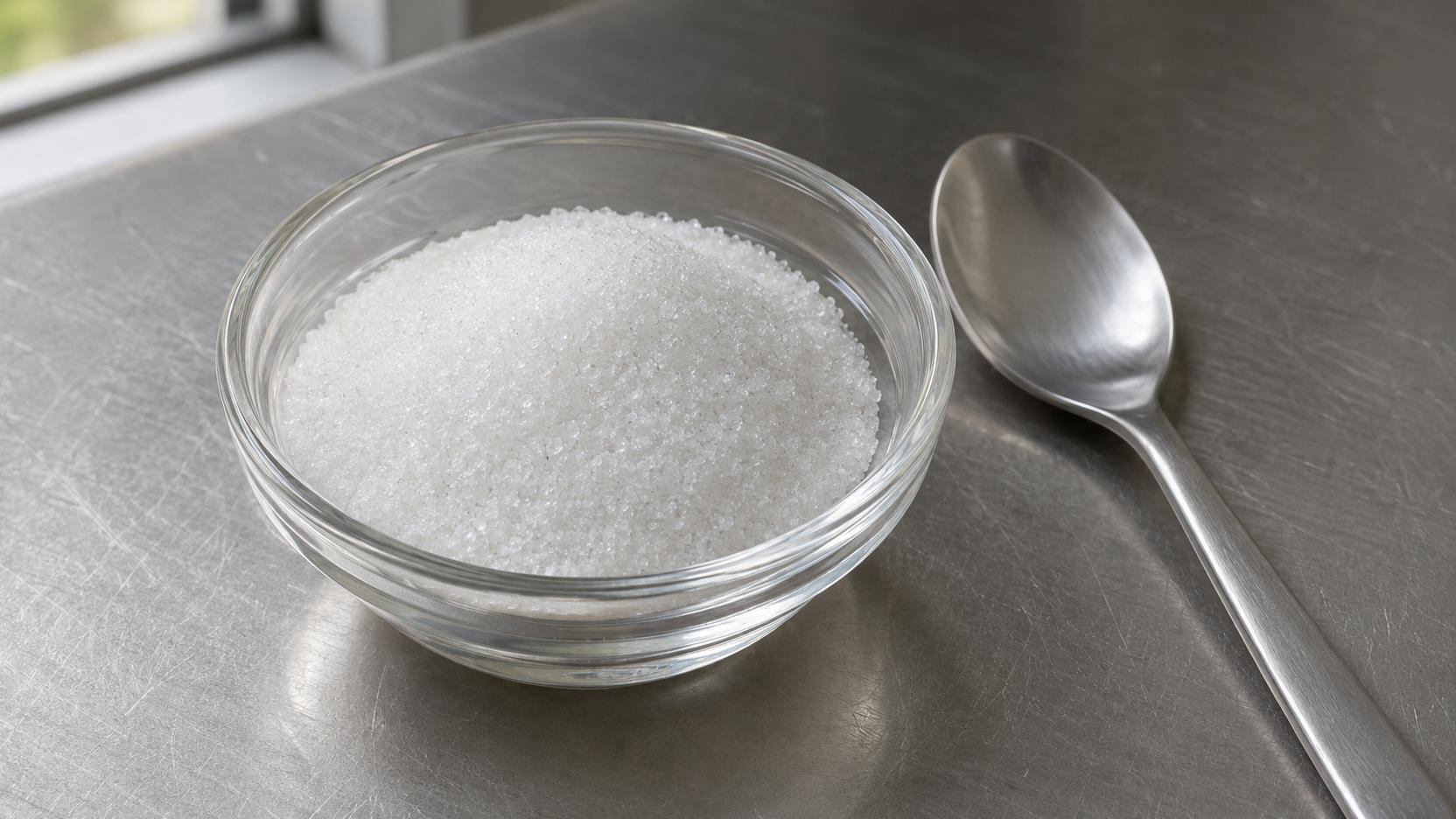
The study compared two defined daily doses of D-allulose. A sweetener blend may also contain a carrier, monk fruit extract, sugar alcohols, dietary fiber, or flavorings. The ingredient list can help distinguish a single ingredient from a finished product with several ingredients. Finding allulose on that list establishes that it was part of what was consumed. The actual amount and the full formulation also matter when assessing what caused a headache.
Headache, nausea, or skin changes alone cannot establish an allulose allergy. Direct human studies have also not established a link between allulose intake, histamine release, and histamine intolerance. These symptoms alone cannot establish that a histamine reaction occurred.
The timing of symptoms, whether they occurred after more than one exposure, and any history of similar episodes all matter when assessing a reaction. Persistent, recurring, or severe headaches warrant an independent clinical evaluation. Stopping a product and trying it again on your own cannot establish the cause.
Recomendaciones relacionadas
-

Xylitol material selection to avoid pitfalls: How to choose between 20 mesh and 100 mesh?
938Compare xilitol 20 mesh crystals and 100 mesh fine powder by particle size, specification, and formulation checks.
Ver detalles -
¿Es la dextrosa azúcar anhidra?
1678Sí, la dextrosa anhidra es 100% azúcar puro con una Gi de 100. Aprenda Su Impacto En La Insulina, Los Diabéticos Y La Dieta Keto.
Ver detalles -
Can Maltodextrin Contain Gluten? Check the Source and Product
360Can Maltodextrin Contain Gluten? Learn Why Starch Source, Finished-Food Claims, And Wheat Allergen Labels Differ.
Ver detalles -
¿Qué alimentos contienen alulosa?
1655Descubra Por Qué La Alulosa Es El Edulcorante Keto Definitivo. Aprenda cómo funciona este azúcar raro y cómo usarlo para su dieta hoy.
Ver detalles