SGNUTRI


Buscar producto
Does Polydextrose Raise Blood Sugar
Let’s go straight to the conclusion: Polydextrose will not cause a significant increase in blood sugar, nor will it cause severe insulin fluctuations. For friends who need to strictly control blood sugar, it is a relatively safe category. Although it is classified as a “carbohydrate” on food labels, its behavior in the body is very different from glucose and sucrose. Since the body can only partially digest and ferment it, it is more like a soluble dietary fiber in nature. So neither people with diabetes nor those on the ketogenic diet need to worry about it triggering a serious metabolic loss of control or insulin spike.
Why Can Polydextrose Be ‘Blood Glucose Neutral’?
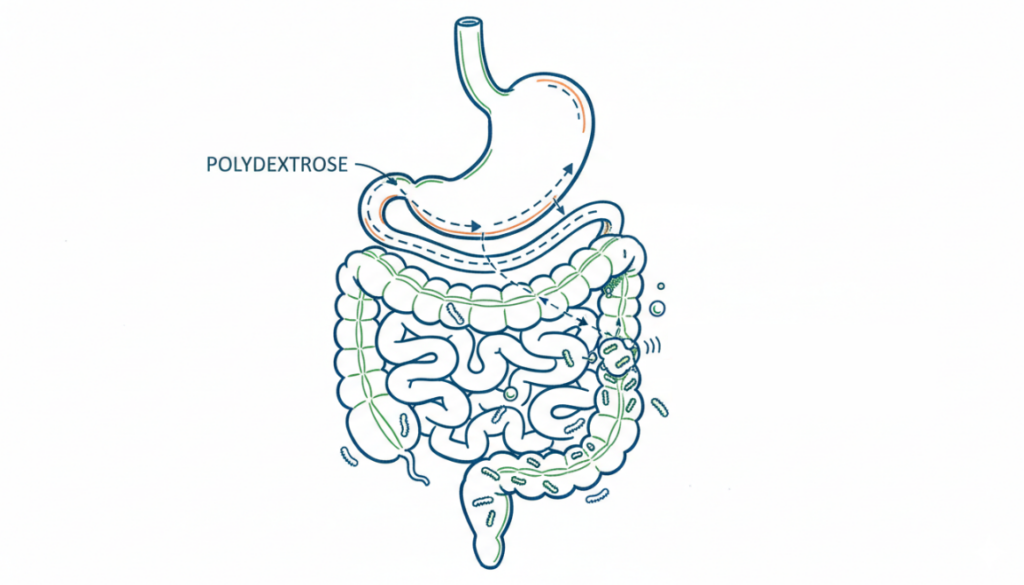
We’re going to dissect the mechanism by which the body processes it. Simple carbohydrates (such as glucose, fructose, sucrose) are usually rapidly broken down and absorbed into the blood, while polydextrose is the synthetic glucose polymer. Our small intestine lacks the enzymes needed to completely hydrolyze it, so it can pass through the upper digestive tract intact. It is only when it reaches the large intestine that it is partially fermented by the intestinal flora. This “slow and incomplete” digestion is the key reason why it does not cause blood sugar to soar like ordinary sugar.
Understanding The Effects Of Blood Glucose
In clinical blood glucose management, the glycemic index (GI) is an indicator that cannot be bypassed. The performance of polydextrose in this regard is almost negligible. Because it does not increase the concentration of glucose in the plasma, it actually functions more like a dietary fiber than a carbohydrate that provides energy. This is essential for the management of patients with type diabetes. The core logic of clinical management is to avoid high blood sugar (hyperglycemia), so the introduction of this kind of composition similar to dietary fiber is obviously much safer than the intake of high-sugar carbohydrates in food formula and daily diet.
A la vanguardia de la nutrición
Fibra soluble
La fibra soluble es un ingrediente dietético altamente estable y no digerible que favorece el control del peso aumentando la saciedad y reduciendo la ingesta de alimentos. De aplicación versátil, se utiliza ampliamente para mejorar el perfil nutricional y la textura de alimentos, bebidas y productos sanitarios.
Fibra soluble
Prebiótico
Un prebiótico funciona como un factor de proliferación que es degradado y utilizado selectivamente por bacterias intestinales beneficiosas, como Bifidobacterias. Este proceso ejerce un efecto positivo sobre la salud humana en general, a menudo acompañado de ventajas metabólicas como un bajo impacto calórico y fluctuaciones mínimas del azúcar en sangre debido a su estabilidad digestiva única.
Prebiótico
Vitaminas
Las vitaminas son micronutrientes orgánicos esenciales, clasificados en formas hidrosolubles y liposolubles, que regulan procesos fisiológicos críticos como el metabolismo, la inmunidad y la coagulación. Debido a su sensibilidad a la luz, el calor y la humedad,
Vitaminas
Polydextrose And Special Diets
The safe configuration of polydextrose makes it a “frequent visitor” to various dietary restriction programs:
Diabetes management: the most headache for patients is postprandial blood sugar control. Since polydextrose is not metabolized to glucose, it does not cause those postprandial spikes that often require additional insulin injections to calm down.
Ketogenic diet: The strict ketogenic diet requires extreme avoidance of insulin fluctuations in order to maintain the ketonic state. Since polydextrose does not elicit a significant insulin response, it is widely accepted in many ketogenic products. It’s rare to retain the texture and taste needed for processed foods without betraying your metabolic state.
Clarifying Confusion About ‘Carbohydrate’ Labels
Categorical attribution on the label and physiological metabolic reality are two different things. Regulations require that polydextrose be labeled as a carbohydrate based on its chemical structure; however, from a physiological point of view, it does not have the characteristics of ordinary carbohydrates at all. Although it produces about kilocalories per gram, this is by no means from a rapid influx of blood sugar. Don’t just stare at the total number of carbohydrates on the label, learn to distinguish between “sugar-raising carbohydrates” and “non-sugar-raising carbohydrates”, so that you can really take the initiative in diet choice.
Author Name: Dr. Julian Rivers
“I am a specialist in metabolic health and functional food ingredients. My work focuses on bridging the gap between complex nutritional biochemistry and daily dietary choices. I wrote this guide to help individuals—especially those managing diabetes or following a ketogenic lifestyle—understand the real-world physiological impact of ingredients like polydextrose.”
El prev: What Food Has Allulose
Recomendaciones relacionadas
-

¿La dextrina resistente aumenta el azúcar en sangre?
163No, la dextrina resistente no aumenta el azúcar en sangre. Es una fibra no digerible con cero Gi, seguro para ceto y diabéticos.
Ver detalles -
¿Es el xilitol lo mismo que la estevia?
99¿Es lo mismo el xilitol que la estevia? Conozca las diferencias clave en sabor, calorías e impacto en la salud para elegir el mejor edulcorante.
Ver detalles -
¿Es lo mismo la vitamina K y el potasio?
280No, no lo son. El potasio (K) es un mineral para el equilibrio de líquidos, mientras que la vitamina K es para la coagulación de la sangre. Lea la guía.
Ver detalles -
¿La dextrina resistente es buena para la salud?
241¿Se pregunta si la dextrina resistente es buena para usted? ¡Sí! Descubra cómo esta fibra soluble favorece la digestión, la salud intestinal y las dietas ceto de forma segura.
Ver detalles