
 SGNUTRI


Search Product
Vitamins For Children’s Hair
The most beneficial vitamins for children’s hair include biotin, iron, zinc and vitamin D. In most cases, children’s hair problems stem from “hidden nutritional deficiencies” caused by picky eaters “. However, it is advisable to consult a pediatrician for a simple blood test to exclude the cause of pathology (for example, thyroid problems or severe anemia).
Once a simple nutrient deficiency is diagnosed, a low-sugar multivitamin designed for children can be selected. Keep in mind that hair growth cycles are long; safe and effective nutritional interventions usually take 3 to 6 months to see significant improvements. In the meantime, a balanced diet (especially eggs, nuts and dark vegetables) is just as important as supplements.
The Four Elements of Hair Growth
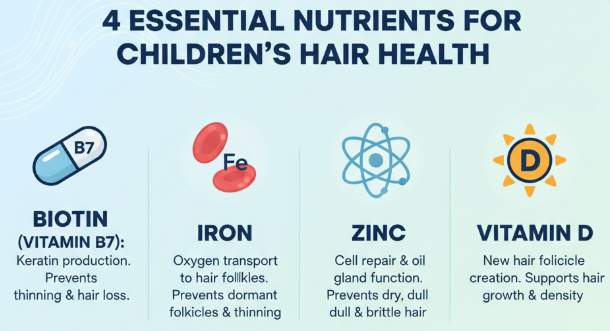
To truly improve your child’s hair, we must focus on these 4 nutrients that are scientifically proven to support hair follicle health:
Biotin (Vitamin B7): It is an essential coenzyme for the production of keratin (Keratin), which is the structural protein of hair. If the lack of biotin, hair will become thin, brittle, and even fall out. In any hair nutrition supplement program for children, this is the most basic part.
Iron: Iron is responsible for transporting oxygen to cells throughout the body, including hair follicles. I have seen many cases where the child’s ferritin (Ferritin) level is low, causing the hair follicles to enter the “dormant period” due to hypoxia. The intuitive manifestation is the thinning of the hair.
Zinc (Zinc): Zinc is involved in the repair of hair follicle cells and maintains the normal function of the oil glands around the scalp. Typical symptoms of zinc deficiency are usually hair that is dry, dull and easily broken.
Vitamin D: Modern research suggests that vitamin D is directly involved in the production of new hair follicles. Many parents think that children’s hair is less genetic, in fact, there are many cases finally found because of long-term lack of vitamin D.
Best Dosage, Timing, and Absorption
Buying a supplement is only the first step. How and when to eat it directly determines whether these nutrients can really reach the hair follicle. To ensure safety and maximize absorption, I have the following suggestions:
Follow the Recommended Dosage Strictly: don’t have the misunderstanding of “make up much faster. Biotin is water-soluble and excess is excreted, but minerals like iron and zinc can be toxic if taken in too high a dose. Be sure to strictly adhere to the dosage on the product label or according to the specific value calculated by the pediatrician based on the child’s weight.
Grasp the timing of absorption:
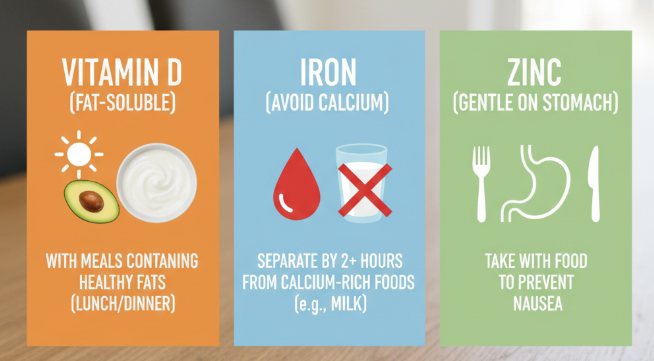
Vitamin D (fat-soluble): It needs oil to help with absorption. Therefore, it is best to arrange to take it at lunch or dinner, especially when there are healthy fats such as eggs, avocados or yogurt on the table.
Iron (avoid calcium): This is a detail that many parents tend to overlook-calcium inhibits the absorption of iron. If the child drinks milk for breakfast, do not give iron supplement at this time. Ideally, high-iron supplements and calcium-rich foods should be separated by at least two hours.
Zinc (Pampers the stomach): Fasting zinc supplements can sometimes cause nausea. In order to avoid the child’s stomach discomfort, it is best to take with a meal.
“Vitamin C” Tips: If you want to improve the effect of iron supplementation, you can use vitamin C. I often suggest that parents give their children iron supplements with 1 small glass of orange juice or a few strawberries. This can significantly increase the absorption rate of iron, allowing more oxygen to be transported to the roots.
Long-term adherence: Hair growth depends on a stable supply of nutrients. Establishing a daily routine (such as “take vitamins after dinner”) helps to keep the level of nutrients in the blood stable, which is essential for the recovery cycle mentioned later.
Consult a Pediatrician to Rule Out Pathology
Frankly, the most responsible thing to do before buying any supplements is to see your doctor first. Although nutritional deficiency is the main cause, we should use scientific methods to exclude potential pathological factors. In general, I would recommend doing a simple blood test (Blood Work), focusing on two indicators:
Thyroid function: Hypothyroidism is one of the common pathological causes of hair loss in children.
Ferritin levels: This is to rule out iron deficiency anemia.
The best time to introduce vitamin supplements is only when the doctor excludes these pathological factors and confirms that the child is only a deficiency of trace elements.
Combining Diet with Supplements
Finally, don’t let vitamin supplements become an excuse for children to continue to be picky. The meaning of the supplement is “supplement”, not “substitute”. While supplementing your child with vitamins, you must find ways to integrate foods rich in the above “four elements” into their daily diet, so that there is a synergistic effect:
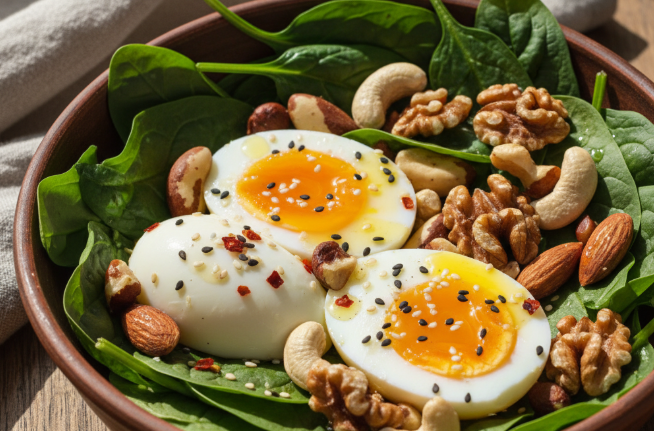
Eggs: a natural treasure trove of biotin.
Nuts and seeds: Rich in zinc and good fats.
Dark green leafy vegetables (such as spinach): provide iron and vitamin C (don’t forget, vitamin C helps iron absorption).
Author:Carter
“I am a pediatric nutrition specialist and health researcher dedicated to bridging the gap between medical science and daily parenting. I believe that addressing hair health starts with understanding internal biology, not just following trends. I hope to empower parents with data-driven, safe, and effective nutritional strategies to help their children thrive from the inside out.”