 SGNUTRI


Search Product
What Food Has Allulose
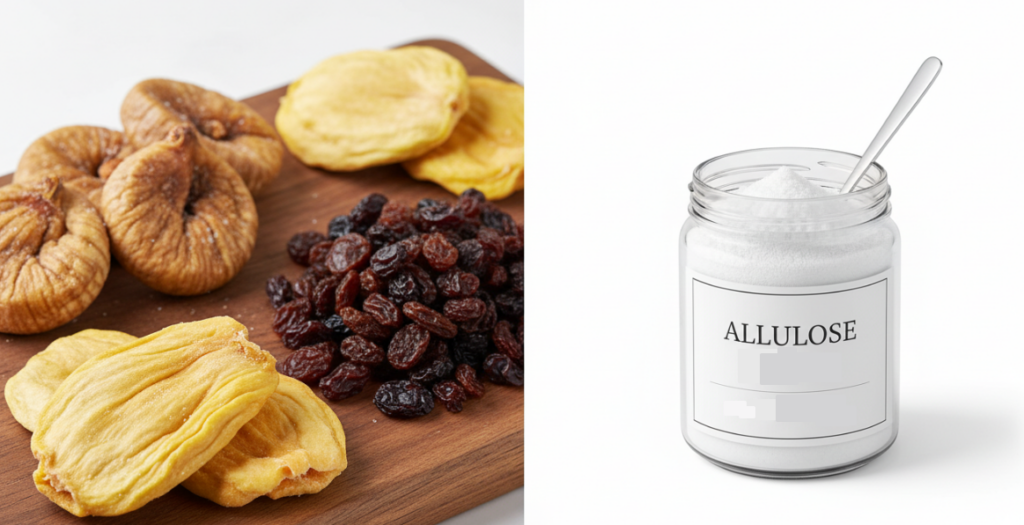
Give a direct answer: it is naturally occurring, such as figs, raisins, jackfruit and maple syrup, but the content is too low to meet the needs of commercial applications through natural intake.
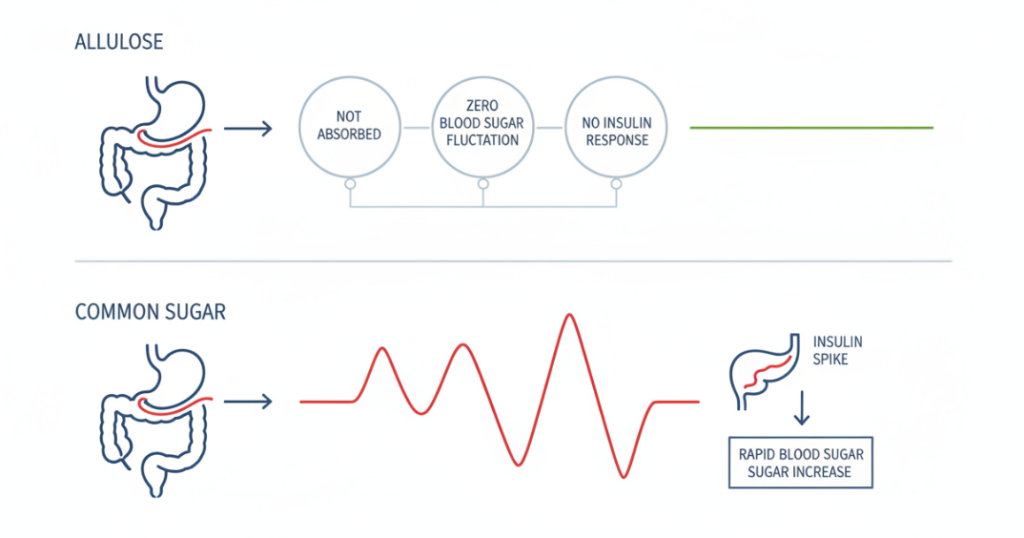
For ketogenic dieters, allulose currently available on the market is basically produced by enzymatic conversion (Enzymatic Conversion). It is one of the most special “rare sugars”: the body basically does not break it down, nor does it cause blood sugar fluctuations or insulin reactions (Insulin Response). In other words, when calculating net carbs (Net Carbs), it is usually treated as zero and does not ruin your ketogenic status at all. So, when you buy low-carbon ice cream, low-sugar baked snacks or protein bars, you can look for it with confidence.
Why Are Natural Sources Not Enough?
When searching for “what foods contain allulose”, many people always try to find natural fruits as an alternative source. Although there are indeed trace amounts of psicose in foods such as figs, raisins, and jackfruit, it is almost impossible to get enough psicose by eating these fruits.
This natural concentration has no practical value for people who want to replace sucrose with it. Because of this, the food industry has to turn to enzyme conversion technology. Using a specific enzyme to convert fructose (usually from corn) into allulose, the manufacturer can accurately reproduce this naturally occurring rare sugar molecule and achieve extremely high purity and concentration. Only then can it become a practical ingredient in the ketogenic-friendly product.
To the forefront of nutrition
Soluble Fiber
Soluble fiber is a highly stable, indigestible dietary ingredient that promotes weight control by increasing satiety and reducing food intake. Versatile in application, it is widely used to enhance the nutritional profile and texture of foods, beverages, and health products.
Soluble Fiber
Prebiotic
A prebiotic functions as a proliferation factor that is selectively degraded and utilized by beneficial intestinal bacteria, such as Bifidobacteria. This process exerts a positive effect on overall human health, often accompanied by metabolic advantages such as low caloric impact and minimal blood sugar fluctuations due to their unique digestive stability.
Prebiotic
Vitamins
Vitamins are essential organic micronutrients, categorized into water-soluble and fat-soluble forms, that regulate critical physiological processes such as metabolism, immunity, and coagulation. Due to their sensitivity to light, heat, and moisture,
Vitamins
Why Is It A “Rare Sugar”?
The reason why allulose can stand out from a group of sugar substitutes lies in its unique metabolic characteristics. In the world of carbohydrates, most of the sugar is eventually broken down into glucose, causing blood sugar spikes and insulin secretion. But allulose is completely different, when you eat it:
Hardly absorbed: Although it will enter your system, it will not be used for production capacity.
Zero blood sugar effect: Because it passes through the digestive system almost intact, it does not trigger the hormonal responses that normally slow down the process of fat loss or ketogenesis.
This technically explains why it is classified as “rare sugar”. Unlike artificial sweeteners, which may have an aftertaste, or sugar alcohols (such as maltitol), which may cause gastrointestinal discomfort, allulose actually behaves more metabolically than dietary fiber.
How To Incorporate Allulose Into Your Ketogenic Diet
Since you can’t eat fruit to supplement allulose, how should ketogenic dieters eat it? The most direct way is to learn to read the ingredient list. Because the body can’t break it down, you can safely deduct allulose from total carbs when calculating net carbs. When purchasing products, it is recommended to pay attention to these categories:
Low-carbon ice cream: Allulose is currently the “gold standard” in ketogenic ice cream because it remains soft in the frozen state, unlike erythritol, which makes ice cream hard and crumbly.
Low-sugar baked snacks: From cookies to muffins, allulose can provide a baking texture that is difficult to achieve with other sugar substitutes, especially the attractive burnt brown.
Protein Bars: You’ll often see this in premium protein bars because it delivers pure sweetness without the annoying aftertaste of stevia.
The key is to select high-quality processed products that make use of this rare sugar. As long as you can read the ingredient list, you can achieve your ketogenic goal without sacrificing sweet taste.
Author: Sarah Jenkins
I’m a certified nutritionist and keto lifestyle consultant with over a decade of experience in metabolic health and food science. My passion lies in bridging the gap between complex nutritional science and practical daily habits. I believe that maintaining a ketogenic diet shouldn’t mean giving up the joy of eating, so I dedicate my work to helping you decode labels and choose ingredients that truly support your health goals.
The prev: Is Resistant Dextrin Keto FriendlyThe next: Does Polydextrose Raise Blood Sugar
Related recommendations
-

Is Soluble Fiber Better Than Insoluble Fiber
524Learn The Differences Between Soluble And Insoluble Fiber And Which Type Is Best For Your Specific Health Goals.
View details -
Is Maltitol Syrup Gluten Free? Everything You Should Know
1228Find out if maltitol syrup is gluten-free, its uses as a sweetener, and whether it’s safe for people with gluten sensitivity.
View details -
Fructo-Oligosaccharide Powder: Health Benefits and Uses
1678Discover What Fructo-Oligosaccharide Powder Is, Its Health Benefits, And Common Uses In Food And Supplements-SGNUTRI.
View details -
Best Source Of Soluble Fiber
610Find The Best Source Of Soluble Fiber. Learn How Oats, Beans, And Avocados Trap Cholesterol And Improve Metabolic Health.
View details