
 SGNUTRI


Search Product
What Is Dextrose Anhydrous
Dextrose Anhydrous is the purest crystalline form of D-glucose derived from starch—typically corn—that has been processed to remove all water molecules, resulting in a moisture content of less than 0.5%. For consumers and fitness enthusiasts, it serves as a high-glycemic (GI score of 100), gluten-free, and vegan carbohydrate source that provides immediate energy by spiking insulin levels. Standard sucrose must be broken down by the human body before it can be used, while anhydrous glucose enters the bloodstream almost immediately. This unique property makes it the “gold standard” ingredient for rapid post-workout recovery, medical IV fluids for dehydration, and moisture-sensitive food products where maintaining a dry texture is critical.
Understanding The Meaning Of “No Water”
To truly understand what anhydrous glucose is, we need to look at its production process and chemical state. This component is extracted from a starch source such as corn by enzymatic digestion. The defining characteristic of this particular form of glucose is actually hidden in its name: Anhydrous.
Literally, “Anhydrous” means “no water”. During the manufacturing process, glucose is crystallized at a specific high temperature in order to completely “drive” water molecules from its crystal structure. The result is a powder having an extremely low water content (less than 0.5%). This is the difference between it and glucose monohydrate (Dextrose Monohydrate)-the latter’s crystals also “lock” water molecules.
This extremely low water content is critical for manufacturers and consumers, who often need to 1 a form of glucose that is highly concentrated, dry and stable in a variety of environments.
Anhydrous Glucose Vs. Sucrose
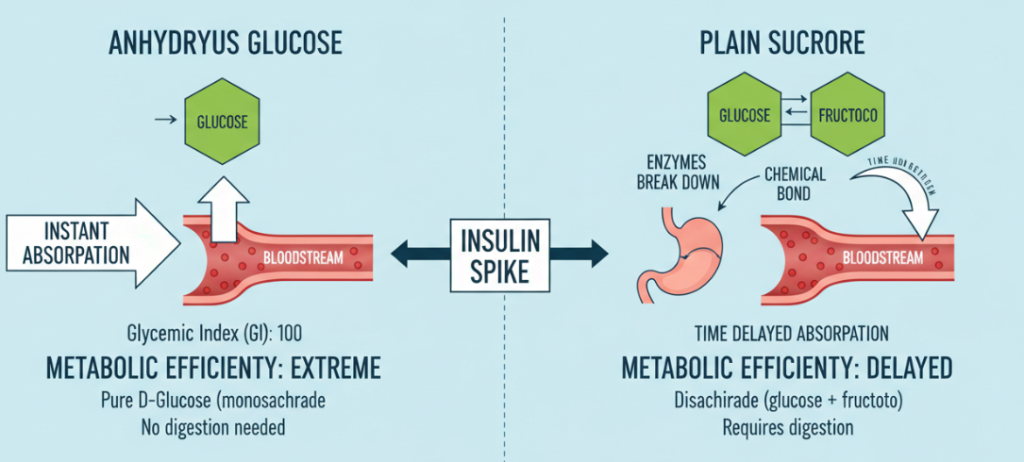
Why is anhydrous glucose preferred over other sweeteners? The main reason lies in metabolic efficiency. Its glycemic index (GI) is 100, which is the baseline against which all other carbohydrates are measured.
Plain Sucrose: Sucrose is the 1 disaccharide, meaning it consists of two molecules (glucose and fructose). In order for the body to use it to produce energy, enzymes must first break these chemical bonds. This process of digestion takes time.
Anhydrous glucose: Because it is pure D-glucose (monosaccharide), it does not need to be digested. It skips the breakdown process that complex carbohydrates or disaccharides must go through, entering the bloodstream almost instantaneously.
This extreme absorption is what triggers the “insulin spike” I mentioned earlier. While it is often recommended to avoid blood sugar spikes in daily weight management, this mechanism is deliberately exploited to advantage in certain high-intensity exercise and medical scenarios.
Application Scenarios Of Dextrose Anhydrous
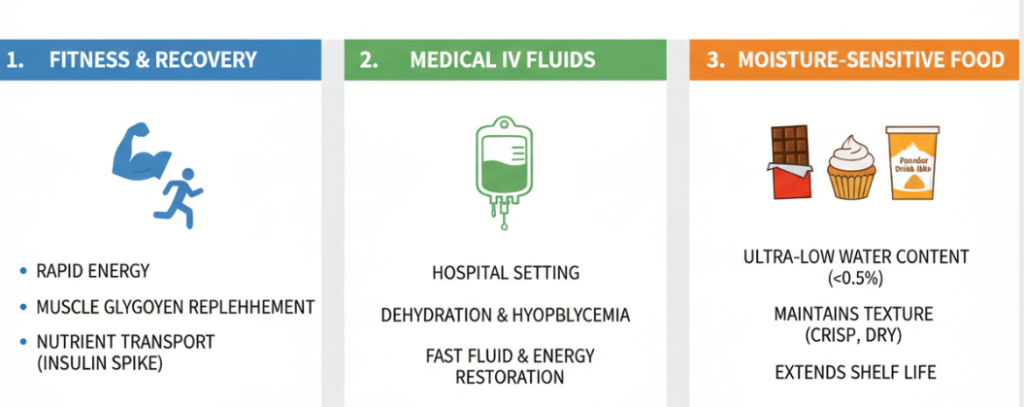
With its extremely high purity and rapid absorption capacity, anhydrous glucose has an irreplaceable position in the following 3 key areas:
Fitness And Recovery After Exercise
For fitness enthusiasts and bodybuilders, the instant energy provided by anhydrous glucose is not just a sweetener, but a functional tool.
Glycogen supplementation: After high-intensity training, muscle glycogen reserves are depleted. The rapid entry of glucose into the bloodstream immediately drives glucose into muscle cells.
The role of insulin: We often use the resulting insulin spike as a “transport mechanism” in formulation design “. It helps to “transport” other key nutrients such as creatine and amino acids into muscle tissue along with glucose, initiating the recovery process much faster than slowly digesting carbohydrates.
Medical Intravenous Fluids (IV Fluids)
In a hospital setting, speed and purity are critical. Anhydrous glucose is the main component of intravenous fluids used to treat dehydration and hypoglycemia (Hypoglycemia). Because it is chemically identical to glucose in human blood and does not contain water impurities, it can quickly restore fluid balance and energy levels without causing metabolic burden.
Manufacture Of Moisture-Sensitive Food
In the field of food technology, the ultra-low water content of anhydrous glucose (<0.5%) makes it indispensable. In many products, changes in water Activity can disrupt texture-such as chocolate, icing or powdered beverage mixes-and adding “wet” sugar to these products can be disastrous. Anhydrous glucose provides both sweetness and energy, while ensuring that the final product maintains a crisp, dry texture and extends shelf life.
Vegan Vs. Gluten-Free
Finally, from the point of view of modern dietary needs, anhydrous glucose behaves well. Since it is plant-based (usually extracted from corn starch) and highly refined:
Vegan: Its standard processing does not involve any animal by-products.
Gluten-Free: Although it is derived from grains (such as corn and occasionally wheat, but processed to remove gluten), the final crystalline glucose is generally considered safe for gluten-free diets due to its high degree of hydrolysis and purification.
Author:Jack
I am a Certified Sports Nutritionist and Food Science researcher dedicated to decoding complex ingredients. With a focus on performance nutrition, I specialize in explaining the science behind fuel sources like Dextrose Anhydrous to help athletes and health-conscious consumers make informed dietary choices for optimal recovery.