 SGNUTRI


Produkt suchen
Hilft Allulose beim Abnehmen? Wie es tatsächlich funktioniert
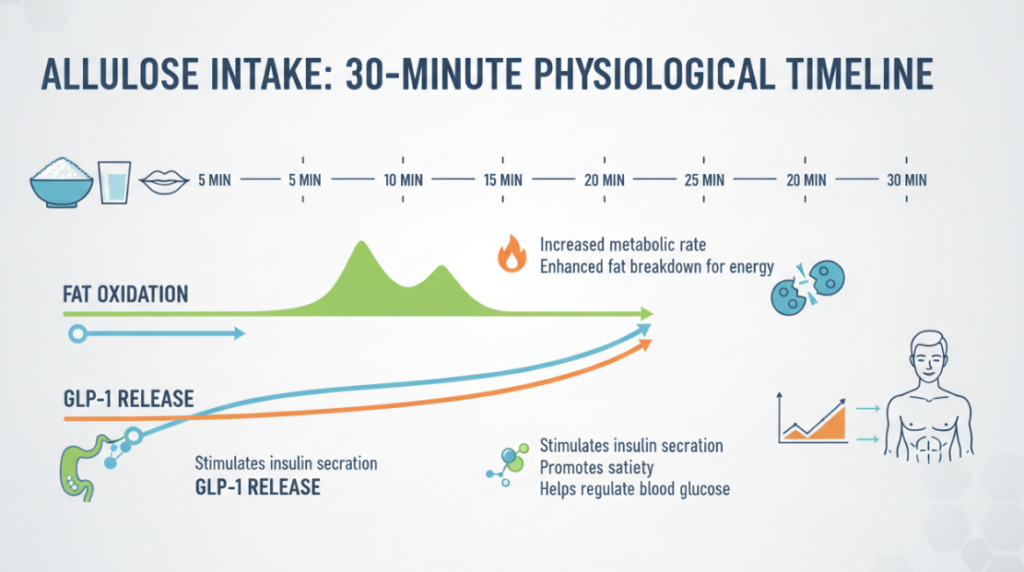
Can allulose help with weight loss? The answer is yes. But don’t get me wrong, it’s not a simple “heat offset” to fool the brain. The clinical data is out there: this rare sugar actually speeds up the oxidation of body fat and triggers the gut to release GLP-1-the 1 hormone that naturally suppresses appetite. It doesn’t just cut a few grams of sugar out of your diet, it directly modifies the way your body processes fat and hunger signals.
But if you think that buying a box of allulose cookies will allow you to lie down and shed meat, you’re wrong. To really see the effect, you have to understand its onset threshold and biological pathway. Next, I will break down the underlying logic of allulose forcing the body to burn fat, and tell you how it specifically helps you lose weight, and how to eat it to avoid the gastrointestinal collapse that makes countless people overturn.
Core conclusion: it is a metabolic tool, not a weight loss medicine
You can’t lose weight by sprinkling a little allulose on junk food. Allulose (D-psicose) is essentially a metabolic tool. When you eat it, about 70 percent is absorbed into the bloodstream, but the kidneys remove it intact through the urine. You taste the sweetness, but your body can’t squeeze any energy at all (only 0.4 kcal per gram).
Calorie differences aside, the real miracles of weight loss actually happen in your gut and liver. Scientists studying human metabolism have found that when you consume allulose after a meal, your body forcibly switches its preferred fuel source from carbohydrates to stored body fat.
The A.C.E. Weight Loss Framework: Three Core Mechanisms of Allulose Effect
How exactly does allulose help with weight loss? To illustrate this, I ‘ve summarized an “A.C.E. Framework”. Understand this 3 a biological mechanism, and you will understand that it is not a dimensional thing at all with sucralose, aspartame and these rotten high-street zero-kalas.
A- appetite control (Appetite Control: natural GLP-1 effect)
Allulose is a mild appetite suppressant. Recent scientific studies have demonstrated that oral administration of D-psicose directly stimulates the release of glucagon-like peptide -1(GLP-1).
People who know a little about weight-loss drugs are no strangers to GLP-1. The famous Ozempic/Wegovy aims at the same receptor. Although allulose caused mild physiological fluctuations rather than violent drug doses, the release of this endogenous GLP-1 was sufficient to slow gastric emptying. You will eat more quickly and be hungry longer. Instead of relying solely on willpower to knock down your appetite, your brain will automatically cut off the desire for the next 1 snack.
C- carbohydrate blocking (Carb Blocking: inhibition of α-glucosidase)
Allulose actively blocks the body from absorbing other carbohydrates. When you eat a 1 meal with both regular carbohydrates and allulose, this rare sugar will go to combine with alpha-glucosidase. This enzyme was originally responsible for breaking down complex carbohydrates into glucose.
By blocking this enzyme 1, allulose successfully cut off the crazy spike in blood sugar and the consequent insulin collapse. The lower the insulin level, the less time the body has to store fat and the longer it will spend burning fat.
E-Increase fat oxidation rate (Enhanced Fat Oxidation: forcing the body to burn fat)
Allulose forces your liver to preferentially burn fat. In a benchmarked clinical trial of 13 healthy subjects, researchers took a 5-gram control group of psicose and aspartame head-on. It was found that those who ate allulose oxidized more fat to provide energy after the meal, while the control group still burned carbohydrates.
This means that even a handful of allulose can physically switch your metabolism and dramatically increase the rate of fat oxidation after a meal.
Expert Pit-Avoidance Guide: Why do most people roll over with allulose?
No matter how much you know about the principle, it is useless to eat the wrong way. Most novices are making some low-level dietary mistakes, directly destroying the intestines and stomach, and finally can only give up completely. Listen to 1 advice, don’t step on the following two pits.
Trap 1: The Empty-Stomach Beverage Trap
Never drink liquid allulose in large doses on an empty stomach. Many people who play intermittent fasting like to squeeze 15 to 20 grams of allulose syrup into their empty black coffee in the morning. The human body has no enzyme that breaks down D-psicose at all. Such a 1 wave of liquid suddenly rushes into the defenseless intestinal tract, which will quickly suck out the water in the reverse direction, causing jet diarrhea, severe flatulence and gastrointestinal colic.
Remember death: allulose is best eaten with solid food. If you have to drink liquid, a single dose of dead pressure within 5 grams, first give the stomach a little time to establish tolerance.
Trap 2: “Ketogenic Junk Food” Calorie Compensation
“Zero sugar” is not equal to “zero card”. The food factory stuffed those brownies and ketogenic cookies that claimed to be added with psicose, with almond flour, butter and heavy cream. A cookie does have no sugar, but it still contains 400 calories of dense fat. You 1 3 a cool one. You should be fat and you should be fat. Making a calorie gap is the last word for weight loss. The correct use of allulose is to flavor raw foods such as Greek yogurt or oatmeal, not as an excuse to binge on high-caloric ketogenic desserts.
Great PK for weight loss: allulose vs other sugar substitutes
Different sugar substitutes react differently in the gut. In this dimension of weight loss, allulose and its main competitors perform very differently:
Sweetener Comparison Table
| Süßstoff | Allulose | Erythritol | Stevia |
| Increases Fat Oxidation Rate | Ja | Nein | Nein |
| Stimulates GLP-1 Release | Ja | Nein | Nein |
| GI Discomfort Risk | Hoch (if consumed in excess on an empty stomach) | Mäßig | Niedrig |
| Geschmacksprofil | Almost exactly like real sugar | Noticeable cooling aftertaste | Slight bitter aftertaste |
Practical Dosage Guide: How Much Should You Eat Every Day?
Keeping your intake within the clinical onset interval can squeeze out its weight loss dividend and preserve your stomach. The clinical trials that really show that they can improve fat oxidation are actually only 5 grams in a single dose.
Single meal extreme value: the intake of a meal must not exceed 0.4 grams per kilogram of body weight. If you weigh 68 kilograms (150 pounds), eat up to 27 grams per 1 meal.
All-day limit: Keep the total intake throughout the day within 0.9 grams per kilogram of body weight.
Best time to take it: Eat 5 grams of allulose 30 minutes before (or with) the heartiest meal of the day. This can directly suppress the sugar index of this meal and pull the fat burning rate after the meal to full range.
FAQ
Does allulose cause long visceral fat?
No, it won’t. The results of clinical studies are just the opposite. Allulose actually helps you reduce abdominal fat and subcutaneous fat by reducing lipogenic enzymes in the liver and increasing the rate of fat oxidation after a meal.
How much allulose do you eat every day to lose weight?
Studies have shown that as long as 5 to 10 grams of allulose is consumed with meals a day, it is enough to enhance fat oxidation and improve insulin sensitivity, and it is easy to have diarrhea if you eat too much.
Will eating allulose break my fasting state?
Strictly metabolically, no. It has only 0.4 calories per gram and does not cause blood sugar or insulin fluctuations. But we strongly recommend not to do so, eating large amounts on an empty stomach will greatly increase your risk of gastrointestinal cramps.
Does allulose cause an insulin spike?
Not at all. Allulose passes through the intestine in the body and is not converted to glucose at all. Its glycemic index is zero, which means it doesn’t trigger any insulin response.
Is allulose better than stevia when it comes to weight loss?
From a metabolic point of view, it’s really better. Although neither provides calories, allulose is active, stimulating endogenous GLP-1 release and increasing fat oxidation. Stevia, on the other hand, is just a passive “calorie replacement” without any additional metabolic gain.
Why did I get fat after eating allulose?
If you are still gaining weight while eating allulose, you have a high probability of mixing it with a high-calorie ketogenic dessert. Eating too much dietary fat (such as butter and almond flour) directly smoothes out your calorie gap, and fatness has nothing to do with psicose itself.
Verwandte Empfehlungen
-

Wie man Präbiotika mit Probiotika einnimmt
1446Erfahren Sie, wie Sie Präbiotika mit Probiotika einnehmen. Nehmen Sie sie zusammen 15-30 Minuten vor dem Frühstück für maximale Darmgesundheit Ergebnisse.
Details anzeigen -
Ist Polydextrose eine gute Quelle für Ballaststoffe?
1193Entdecken Sie Polydextrose: Ein kalorienarmer, ketofreundlicher funktioneller Ballaststoff, der die Darmgesundheit und den Blutzucker unterstützt.
Details anzeigen -
Lactitol-Monohydrat: Eine sauber schmeckende Zucker-Alternative
1826Sgnutri liefert Lactitol- und Ispaghula-Hülsen-Granulat für Ballaststoffformulierungen für die Verdauungsgesundheit und Lebensmittelanwendungen.
Details anzeigen -
Hochfructose-Pulver: Ein konzentriertes Süßungsmittel für Trockenformulierungen und funktionelle Anwendungen
1947Erfahren Sie mehr über Fruktosepulver und -sirup und verstehen Sie, was Maissirup mit hohem Fruchtzuckergehalt ist und wie er als Süßstoff verwendet wird.
Details anzeigen