 SGNUTRI



Search Product
What Is The Use Of Maltodextrin In Beer Brewing? See The Body, Terminal Specific Gravity And Sweetness
Maltodextrin is mainly used in beer brewing to replenish the thin body of the beer and make the beer taste fuller. Ordinary brewer’s yeast has difficulty utilizing its long dextrin. This part of the dextrin remains dissolved in the wine after fermentation, which can increase the final specific gravity and usually bring limited sweetness. If a beer’s fermentation performance meets expectations, but the taste is considered too thin during tasting, maltodextrin is worth a sample comparison. Pilsner bench trial · Brewing yeast fermentation study
Why doesn’t beer necessarily taste sweeter when the terminal gravity increases?
Maltodextrin is produced by the partial hydrolysis of starch and contains glucose chains of varying lengths. Adding glucose and maltodextrin separately to the wort before fermentation can increase the initial specific gravity (OG). During fermentation, yeast readily utilizes glucose, converting it into alcohol and carbon dioxide. The longer dextrin in maltodextrin is more likely to remain until the end of fermentation, becoming a residual leachate that increases the final specific gravity (FG). FDA definition of maltodextrin · Brewing yeast fermentation study
A hydrometer reads density. Dextrin left in the wine can raise the reading, but the sweetness depends on which sugars are left in the wine and how much of each. The U.S. FDA describes maltodextrin as a non-sweet sugar polymer, and SG Nutri’s product information also describes it as non-sweet or slightly sweet. Therefore, when judging the addition effect, the endpoint specific gravity is used to track the fermentation results, while sweetness and fullness depend on the evaluation. SG Nutri maltodextrin product information · FDA definition of maltodextrin
Yeast strains can alter this result. Strains that can secrete glucoamylase can break down some of the residual dextrin into glucose and continue fermentation. The endpoint proportion may be lower than expected. If fermentation continues after packaging, the additional carbon dioxide generated may also cause excessive carbonation. When encountering this type of strain, the amount of dextrin that can be left should be estimated based on the fermentation results of actual trials. Study of glucoamylase-producing brewing yeasts
Why do wines experience different amounts of the same amount of feed?
The molecular weight distribution of dextrin affects the fullness of the inlet. Researchers at the Technical University of Munich added different sizes of maltodextrin to the same Pilsner beer. Under the experimental conditions of 10 g/L, the trained evaluation team concluded that samples with a higher molecular weight distribution were fuller than samples with a lower molecular weight distribution. This number corresponds to a specific base wine and experimental raw materials. Switch to a different wine, or a different maltodextrin; the sensory differences need to be re-identified. Pilsner bench trial, Table 5
When looking at the raw material specifications, you can first check the glucose equivalent (DE). It represents the level of reducing sugars in dry matter, measured as glucose. This item alone cannot tell how much glucose or how much longer dextrin is in the raw materials. Taking the DE 18–20 specification published by SG Nutri as an example, when conducting a small test of the formula, the glucose and maltose content can be checked again, and the endpoint specific gravity after fermentation can be verified using the yeast used in actual production. SG Nutri maltodextrin specification · Study of maltodextrin molecular weight and beer body
Use the same batch of beer to test the body and foam separately
Take the same batch of finished wine, leave one portion for comparison, and add maltodextrin solutions of different concentrations to the rest. Each sample was controlled for the same dilution ratio, temperature, and carbonation level, and was numbered and then blinded to record the fullness and sweetness, respectively. If the taste is fuller and the sweetness still meets the target, a batch of fermentation trials will be conducted according to the planned feeding node, the initial specific gravity and the terminal specific gravity will be recorded, and the taste of the finished product will be reviewed. Adding samples in a cup can first answer whether the taste value is worth adjusting, and then a small fermentation test can confirm how much dextrin is actually left in the wine. Pilsner bench trial · Brewing yeast fermentation study
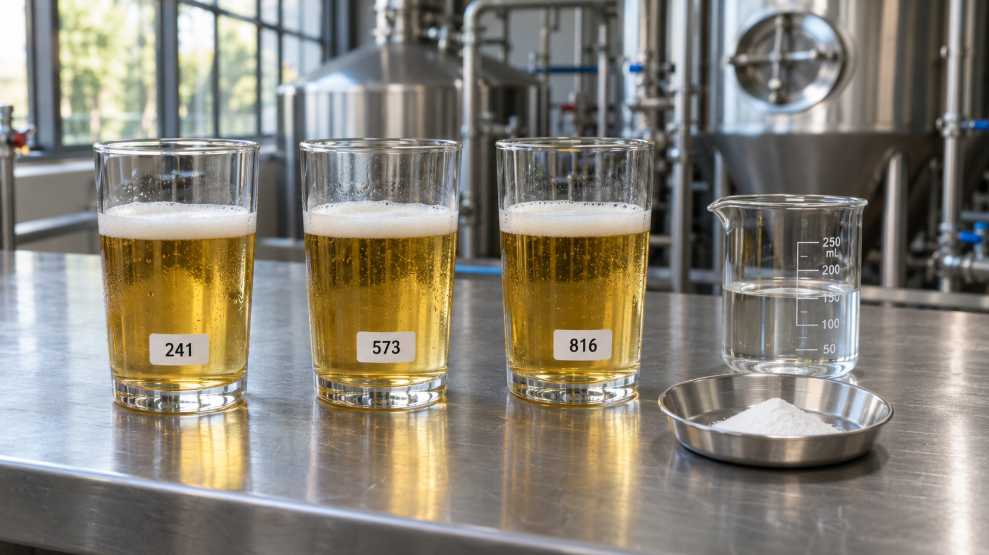
If you want to extend the steeping time, time it separately under the same cup and pouring conditions. Brewing experiments have found that malt-derived proteins and other components are also related to foam stability. If the wine is fuller after adding samples, the foam will subside at a similar rate. The visible benefit of this dosage on the wine is reflected in the taste. Brewing trial on malt components and foam stability
Related recommendations
-

Maltodextrin AlternativesNatural Swaps for Healthier Eating
2819Professional Guide To Natural Alternative To Maltodextrin. Find Healthy Swaps For Blood Sugar And Weight Management.
View details -
Allulose Health Benefits: Why Switch Your Sweetener Now
2624Discover Allulose Health Benefits. Switch Your Sweetener Now For GLP-1 Triggers, Carb Blunting, And Real CGM Data.
View details -
How Does Allulose Affect Net Carbs? Starting From The Us Nutrition Label
443Allulose counts toward total carbs on U.S. labels. Learn to calculate net carbs per serving and avoid subtracting it twice.
View details -
What Is Dextrose Anhydrous Used For
2250Discover The 3 Main Uses Of Dextrose Anhydrous: Medical IVs, Sports Recovery, And Food Manufacturing.
View details