 SGNUTRI



Search Product
Fructooligosaccharides Market Size and Applications: From Global Forecasts to Formulation Specifications
Two public reports on the global fructooligosaccharides (FOS) market provide $4.53 billion and $5.1 billion in 2030 size forecasts, respectively. Both reports include sources of sucrose and chicory, powders and liquids, as well as food and beverages, dietary supplements, infant formulas, and animal feed. For the formulation team, the differences start here: beverages need to verify the FOS retention after heat processing, powders need to calculate the actual content per serving, and baby formulations also need to verify the composition of ingredients and the conditions of use in the target market.The Business Research Company market report · Grand View Research market report
How big is the global fructooligosaccharide market?
| Research firm | 2026 market estimate | 2030 market forecast |
|---|---|---|
| The Business Research Company | $3.42 billion | $4.53 billion |
| Grand View Research | $3.3 billion | $5.1 billion |
The two agencies’ estimates for 2026 differ by $120 million, and by 2030, the gap is projected to widen to $570 million. These figures are suitable for determining the approximate magnitude of the global market. To estimate the demand for a particular type of powder or syrup, it is also necessary to verify the products, uses, and regions covered in the report, and to confirm whether sales are counted by delivered weight or by broken-down weight. The public summary does not provide sufficiently detailed underlying data to explain the difference between the two forecasts. The Business Research Company market report · Grand View Research market report
What is the difference in ingredients between sources of sucrose and chicory?
The market report classifies both raw material routes under FOS. When sucrose is used as a raw material, enzymes can transfer fructosyl groups to sucrose molecules to form short-chain fructooligosaccharides (scFOS) represented by sucrose trisaccharide (GF2), sucrose tetrasaccharide (GF3) and sucrose pentasaccharide (GF4). Another route is to partially hydrolyze inulin extracted from chicory to obtain a mixture of fructooligosaccharides with different chain length distributions. When evaluating whether the two raw materials can be replaced, in addition to the total FOS content, chain length distribution and residual monosaccharides and disaccharides must also be compared. The former relates to whether existing raw material composition data can be used, while the latter will affect the sugar content calculation of the finished product. FDA response to GRAS Notice 605 · Technical data from GRAS Notice 717, published by FDA
Given the same FOS 95, what is the actual difference between the liquid and powder contents?
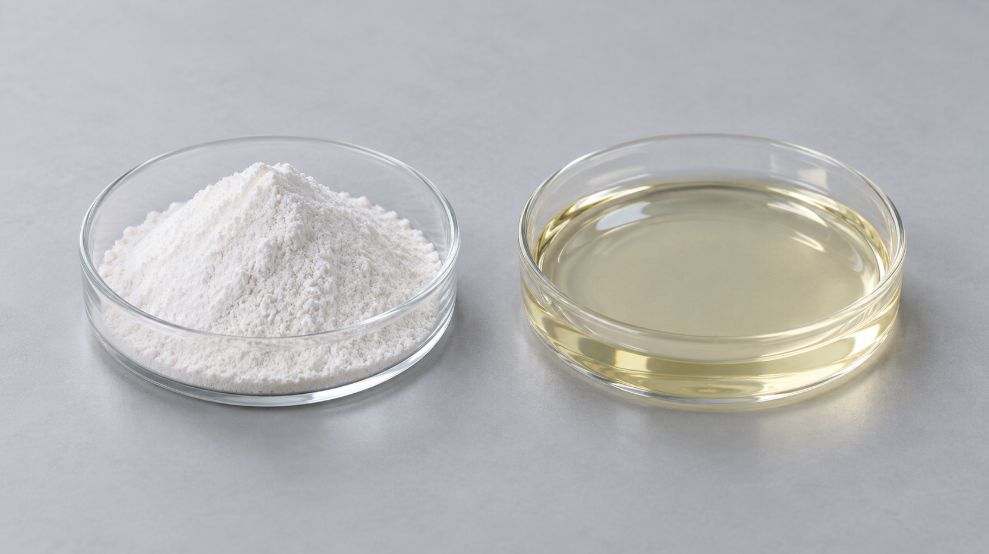
Let’s look at the dry basis first. The publicly available specifications of SEGO Nutrition (SGNUTRI) classify both liquids and powders into two grades: FOS 55 and FOS 95. 55% and 95% refer to the mass ratio of FOS to dry matter. Liquids also need to be considered based on their solid content, while powders need to be considered based on their moisture content. Calculate how much FOS the incoming material actually contains, multiply the weight of the incoming material by the dry matter ratio, and then multiply by the dry-based FOS content. Saigao Nutri fructooligosaccharide specification sheet
Let’s do a conversion example using specification boundaries. If the solid content of the FOS 95 liquid is 75% and the dry-based FOS is 95%, then each 100 kg of feed contains 71.25 kg of FOS. If the moisture content of FOS 95 powder is 5% and the dry-based FOS is 95%, then each 100 kg of feed contains 90.25 kg of FOS. The difference between the two is 19 kilograms. Formula trial calculations can be performed by first using the specification value and then calculating the batch’s feed quantity using the batch’s inspection report (COA). Saigao Nutri fructooligosaccharide specification sheet
What do you think of drinks, supplements, and baby formulas?
For acidic beverages, first check the retention rate after heat treatment. One study subjected FOS extracted from rice bran to heating tests at 90, 100, and 110 °C in buffer solutions at pH 5.0, 6.0, and 7.0, respectively. Under these experimental conditions, the lower the pH, the faster the degradation of the three FOS components measured. When developing acidic beverages, a small trial can be conducted using the actual formulation and the planned sterilization conditions to compare the FOS content before and after sterilization. If the loss causes the finished product to fall below the target value, the formulation or processing conditions must be re-verified. Fructooligosaccharide thermal stability study
Calculate the actual content of each dietary supplement powder packet first. Assuming a target of 2 grams of FOS per bag, based on the specification boundaries above, approximately 2.22 grams of FOS 95 powder and approximately 3.83 grams of FOS 55 powder should be added (moisture content is calculated at 5%). If the total capacity of each bag is only 3 grams, the latter specification will exceed the capacity simply by increasing the amount of material. If you also plan to declare dietary fiber on the U.S. nutrition label, you should separately verify whether the raw materials fall within the scope of inulin and inulin-type fructans as described in the FDA guidelines. Saigao Nutri fructooligosaccharide specification sheet · FDA dietary fiber labeling guidance
The baby formula is first verified against the target market before setting specifications. EU regulations stipulate a total upper limit of 0.8 grams per 100 ml for specific combinations consisting of 90% galacto-oligosaccharides and 10% high molecular weight fructo-oligosaccharides. When using other combinations or other caps, their applicability must be demonstrated in accordance with regulations. The U.S. FDA’s GRN 1271 response addresses the specific short-chain FOS, full-term infant milk-based formulations, and corresponding dosages described in the notification. When evaluating whether the same ingredient can be used in two markets, the ingredient composition, formulation category, and amount added under edible conditions should be compared item by item. Consolidated EU Delegated Regulation (EU) 2016/127 · FDA response to GRAS Notice 1271
Related recommendations
-

Is Allulose A Carbohydrate? Net Carb Impact Exposed
2557Is Allulose A Carbohydrate? Yes, But With Zero Net Carbs. Discover Its Real Impact On Blood Sugar And Keto Macros.
View details -
Is Allulose a Fiber? How It Truly Affects Your Digestion
2738Is Allulose A Fiber? No. Is Allulose A Prebiotic? Yes. Discover Its True Impact On Digestion And Avoid Bloating.
View details -
Is Allulose a Healthy Sweetener? Safety Pros & Cons
2600Is Allulose A Healthy Sweetener? Learn The Safety Pros And Cons, CGM Benefits, And Hidden Baking Traps.
View details -
Allulose and Liver Health: What Human Evidence Shows
795Explore allulose and liver health, including human trial findings, evidence limits, and food-use considerations.
View details