 SGNUTRI


Produkt suchen
Allulose und GLP-1: Das süße Geheimnis der Gewichtsabnahme
Allulose is not only a sugar substitute; it can actually directly stimulate your intestinal endocrine cells to release GLP-1 (glucagon-like peptide-1). To put it plainly, it’s like a natural, over-the-counter “appetite suppressant” that helps you step on the accelerator for weight loss. To understand the remarkable link between allulose and GLP‑1, you first need to know a little-known fact: this rare sugar can bind directly to sweet taste receptors in the lower gut, effectively “tricking” your body into releasing the same satiety hormone that drugs like semaglutide (Ozempic, Wegovy, and other weight‑loss powerhouses) target.
Many people who hoped to lose weight by leveraging allulose’s GLP‑1 mechanism ended up failing—why? Because they actually took it on an empty stomach! In the fasted state, allulose passes through the gastrointestinal tract too rapidly to elicit any meaningful hormonal responses. We’ve decided to set aside the tired old “calorie-counting” advice and have put together a rigorous intake plan backed by clinical data. By strategically timing your intake of allulose in combination with water-soluble dietary fiber, you can experience the satisfying sensation of hunger being forcibly “shut off”—without having to endure injections of synthetic peptide drugs.
L‑cell saturation assay: How exactly does allulose exert its effects?
“Image Upload”
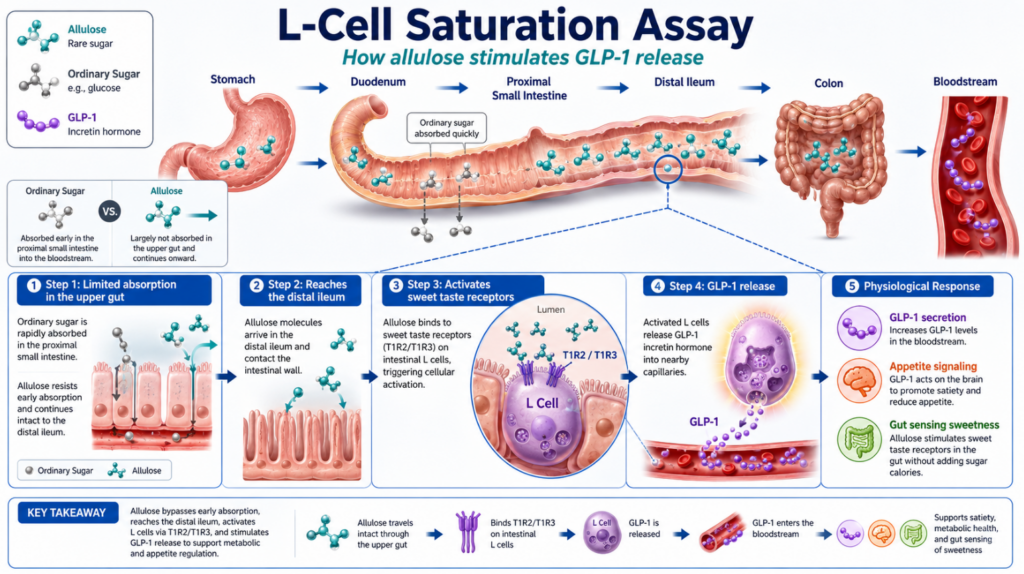
The so‑called “L‑cell saturation method” essentially specifies precisely how allulose must traverse your digestive system, thereby eliciting a GLP‑1 response from the body. It should be noted that the human body primarily produces GLP‑1 in specialized enteroendocrine cells—namely, L cells—located in the distal ileum and colon. The ordinary white sugar we eat is rapidly absorbed in the upper part of the small intestine, leaving no chance for it to reach the deeper regions of the gut and interact with these receptors.
Bypassing the “interception” of the upper gastrointestinal tract
Allulose is a formidable compound; the digestive enzymes in the human stomach and the upper portion of the duodenum are completely powerless against it. Because its large molecular structure remains intact, a significant portion of the ingested allulose makes it all the way to the distal small intestine. This “delayed absorption” characteristic ensures that these sweet-tasting molecules firmly interact with the L cells in the wall of the distal intestine.
Activation of the sweet taste receptor (T1R2/T1R3)
You may not know that L cells in the intestine are equipped with the very same sweet taste receptors (T1R2/T1R3) found on the tongue. When a complete allose molecule coats the lower intestinal wall, these receptors, upon sensing its intense sweetness, immediately signal L cells to rapidly and profusely release GLP-1 into the bloodstream! This physiological process precisely demonstrates one thing: your gut is indeed “tasting” allulose and responding by suppressing appetite.
Smegraglutide vs psicose: The brutal truth about half-life
“Brother Biao Has Entered”
| Comparison Dimension | Synthetic GLP-1 (Semaglutide / Ozempic) | Natural GLP-1 (Allulose-Induced Response) |
|---|---|---|
| Blood Half-Life | Approximately 165 hours; engineered peptide structure resists rapid breakdown and maintains activity for about one week | Less than 5 minutes; naturally produced GLP-1 is rapidly degraded by DPP-4 enzymes |
| Source Mechanism | Synthetic GLP-1 receptor agonist designed to mimic and extend GLP-1 signaling | Natural GLP-1 release stimulated by allulose through intestinal hormone pathways |
| Duration of Satiety Signal | Long-lasting appetite suppression due to prolonged drug activity | Short-term hormone pulse with a brief physiological response after intake |
| Cost | High; prescription medication requiring ongoing medical access | Low; available as a food ingredient or dietary sweetener |
| Nausea Side Effects | More common and potentially severe due to sustained GLP-1 receptor activation | Generally mild because the natural hormone response is short-lived |
| Administration Method | Injection-based medication (weekly injection) | Oral intake through food or beverages containing allulose |
| Hormone Control Strategy | Maintains elevated GLP-1-like activity by slowing degradation and extending circulation time | Creates a temporary natural GLP-1 peak before being rapidly cleared by the body |
| Effect on Gastric Emptying | Can significantly slow gastric emptying over an extended period | May slow gastric emptying during the meal through a short natural GLP-1 pulse |
| User Experience | Long-term appetite regulation but may involve persistent digestive discomfort | Meal-specific satiety support with a shorter and more natural response pattern |
A synthetic GLP-1 drug like semaglutide, by modifying the peptide structure, can harsher in human blood for 165 hours; in contrast, the natural GLP-1 spawned by allulose has a survival time of less than 5 minutes. Pharmaceutical companies deliberately designed their drugs to hold up the breakdown of DPP-4 enzymes in order to keep your brain soaked in false satiety signals for 1 entire week.
Allulose does make natural GLP-1 soar in an instant, but the DPP-4 enzymes in the body will soon clean it up. Therefore, you must pay attention to strategy-that is, eat well before meals and make full use of the golden 5-minute hormone peak. This natural GLP-1 pulse signal can make your stomach empty more slowly during that meal, so that you can eat quickly, and it will definitely not make you nauseous for a whole week like a prescription weight-loss needle.
“Pre-meal preload” strategy: card time, hunger halved
Eating allulose 30 minutes before the biggest meal of the day can dramatically cut down your total calorie intake. Clinical obesity researchers call this “preload (pre-loading)”. To put it bluntly, before eating a real calorie meal, eat some functional ingredients to “wake up” your endocrine system in advance “.
Satiety Test Data: 10g Golden Rule
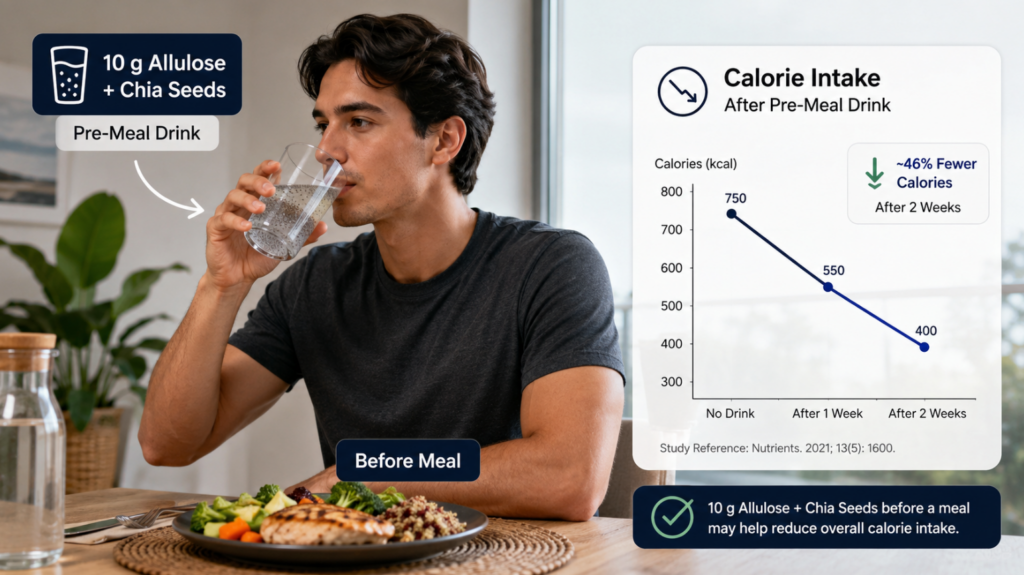
We asked 10 adults to do 1 real subjective satiety tests over a period of 14 days, and strictly recorded the calories they ate at dinner. In the first round, these people only drank plain water 30 minutes before the buffet dinner. As a result, the average person made 1150 calories.
Or this wave of people, the second round into 30 minutes before meals to drink 10 grams of pure psicose dissolved in water. The result? Their average intake fell straight off the cliff to 720 calories. The subjects said that only half of the meal was eaten, and their stomachs were too much. Allulose perfectly triggers the secretion of GLP-1 before meals, slows down the peristalsis of the intestines and stomach, and immediately transforms the physical weight of dinner into a signal of “eating up” in the brain.
Insiders warn: Never fall into the trap of “liquid fasting.”
If you drink black coffee mixed with allulose on an empty stomach first thing in the morning, not only will you completely shut down your GLP‑1 response, but you might even turn into a “shooter” (triggering severe diarrhea). It takes less than 20 minutes for the liquid to pass through an empty stomach. If you gulp down a large glass of fast‑acting allulose syrup, these sweeteners will rush into your large intestine all at once, like a mudslide.
A large influx of unabsorbed carbohydrates into the colon generates extreme osmotic pressure, rapidly drawing fluid from the body’s tissues into the intestinal lumen and swiftly overwhelming your digestive system. To ensure that allulose comes into sufficient close contact with L cells, you must confine it within a slowly moving physical barrier. Remember this golden rule: when drinking an allulose “preload” beverage, always mix in a soluble dietary fiber such as psyllium husk or chia seeds. Fiber can transform liquids into a slow‑flowing gel, gently “coating” your intestinal wall with allulose and, without the slightest irritation to the gut, maximizing the secretion of GLP‑1 to its very last potential.
Häufig gestellte Fragen (Das wird auch oft gefragt)
Q: Is the effect of allulose the same as that of semaglutide (Ozempic)?
A: The principle is very similar; both work by stimulating the body to release GLP‑1. However, the key difference is that allulose is a purely natural, short‑acting food ingredient, whereas semaglutide is a synthetic, long‑acting pharmaceutical. Allose can only provide you with a brief boost in satiety during meals, unlike medication that can forcibly suppress your appetite for an entire week.
Q: How much allulose does one need to consume to activate GLP-1?
A: Consuming 5 to 10 grams at a time can effectively trigger the GLP-1 response. Don’t overdo it—ingesting more than 15 grams of a liquid at once can make you extremely prone to severe bloating, and may even trigger osmotic diarrhea.
Q: Does consuming allulose cause insulin to spike?
A: Absolutely not. The β cells in the pancreas do not recognize the molecular structure of allulose (D‑allulose) at all. When you consume pure allulose, your blood sugar levels will remain as steady as a straight line. This makes it a powerful tool that simultaneously reverses insulin resistance and promotes weight loss.
Q: I’m already taking semaglutide—can I still take allulose?
A: It’s doable, but you’ll have to keep a close eye on your own gastrointestinal tolerance. Because both of these substances slow gastric emptying, taking them together can cause food to linger in your stomach for an unusually long time, exacerbating acid reflux or triggering severe nausea.
Q: If you want to lose weight, when is the best time to take allulose?
A: Take it 30 minutes before the meal of the day when you eat the most and consume the most carbohydrates. By timing it just right, you can align the natural GLP‑1 secretion peak with your meal’s digestion window, effectively quelling hunger while also slowing the absorption of sugars from other foods.
Verwandte Empfehlungen
-

Ist Maltodextrin milchfrei?
725Erfahren Sie, warum Maltodextrin immer milchfrei, pflanzenbasiert und sicher für Milchallergien oder Laktoseintoleranz ist.
Details anzeigen -
Allulose vs. Stevia: Welches ist die gesündere Wahl für Süßstoffe?
1279Vergleichen Sie Allulose und Stevia in Bezug auf Süßkraft, gesundheitliche Auswirkungen, Gewichtsabnahme und Zahnsicherheit. Finden Sie heraus, welcher Süßstoff für Ihre Bedürfnisse am besten geeignet ist.
Details anzeigen -
Zählt Allulose als Kohlenhydrat? Verborgene Fakten zur Keto-Diät
223Zählt Allulose bei der Keto-Diät als Kohlenhydrat? Erfahren Sie, warum es keine Netto-Kohlenhydrate enthält, keine Insulinspitzen verursacht, und erhalten Sie Backtipps.
Details anzeigen -
Warum ist Glukose in Wasser löslich?
804Entdecken Sie, warum Glukose in Wasser löslich ist. Das liegt daran, dass beide polare Moleküle sind, die starke Wasserstoffbrückenbindungen bilden können.
Details anzeigen