 SGNUTRI


Produkt suchen
Allulose comes from what plant? Source Guide
To answer allulose comes from what plant?, the production routes of trace amounts of allulose and commercial ingredients detected in food cannot be placed on the same level. Allulose can be found in small amounts in sources such as wheat, raisins, and dried figs, but this does not mean that commercially available allulose is extracted directly from these plants or fruits.
Direct source of commercial ingredients
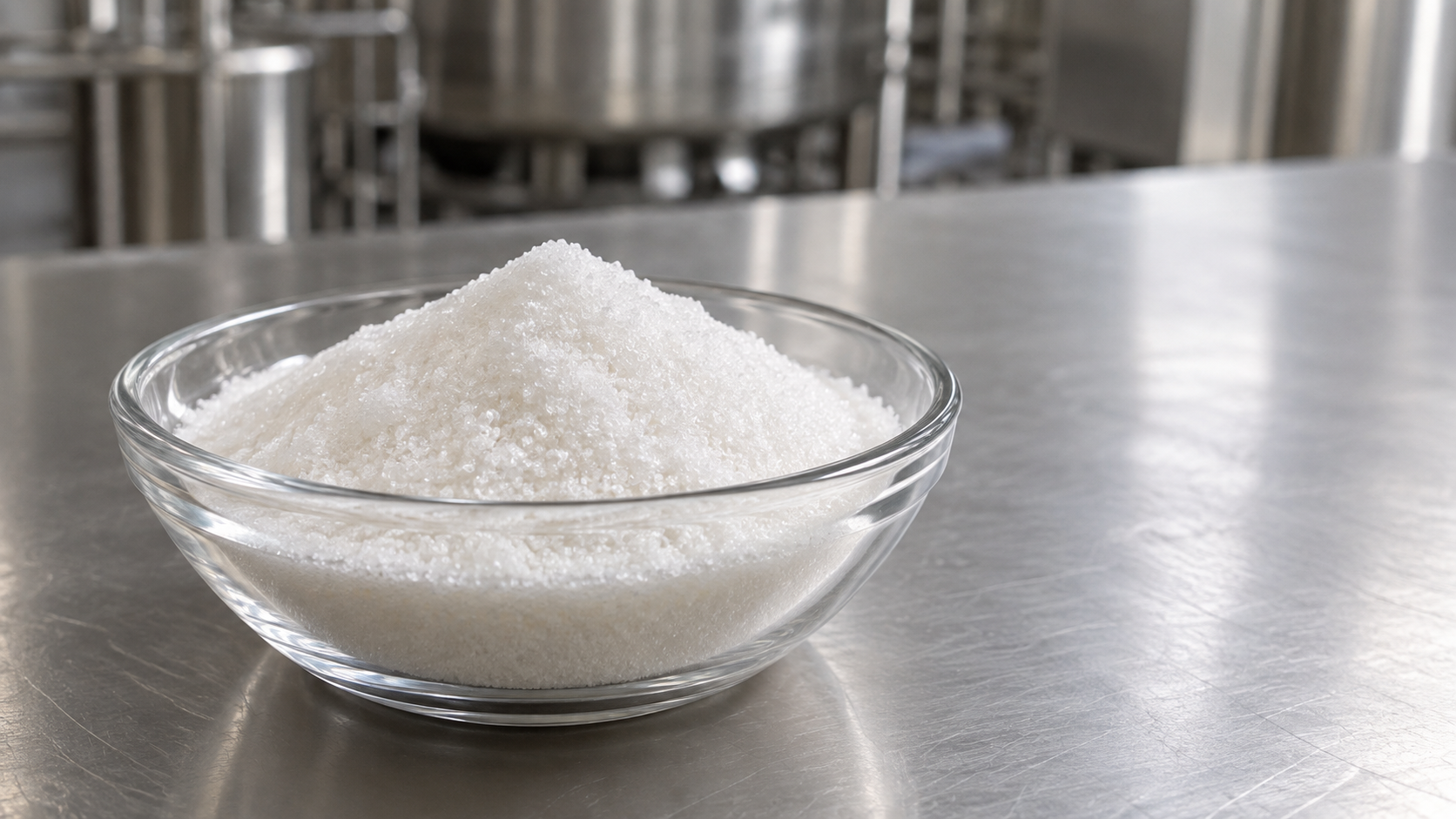
The mainstream approach to commercial allulose is to use fructose solution as the direct reaction substrate, rather than extracting or leaching the fruit to obtain allulose. Fructose substrates may come from glucose or fructose formed by saccharification and isomerization of starch, or from glucose and fructose after hydrolysis of sucrose in sugarcane or sugar beets. Therefore, what can be determined is its direct substrate and upstream route, and not all products can be summarized by a single fixed plant name.
“Isolate ”not extracted from fruit”
Industrial processes convert fructose into allulose through enzymatic processes. The reacted sugar solution also contains unreacted fructose and other small amounts of components, which must then be separated and purified to obtain the specified composition of allulose syrup; the crystallized product must continue to crystallize, separate solid and liquid, wash and dry. The “separation” mentioned here is the separation of allulose from the enzymatic reaction sugar solution, not the extraction of the same component from fruit.
Confirm the upstream source of the specific product
To determine which upstream plant source a specific product uses, the direct sugar source, upstream starch or sucrose source, and the supplier’s raw material traceability information should be verified. Different raw material sources will not change the chemical identity of qualified D-allulose, but may affect supply chain claims such as corn origin, organic, non-GMO, allergens, etc.; “natural ”“non-synthetic” or “corn-free” cannot be launched based solely on product name, plant origin or enzymatic production method. When judging a specific product, we should ultimately return to the raw material traceability chain, not the product name.
Verwandte Empfehlungen
-

Tägliche Zufuhr von löslichen Ballaststoffen
1042Erreichen Sie Ihre tägliche Zufuhr an löslichen Ballaststoffen von 5-10 g. Senken Sie Ihren Cholesterinspiegel und verbessern Sie Ihre Gesundheit mit unserer Top-Lebensmittelliste.
Details anzeigen -
Ist Maltodextrin ketofreundlich?
1194Ist Maltodextrin Keto? Nein. Sein hoher Gi-Wert (85-105) treibt den Blutzucker in die Höhe und unterbricht die Ketose schneller als normaler Haushaltszucker.
Details anzeigen -
Ist Allulose ein präbiotischer Ballaststoff? Echte Vorteile für die Darmgesundheit
1138:Ist Allulose ein Ballaststoff? Nein. Ist Allulose ein Präbiotikum? Ja. Erfahren Sie mehr über die tatsächlichen Vorteile für die Darmgesundheit und vermeiden Sie Fallstricke bei der Zusammensetzung.
Details anzeigen -
Galakto-Oligosaccharid-Sirup - Vorteile und Anwendungen
1961Erfahren Sie mehr über Galacto-Oligosaccharide-Sirup von Sgnutri, einem Premium-Anbieter von präbiotischen Süßungsmitteln für Clean-Label-Lebensmittel- und Getränkeanwendungen.
Details anzeigen