 SGNUTRI


Search Product
What Does Allulose Do To Your Body
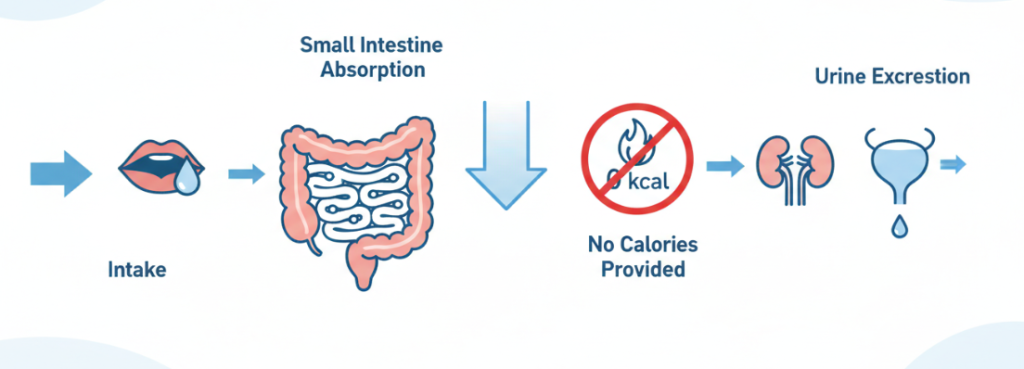
The most direct answer is that it basically “passes through the intestines” and will never ruin your diet plan or break your stomach. When you eat this rare sugar, about 70-84% will be quickly absorbed into the blood through the small intestine, but here’s the point-we don’t have the enzymes that metabolize it to produce energy. It doesn’t cause blood sugar to spike, nor does it stimulate insulin to hoard fat, and the absorbed allulose ends up in the urine intact. For those of us in ketogenic and fitness circles, this means that it has almost zero calories (only 0.4 kcal/g) and zero net carbon water, allowing you to stay firmly in the ketogenic state of burning fat. And the mouth, because most of it is absorbed in the first half of the intestinal tract and does not run to the lower digestive tract to ferment, you will hardly encounter severe flatulence, farts or diarrhea like eating erythritol.
The Absorption Process
To really understand what this thing does to the body, we have to look at its particular route in the digestive tract. Usually we eat ordinary sugar, the body will disassemble it for fuel. But allulose is something else entirely.When this rare sugar into the small intestine, the vast majority-almost 70 to 84 percent-will quickly enter the bloodstream. However, we should remember that absorption does not mean that we can use it. The human body simply does not have the specific enzymes needed to break down allulose. Since the body can’t burn it as energy, it wanders around in your blood and becomes inert substance that is not recognized. This peculiar biological “detour” mechanism is the fundamental reason why it behaves very differently from ordinary carbohydrates in the body.
Blood Sugar And Insulin
The most significant effect of allulose on your body is that it “doesn’t” have an effect-especially on blood sugar. The body has no enzymes to metabolize this sweetener, so it will not be converted into glucose. As a result, eating allulose won’t raise your blood sugar levels at all. Because there’s no sugar spike in your blood, your pancreas won’t be triggered to secrete insulin. In fact, many people who lose fat and get stuck are planted here. This physiological advantage is too critical. You know, insulin is a proper “fat hoarding hormone”. By avoiding the insulin spike, your body won’t receive the wrong signal to store excess energy as fat. Instead of getting caught up in the body’s fat storage cycle, the allulose circulating in the bloodstream is eventually filtered by the kidneys and excreted directly through the urine as it is. When it leaves, your body is almost exactly the same as it was before you ate it.
To the forefront of nutrition
Soluble Fiber
Soluble fiber is a highly stable, indigestible dietary ingredient that promotes weight control by increasing satiety and reducing food intake. Versatile in application, it is widely used to enhance the nutritional profile and texture of foods, beverages, and health products.
Soluble Fiber
Prebiotic
A prebiotic functions as a proliferation factor that is selectively degraded and utilized by beneficial intestinal bacteria, such as Bifidobacteria. This process exerts a positive effect on overall human health, often accompanied by metabolic advantages such as low caloric impact and minimal blood sugar fluctuations due to their unique digestive stability.
Prebiotic
Vitamins
Vitamins are essential organic micronutrients, categorized into water-soluble and fat-soluble forms, that regulate critical physiological processes such as metabolism, immunity, and coagulation. Due to their sensitivity to light, heat, and moisture,
Vitamins
Ketogenic And Fitness Advantage
For our friends in the ketogenic and fitness circles, it is a matter of life and death to find out how a sugar substitute affects the metabolic state. It is precisely because of the light absorption and non-metabolic excretion of allulose that it brings a huge benefit to low-carb eaters: almost zero calories and zero net carbon. It is only a minuscule 0.4 kilocalories per gram, and this thermal effect is basically negligible in practice. When you eat allulose, your body doesn’t think it’s a carbohydrate at all. This means that it will never interrupt your metabolic state. By operating in a way that does not provide available carbohydrates, allulose is perfect for keeping your body safely in a fat-burning ketogenic state, allowing you to eat the sweetness of your mouth without sacrificing your fitness or diet goals.
Gastrointestinal Health
Many people experience an embarrassing physiological side effect when they try other sugar substitutes: gastrointestinal collapse. However, the attitude of allulose to our digestive tract is actually quite gentle. The secret here is all about where it was absorbed. As I mentioned earlier, 70-84% of allulose is sucked away early in the small intestine. Because it is pulled out at such an early stage of the digestive process, it has no chance to travel to your lower digestive tract (colon) to stay. This is in stark contrast to the traditional sugar alcohol of erythritol. Ordinary sugar alcohols usually make it all the way to the large intestine, where the intestinal bacteria gnaw them like a big meal, triggering a process called “fermentation. This fermentation is the culprit that causes many dieters to experience severe flatulence, flatulence and gastrointestinal discomfort. Because the vast majority of allulose has long been comfortably in the blood waiting to be excreted as urine, there is little left in the lower intestine that can be used for fermentation. So it just goes through your body without causing the painful gastrointestinal problems of other sweeteners.
Author: Alex Rivers
I am a clinical nutritionist specializing in metabolic health and ketogenic lifestyle coaching. With over a decade of experience helping clients optimize their body composition through evidence-based nutrition, I have become passionate about demystifying the science behind modern sugar substitutes.
The prev: Is Polydextrose A Good Source Of FiberThe next: Is Resistant Dextrin Keto Friendly
Related recommendations
-

Does Soluble Fiber Increase Satiety
716Yes! Soluble Fiber Forms A Viscous Gel, Slowing Gastric Emptying And Boosting Satiety Hormones Like Glp-1 To Stop Hunger.
View details -
Does Vitamin C Help With Hangovers
738Yes, Vitamin C Helps Hangovers By Boosting Glutathione. Discover How 1,000mg Neutralizes Toxins And Speeds Up Recovery.
View details -
Is Allulose a 1 to 1 Substitute for Sugar? The Truth
342Is Allulose A 1 To 1 Substitute For Sugar? No. Learn Exact SMB Conversion Ratios To Master Perfect Keto Baking Today.
View details -
Is Polydextrose Safe
521Explore Polydextrose Safety, Metabolic Benefits, And Gut Tolerance. Learn Why FDA/EFSA Classify It As GRAS.
View details