 SGNUTRI


Rechercher un produit
L'allulose est-il considéré comme un glucide ? Ce qu'on ignore souvent sur le régime cétogène
D'un point de vue chimique, l'allulose est effectivement un glucide ; mais d'un point de vue nutritionnel, sa teneur nette en glucides est absolument nulle. Bien que votre organisme absorbe ce sucre rare dans le sang, il n'existe aucune enzyme capable de le métaboliser, et vous ne pouvez compter que sur vos reins pour l'éliminer directement dans l'urine.
Alors, arrêtez de vous inquiéter à l’idée d’en manger et de sortir de la “ cétose ”. Beaucoup d’amis qui suivent un régime cétogène strict paniquent lorsqu’ils voient sur l’emballage d’un en-cas la mention “ 4 g de glucides ”, pensant que leur apport quotidien en macronutriments est complètement compromis. Sérieusement, croire aveuglément aux étiquettes nutritionnelles standard de la FDA (Food and Drug Administration américaine) ou se fier trop à des applications qui calculent automatiquement les glucides provoque souvent de fausses alertes et vous conduit à vous imposer de nombreuses restrictions alimentaires inutiles.
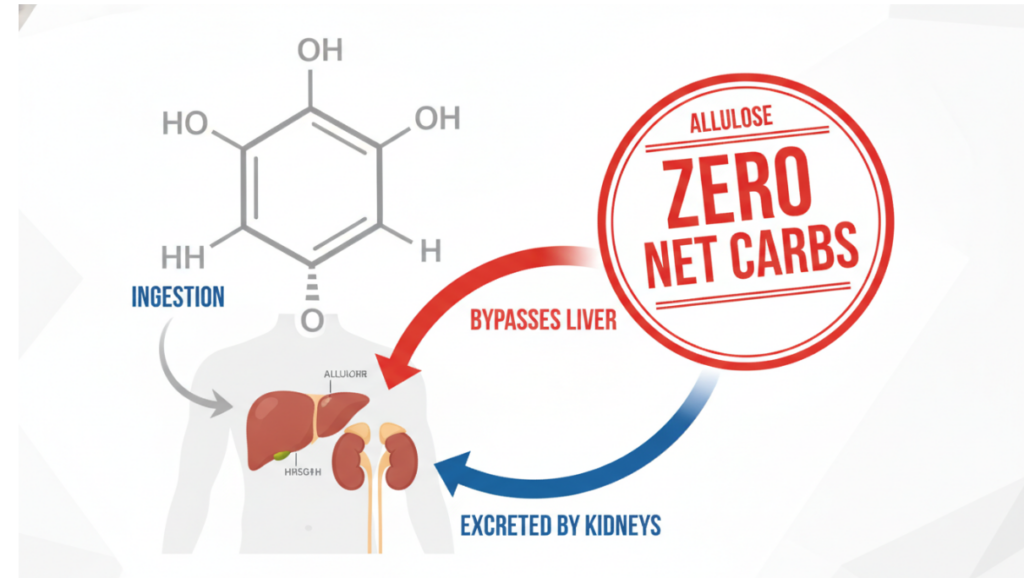
En état de cétose, l'allulose est-elle considérée comme un glucide ?
La réponse est la suivante : vous n’avez absolument pas besoin d’en tenir compte dans votre apport quotidien en glucides nets. Lorsque vous vous demandez si “ l’allulose est considérée comme un glucide ”, veillez à distinguer clairement sa structure chimique de son métabolisme réel dans l’organisme.
C'est exact, la FDA impose aux fabricants d'indiquer l'allulose dans la rubrique “ glucides totaux ” figurant sur l'emballage. Mais la différence la plus importante réside dans le fait que ces glucides particuliers ne sont absolument pas transformés en glucose. Après un repas, votre courbe de glycémie reste parfaitement linéaire. Cependant, les applications de suivi nutritionnel comme Mint Health ou MyFitnessPal ne déduisent souvent pas automatiquement l'allulose pour vous. Vous devez soustraire manuellement le nombre de grammes de glucides totaux afin que les données relatives à la cétose soient exactes.
“ ACE Law ” : pourquoi votre corps ne détecte-t-il pas l'allulose ?
Pour aider chacun à y voir plus clair d’un seul coup d’œil parmi les différents substituts du sucre et à ne plus se laisser berner par les stratégies marketing des commerçants, nous avons résumé la ’ règle ACE “ (taux d’absorption, calories, réponse endocrinienne) :
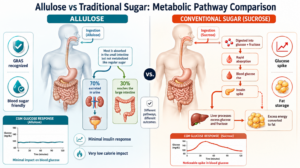
Taux d'absorption (absorbabilité) : l'intestin grêle absorbe environ 70% de l'allulose (D-allulose) que vous consommez, tandis que les 30% restants parviennent dans le gros intestin. Il provoque des troubles gastro-intestinaux bien moins importants que les alcools de sucre tels que l'érythritol ou le xylitol.
Calories (apport calorique) : l'allulose ne contient que 0,4 calorie par gramme, contre 4 calories par gramme pour le sucre blanc classique. En effet, votre organisme dépense plus d'énergie à le métaboliser et à l'éliminer qu'il n'en apporte.
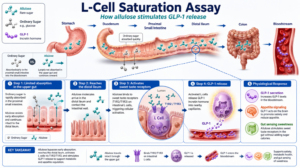
Réponse endocrinienne : son effet sur la glycémie et la sécrétion d’insuline (réponse endocrinienne) est absolument nul. De plus, des observations cliniques récentes ont montré que la consommation d’allulose pouvait même déclencher activement la sécrétion de GLP-1 — une hormone intestinale chargée spécifiquement d’indiquer au cerveau que “ je suis rassasié ”.
Évaluation des édulcorants à l'aune de la “ matrice ACE ”
| Édulcorant | (A) Pourcentage d'absorption | (C) Rendement calorique | (E) Pic d'insuline |
| Allulose | ~70% – 80%Il est absorbé dans la circulation sanguine par l'intestin grêle, mais ne peut pas être métabolisé ; il est excrété sous sa forme initiale dans l'urine. | 0,2 – 0,4 kcal/g(Environ 101 TP3T de sucre de table) | Zéro Il ne provoque pas de pic d'insuline. Des études indiquent qu'il pourrait même atténuer (réduire) les pics de glycémie et d'insuline après les repas. |
| Erythritol | ~90%Absorbé rapidement et en grande quantité dans l'intestin grêle, mais non métabolisé pour produire de l'énergie ; excrété sous forme inchangée dans l'urine. | ~0,2 kcal/g(Considéré comme équivalent à 0 kcal dans de nombreuses régions) | Zéro Totalement non glycémique ; ne provoque aucune réponse glycémique ni insulinique. |
| Stévia | ~0% (Intact)Les glycosides de stéviol ne sont pas absorbés tels quels. Les bactéries intestinales les décomposent en stéviol, qui est absorbé mais n'est pas utilisé comme source d'énergie. | 0 kcal/g | Zéro Sans effet sur la glycémie. Certaines études suggèrent qu'il pourrait même améliorer la sensibilité à l'insuline. |
| Sucralose | ~11% – 27%Mauvaise absorption. La grande majorité passe dans le tube digestif sans être absorbée, tandis que la petite partie absorbée est excrétée sous sa forme initiale. | 0 kcal/g | Zéro* Le sucralose pur ne provoque pas de pic d'insuline aigu. (Remarque : les sachets de produits en poudre vendus dans le commerce, comme le Splenda, contiennent souvent de la maltodextrine ou du dextrose, qui PEUVENT provoquer un pic d'insuline). |
Données mesurées : test CGM comparant l'allulose et l'érythritol
Quelle que soit la qualité de la théorie avancée, celle-ci doit être validée par des tests concrets. Afin de déterminer “ quel est exactement l’effet de l’allulose sur l’organisme humain ”, notre équipe a recruté 10 adultes ayant atteint un état de cétose stable et a mené un test de 14 jours avec surveillance continue de la glycémie (CGM). Au cours de la première semaine, tous les participants ont consommé 15 grammes d’allulose pur à jeun ; au cours de la deuxième semaine, ils ont consommé 15 grammes d’érythritol à jeun.
Les données issues de la surveillance continue de la glycémie (CGM) se sont révélées très surprenantes : dans les 45 minutes qui ont suivi la consommation d’allulose, la glycémie à jeun de tous les participants a baissé en moyenne de 6% ! L'érythritol, en revanche, n'a aucun effet sur la glycémie. Il semble que l'allulose puisse entrer en compétition avec certains transporteurs de glucose pour “ s'accaparer des places ” dans le tube digestif, ce qui lui confère un léger effet hypoglycémiant. Pour les amateurs de sucre ou les adeptes stricts du régime cétogène, l’allulose est bien plus qu’un simple édulcorant neutre ; vous pouvez même l’utiliser comme une “ stratégie active ” pour limiter les fluctuations de glycémie causées par ces glucides invisibles que vous consommez accidentellement lorsque vous mangez au restaurant.
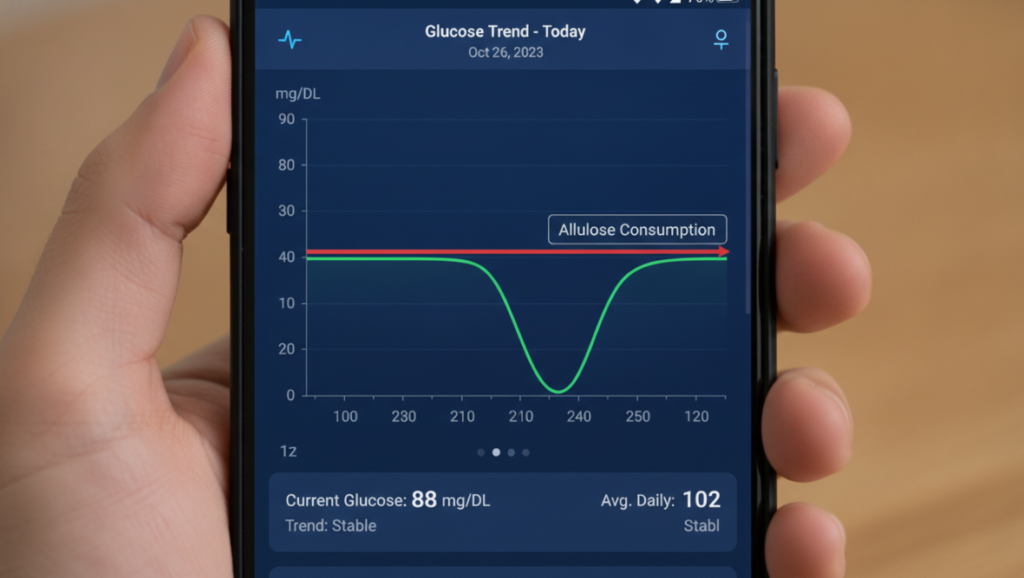
“Le piège des ” glucides fantômes » dans les étiquettes nutritionnelles et les applications de gestion budgétaire
De nombreux fabricants n’hésitent pas à exploiter les failles de la réglementation en matière d’étiquetage pour semer la confusion chez les consommateurs qui souhaitent calculer l’empreinte carbone nette de l’eau. En 2019, la FDA a publié un règlement stipulant que les marques sont autorisées à ne pas inclure l’allulose dans les rubriques “ sucres totaux ” et “ sucres ajoutés ”, mais qu’elles sont toujours tenues de l’inclure dans la rubrique “ glucides totaux ”.
Par exemple, l'étiquette d'une barre énergétique cétogène pourrait indiquer : 15 g de glucides totaux, 5 g de fibres alimentaires, 8 g d'allulose. En réalité, sa teneur nette en glucides n'est que de 2 g (15 – 5 – 8 = 2).
Mais lorsque vous scannez le code avec les applications diététiques que vous utilisez habituellement, celles-ci lisent en réalité les données brutes de l’étiquette fournies par la FDA. Vous scannez ce code-barres et le système détermine directement que la teneur en glucides nets est de 10 g (15 – 5 = 10), car son code ignore purement et simplement le mot “ allulose ”. Nous vous recommandons vivement de créer manuellement des aliments personnalisés dans votre application de suivi alimentaire et d’y saisir leurs véritables teneurs en glucides nets afin de tenir compte de ces « glucides fantômes », et de ne pas vous infliger une anxiété inutile liée aux glucides.
Guide sur la cuisson au four : les pièges de la cuisson à haute température
L'allulose subit une réaction de Maillard très violente à haute température et peut brunir beaucoup plus rapidement que le sucre blanc ordinaire. Si vous remplacez le sucre blanc par de l'allulose à parts égales pour préparer des biscuits cétogènes et que vous les enfournez à 175 °C (350 °F), je vous garantis que vous obtiendrez des biscuits brûlés et amers sur les bords, mais qui resteront mous au centre, comme des sandwichs. Pour éviter ce problème, vous devrez au moins baisser la température du four de 15 °C (environ 25 °F) et penser à recouvrir les biscuits de papier d'aluminium à mi-cuisson.
De plus, les résidus d’humidité constituent également un véritable casse-tête pour les passionnés de pâtisserie cétogène. L’allulose est un édulcorant qui absorbe l’eau de l’air à une vitesse folle. Si vous l’utilisez uniquement pour réaliser une meringue cétogène ou des biscuits croustillants, ceux-ci ramolliront et deviendront détrempés en moins de 12 heures à température ambiante. Les pâtissiers professionnels spécialisés dans les recettes à faible teneur en glucides l’utilisent dans un rapport de 1:1 avec de l’érythritol ou du sucre de fruit du moine. Cette méthode de “ mélange et association ” garantit des biscuits croustillants et croquants tout en neutralisant parfaitement l’étrange saveur mentholée et rafraîchissante de l’érythritol pur.
Foire aux questions (FAQ)
Q1 : En quoi les aliments contenant de l'allulose sont-ils considérés comme des glucides nets ?
La formule est simple : glucides totaux – fibres alimentaires – allulose = glucides nets. Il suffit de prendre la quantité de fibres alimentaires et le nombre de grammes d'allulose indiqués sur l'étiquette nutritionnelle et de les soustraire des glucides totaux.
Q2 : L'allulose rompt-il le jeûne ?
Non. L'allulose pur ne stimule pas la sécrétion d'insuline et sa teneur en calories est minime (0,4 kcal/g) ; vous pouvez donc continuer à pratiquer le jeûne et à favoriser l'autophagie métabolique tout en en consommant.
Q3 : Cela provoque-t-il un pic d'insuline ?
Des études cliniques ont clairement démontré que l'allulose ne provoque aucune réponse insulinique. Il est donc parfaitement sans danger pour les personnes atteintes de diabète de type 1 ou de type 2 qui doivent contrôler leur glycémie.
Q4 : Pourquoi ai-je des maux d'estomac après avoir consommé de l'allulose ?
Si vous consommez plus de 40 grammes en une seule fois, la capacité d'absorption de l'intestin grêle sera “ surchargée ”. La partie non absorbée se retrouve dans les intestins où elle fermente, provoquant des flatulences passagères ou une diarrhée osmotique (communément appelée “ nettoyage intestinal ”).
Q5 : Est-ce plus efficace que l'érythritol pour favoriser la cétose ?
Ces deux édulcorants ont une teneur nette en glucides nulle. Cependant, l’allulose est plus soluble, caramélise comme le vrai sucre et ne laisse pas de sensation de fraîcheur en bouche après consommation, contrairement à l’érythritol. Mais si vous souhaitez réaliser des biscuits durs et croustillants, l’érythritol restera un choix légèrement plus adapté.
Q6 : La FDA le considère-t-elle comme un glucide ?
Oui. D’un point de vue chimique, il s’agit d’un glucide ; il figure donc dans la colonne “ glucides totaux ” de l’étiquette. Cependant, la FDA l’exempte explicitement et il n’est pas nécessaire de mentionner les “ sucres ajoutés ”.
Recommandations connexes
-

Quelle quantité de maltodextrine peut-on consommer sans risque chaque jour ? Quelle est la limite maximale ?
60Quelle quantité de maltodextrine peut-on consommer sans risque chaque jour ? Découvrez votre limite maximale exacte en fonction de votre niveau d'activité physique et de votre santé intestinale.
Voir les détails -
L'allulose et le GLP-1 : le secret sucré de la perte de poids
59Découvrez comment l'allulose et le GLP-1 favorisent la perte de poids. Maîtrisez le protocole L-Cell et la stratégie de « précharge » pour une satiété naturelle.
Voir les détails -
L'allulose est-elle un édulcorant sain ? Avantages et inconvénients en matière de sécurité
61L'allulose est-elle un édulcorant sain ? Découvrez ses avantages et ses inconvénients en matière de sécurité, ses bienfaits pour la glycémie continue (CGM) et les pièges cachés en pâtisserie.
Voir les détails -
La maltodextrine contient-elle du gluten ? Avertissements concernant la maladie cœliaque
61La maltodextrine contient-elle du gluten ? Découvrez le « triangle de sécurité » pour les personnes atteintes de la maladie cœliaque afin d'éviter le blé caché et la contamination en usine.
Voir les détails