
 SGNUTRI


Rechercher un produit
Does Soluble Fiber Dissolve In Water
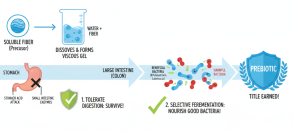
Yes, soluble dietary fiber does dissolve in water. When water-soluble fiber touches the liquid in your digestive tract, it absorbs water wildly and completely changes its physical form-from its original dry state to a thick, viscous gel-like substance. This is completely different from insoluble fiber, which increases the volume of stool by “keeping it as it is”, and this smooth “gel” moves slowly through your gastrointestinal system. It is this unique solubility and the consequent increase in viscosity that makes it so effective in delaying gastric emptying, stabilizing blood sugar, and protecting cardiometabolic health by “catching” LDL cholesterol.
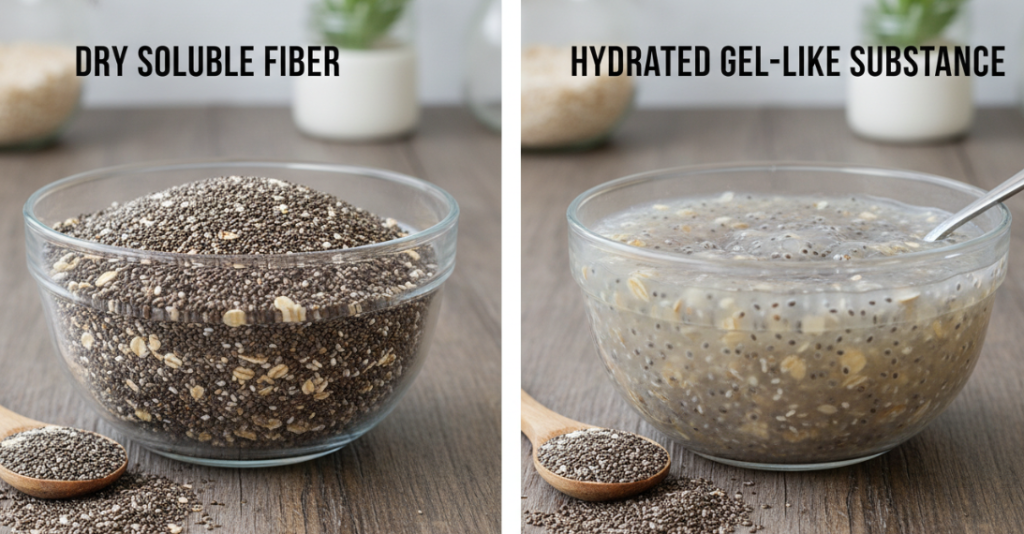
Understanding This “Gelation” Transition
To understand why water-soluble fiber is so unique, we have to look at the way it interacts with liquids. The so-called “water solubility” is essentially its strong hydrophilic ability. When you eat foods rich in water-soluble fiber, such as oats, flaxseed or beans, these fiber particles do not remain solid, but absorb water and swell. You can imagine adding water to a chia seed. The fibers form a colloidal suspension, which means that the particles are evenly distributed in the water, forming a very cohesive gel mass. This transformation is essential for those with sensitive intestines, because it means that this fiber is very gentle to the intestinal mucosa. It does not “rub” in the intestines like coarse fibers, but slides smoothly. This soothing effect can regulate defecation very effectively without the discomfort caused by coarse fibers.
How The ‘Sponge Effect’ Slows Digestion
The greatest contribution of this dissolution process to weight management and digestive health is that it alters the rate of digestion. Since the water-soluble fiber becomes a thick gel, it will significantly reduce the speed of food leaving the stomach, which is what we often call “gastric emptying”. In the eyes of those customers who need to control their diet, this is simply a “fat reduction plug-in”. This sticky gel occupies the stomach space and constantly sends signals to the brain that “I’m full. By prolonging the time food stays in the stomach, water-soluble fiber enhances satiety and makes you less likely to snack between meals. It is the use of their own water absorption characteristics, has become a natural appetite regulator.
À la pointe de la nutrition
Fibres solubles
La fibre soluble est un ingrédient alimentaire très stable et indigeste qui favorise le contrôle du poids en augmentant la satiété et en réduisant la prise alimentaire. D'application polyvalente, elle est largement utilisée pour améliorer le profil nutritionnel et la texture des aliments, des boissons et des produits de santé.
Fibres solubles
Prébiotique
Un prébiotique fonctionne comme un facteur de prolifération qui est dégradé et utilisé de manière sélective par des bactéries intestinales bénéfiques, telles que Bifidobactéries. Ce processus exerce un effet positif sur la santé humaine en général, souvent accompagné d'avantages métaboliques tels qu'un faible impact calorique et des fluctuations minimes de la glycémie en raison de leur stabilité digestive unique.
Prébiotique
Vitamines
Les vitamines sont des micronutriments organiques essentiels, classés en formes hydrosolubles et liposolubles, qui régulent des processus physiologiques essentiels tels que le métabolisme, l'immunité et la coagulation. En raison de leur sensibilité à la lumière, à la chaleur et à l'humidité,
Vitamines
Stabilize Blood Sugar Levels
The solubility properties of water-soluble fibers also play a central role in glycemic control. As the fiber dissolves and forms that sticky barrier in the small intestine, it acts as a trap for carbohydrates and sugars. This “trapping” mechanism prevents digestive enzymes from breaking down carbohydrates so quickly. As a result, the rate at which glucose enters the bloodstream becomes slow and controlled. For those who need to monitor their insulin response or are pre-diabetic, this means avoiding the roller-coaster blood sugar spike that occurs after a meal. So, the point is not just “how much fiber you eat”, but that this fiber dissolves and physically hinders the rapid absorption of sugar.
Catch Cholesterol, Guard Heart Health
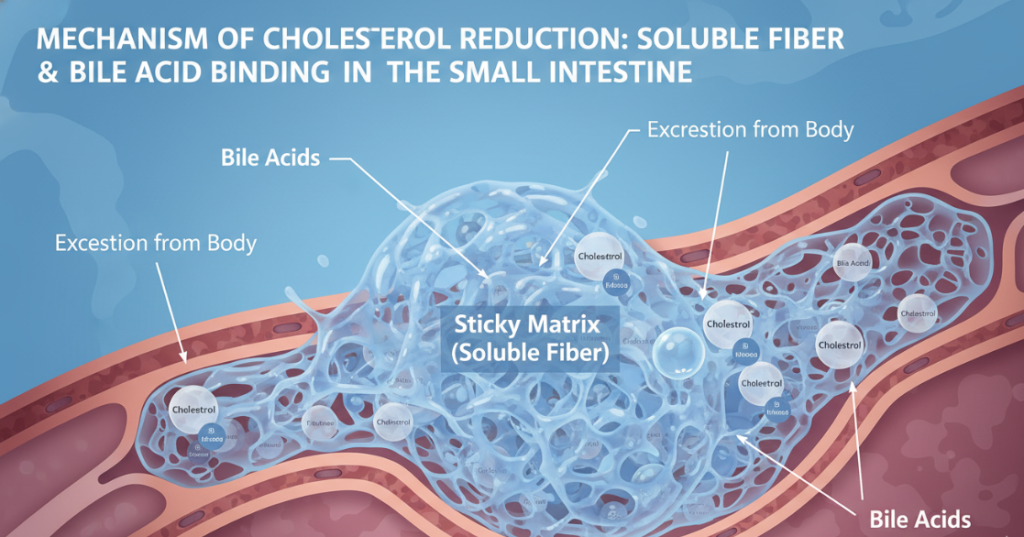
Finally, this “sponge effect” is also a key mechanism by which water-soluble fibers can claim to be “heart-protecting. As the gel passes through the small intestine, it traps bile acids (which are made from cholesterol). Because the body cannot reabsorb this “fiber-bile complex”, it is eventually excreted as waste. In order to replenish the lost bile acids, your liver has to pump cholesterol from your blood, which lowers your total cholesterol and LDL (the “bad” cholesterol) in your blood. This entire protection process relies entirely on the ability of water-soluble fibers to dissolve in water and form a “sticky matrix” that can grab the compound “. If it doesn’t dissolve, it won’t be able to do this cardioprotective task.
Author: Sarah Miller
Hi, I’m a Registered Dietitian Nutritionist specializing in digestive health and metabolic wellness. My passion is translating complex nutritional science—like how fiber interacts with your body—into clear, actionable advice. I help clients master their gut health and blood sugar levels through evidence-based dietary strategies.
Le précédent : Does Resistant Dextrin Raise Blood SugarLe suivant : Why Is Soluble Fiber Important
Recommandations connexes
-
De quoi est composé le sirop de glucose ?
173De quoi est composé le sirop de glucose ? Découvrez ses origines végétales, le processus de raffinage et les informations relatives à la sécurité des produits sans gluten.
Voir les détails -

Suppléments de vitamine D pour les coureurs
252Guide essentiel des suppléments de vitamine D pour les coureurs. Booster la récupération et prévenir les blessures avec la bonne stratégie D3 et K2.
Voir les détails -
Le glucose est-il identique au gluten ?
276Non, le glucose n'est pas du gluten. Le glucose est un sucre, tandis que le gluten est une protéine. Découvrez pourquoi le glucose est sans danger pour les personnes atteintes de la maladie cœliaque.
Voir les détails -
Les prébiotiques sont-ils des fibres solubles ou insolubles ?
182La plupart des prébiotiques sont classés comme des fibres solubles. Découvrez pourquoi elles constituent un sous-ensemble fonctionnel distinct des fibres insolubles.
Voir les détails