 SGNUTRI


Ricerca prodotto
Allulose vs. Erythritol: Please select according to the formulation requirements
When people talk about allulose and erythritol, the easiest pit to step into is to subconsciously treat them as different names for the same sugar substitute. Although these two are both regular customers of the low-calorie sugar reduction ring, once added to the formula, the effects are really different. Before we get into the details, we must first distinguish between “single pure raw material” and “combined sugar substitute”, otherwise this idea will go astray from the beginning.
Don’t rush to compare, find the benchmark first
Root-wise, allulose is a monosaccharide and erythritol is a sugar alcohol. Don’t be fooled by the fact that everyone usually holds the title of “low-calorie sweetener”. When it comes to regulatory labels, specific usage, sweetness performance, formula adaptability and gastrointestinal tolerance, they cannot be equated, let alone replaced with closed eyes.
For example, allulose is about 70% as sweet as sucrose and provides a solid volume. It is not one of those high-multiple sugars that can be cloyingly sweet with just a little bit. As for erythritol, we must not just rely on the word “sugar alcohol” to blindly guess its sweetness, calories or substitution ratio; if we really want to be more honest, we have to use specific product and formula data to calculate it.
When the formula values volume and finished product performance more
If you’re reducing sugar but want to keep the same full volume as when you add white sugar, “filled” sugar substitutes like allulose and erythritol will definitely work much better than high-power sweeteners. The key point is, though, don’t be rigid about making equal replacements; you need to understand what combination of features your final product actually requires.
At this time, allulose tends to taste a little more delicious. For example, if your product requires a Maillard reaction (to achieve a caramel color), or you want frozen foods to taste less tough, this is the right choice. But the coin has both sides, and its strong reducing sugar reaction is also a tough one ——if your recipe is already extremely averse to noticeable browning, you’ll need to weigh it more when using it. In addition, if allulose is added during the blending process, the formulator must also take into account its moisturizing ability and its effect on freezing point.
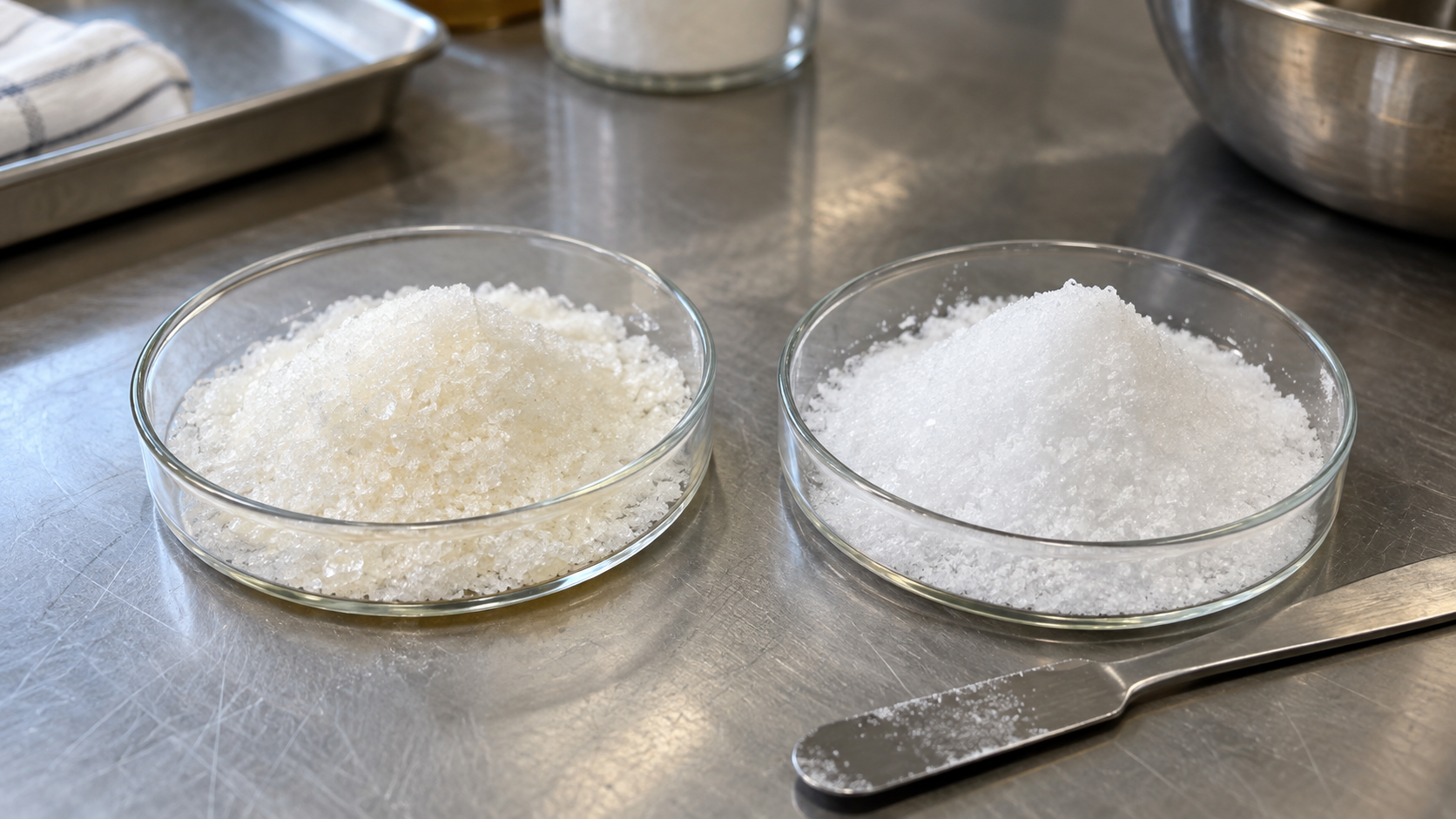
Let’s go back and look at erythritol. This stuff has two very typical “weird temper”: one is refreshing when eaten, and the other is extremely easy to crystallize. This area must focus on avoiding pitfalls. If your finished product doesn’t want a minty coolness, or doesn’t want it to crystallize easily “resanderate” after sitting for a while, don’t rush it just because it’s low in calories. These two core properties must be thoroughly understood before the formula is fully finalized.
Don’t confuse pure products with compound products
Many of the allulose sweeteners sold on the market today are actually not pure and are often mixed with erythritol or other ingredients. This compound product is completely different from pure allulose or erythritol, and the proportions of different brands are also varied.
When comparing these types of products, the first step is to be very careful with the ingredient list! See the complete composition and ranking order clearly. Then check its sweetness to see if there are any additional sugar alcohols or carriers, to find out the specific form of the product, and the actual recommended single-use dosage. Finally, this information must be put back into the regulatory requirements of the target market and calculated in conjunction with the specific food system. Don’t jump to conclusions just because you see the name of a sugar substitute printed on the front of the package.
Ultimately
If the core requirements of the formula are to maintain volume, color, moisturize or adjust the freezing point, then the performance of allulose is definitely worth your priority testing; but if your finished product is extremely sensitive to cooling and crystallization, then you must first understand what the bottom line of erythritol is in your specific system. Comparing these two raw materials always requires a realistic formulation “working environment”, which is completely meaningless if we go against it without considering the actual application scenario.
Il precedente: Allulose comes from what plant? Source GuideIl prossimo: Allulose vs. White Sugar: Differences in Formulation
Raccomandazioni correlate
-

Frutto-oligosaccaridi in polvere: benefici e usi per la salute
1862Scoprite cos'è la polvere di frutto-oligosaccaridi, i suoi benefici per la salute e gli usi più comuni negli alimenti e negli integratori-SGNUTRI.
Visualizza i dettagli -
La vitamina C aiuta con i postumi della sbornia
1129Sì, la vitamina C aiuta i postumi della sbornia aumentando il glutatione. Scoprite come 1.000 mg neutralizzano le tossine e accelerano il recupero.
Visualizza i dettagli -
È consigliabile assumere i prebiotici al mattino o alla sera?
1161Mattina o sera? Scoprite il momento migliore per assumere i prebiotici in base alle abitudini e alla vostra tolleranza digestiva.
Visualizza i dettagli -
Quanta allulosio è troppa? Smettila di rovinarti l'intestino
1055Scopri qual è la dose giornaliera sicura di allulosio. Scopri oggi stesso i limiti esatti in grammi per combattere il gonfiore e prevenire danni all’intestino.
Visualizza i dettagli