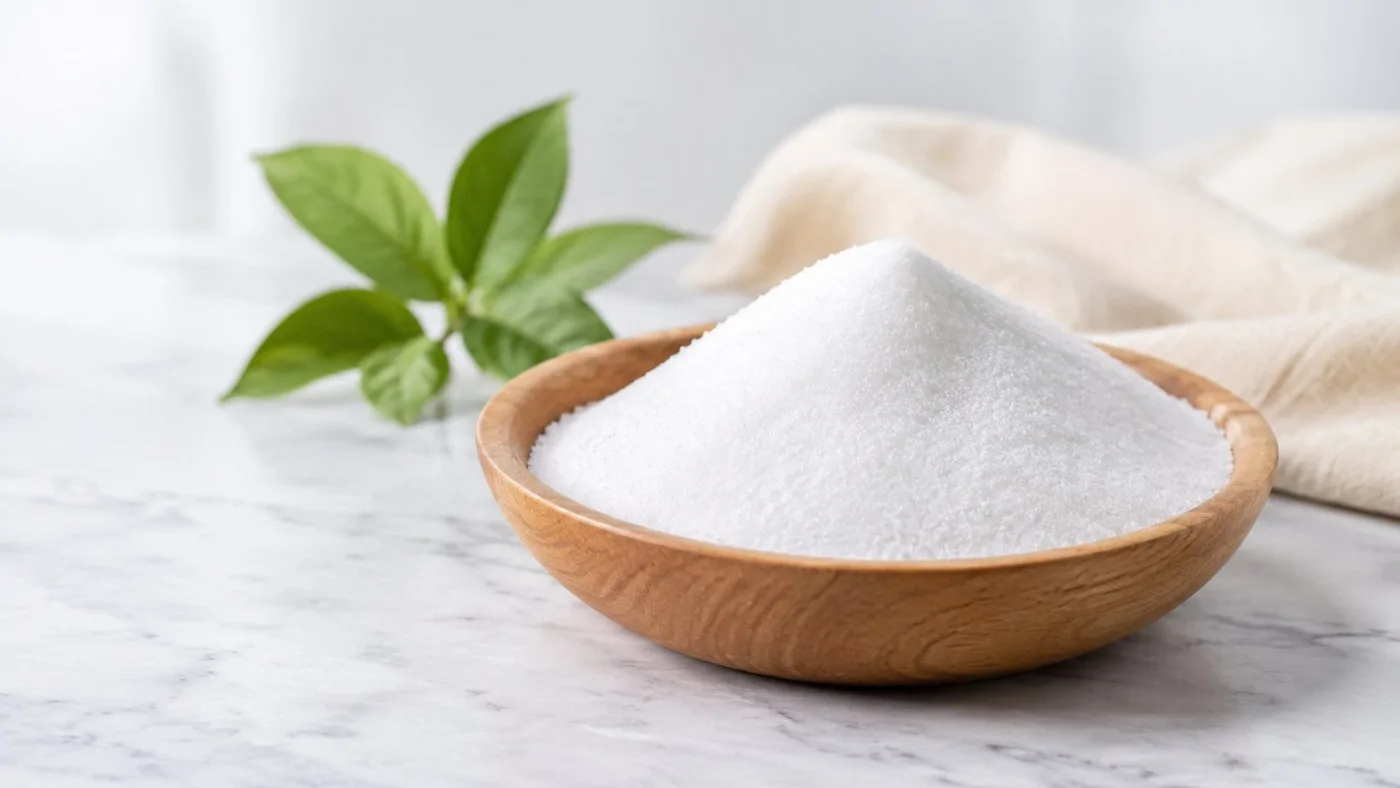
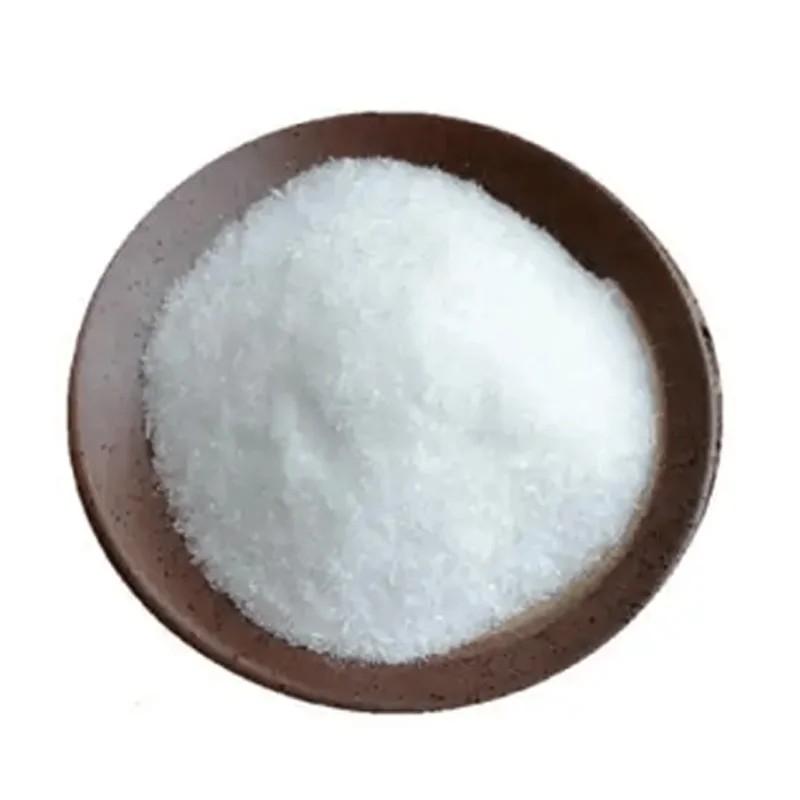
Isomalt is a crystalline sweetener used in bakery products, dairy alternatives, and beverages. The grade shown below has 45–65% of the sweetness of sucrose and a melting range of 145–150 °C, two useful starting points when adjusting sweetness or planning a trial. Review the full specifications and application examples to see what to test in your own formulation.
Isomaltitol (isomalt) is a white, odorless crystalline polyol containing GPS and GPM. The listed grade has 45–65% of the sweetness of sucrose and a melting range of 145–150 °C. Request a current specification and certificate of analysis for the grade you plan to purchase.
Specifiche tecniche
GPS+GPM Content
97–102%
Water (free and crystal)
≤7.0%
Sorbitol & Mannitol
≤2.0%
D-mannitol
≤0,5%
Zuccheri riducenti (come glucosio)
≤0,3%
Total Sugars (as glucose)
≤0,5%
No matching products. Try another filter or search.
Crystalline Xylitol Supply for Pressed Mints in the United Arab Emirates
Rimal Crest Confectionery, a confectionery manufacturer in Sharjah, sought a second supplier of food-grade crystalline xylitol for its pressed mints. After a successful press trial, it ordered 2 metric tonnes to its specified sieve limits. On delivery, the customer inspected and released 78 bags (1,950 kg) and agreed to apply a credit for two damaged bags to the next order. It confirmed a repeat order for 2 metric tonnes to the same specification, with the deposit still pending at the end of the project period.
Country / Region
United Arab Emirates (Sharjah)
Tipo di prodotto
Food-grade crystalline xylitol (a sugar alcohol used as a sweetener in pressed mints)
Project Date
June 2–September 16, 2026 (project period)
Shipping Method
Ocean freight, less than container load (LCL), CFR Jebel Ali
Customer Feedback
The customer reported that the trial blend fed steadily, the tablets came out well, and the first lot ran smoothly on the production press. For the repeat order, the customer requested the same sieve limits and asked that the bags be kept within the pallet edges.
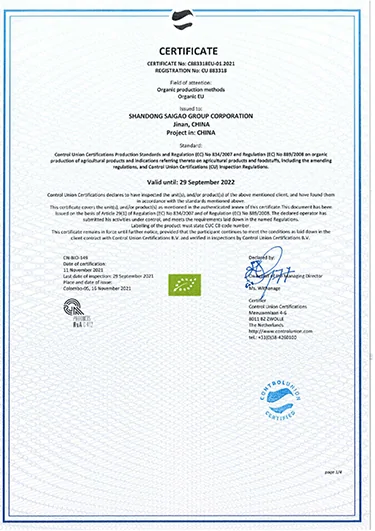
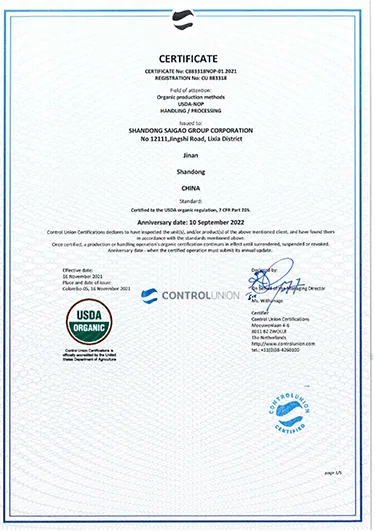
Before approving an organic isomalt shipment, verify that the supplier’s certification covers the finished product and the facilities involved. Match the actual lot, package count, and weight across the shipping documents, then check the paperwork required for the destination market.
Certificazione biologica
Lot Verification
Import Documentation
Match the shipment to its organic paperwork before authorizing dispatch.
Compare bulk organic isomalt quotes by checking whether the certificate covers the quoted grade and production site, and how much qualifying product the supplier can deliver within your receiving window. If only part of the volume is backed by those checks, assess that quantity separately.
Supplier Quotes
Certificate Scope
Production Sites
Deliverable Quantity
Verify what the supplier can certify and deliver before shortlisting a quote.
Calculate how much organic isomalt you need for confirmed launch batches, allowing for production losses and accounting for usable stock. Compare bulk orders, staggered deliveries, and distributor orders by total purchase commitment, first delivery quantity, and stock left after launch.
Minimum Order Quantity
Launch Demand
Staggered Deliveries
Inventory Planning
Size the first order around confirmed launch demand and track any remaining purchase commitment.
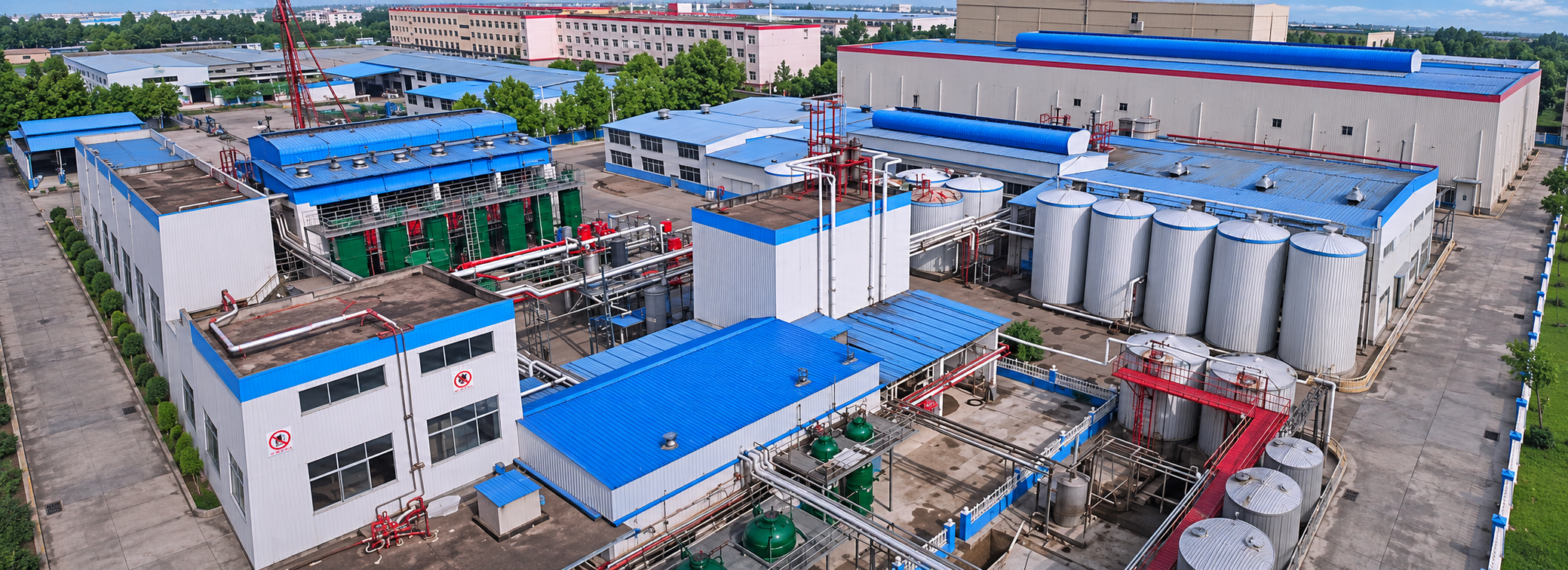
Saigao Group develops and manufactures food ingredients using bioengineering. Its product range includes soluble dietary fibers such as resistant dextrin and polydextrose, oligosaccharides such as FOS, IMO, XOS, GOS, and HMOs, and sweeteners including allulose, sucralose, xylitol, and erythritol. It also supplies DHA and exports crystalline maltitol and maltitol syrup to Europe.
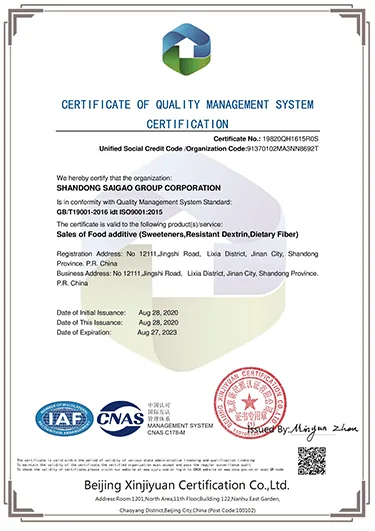
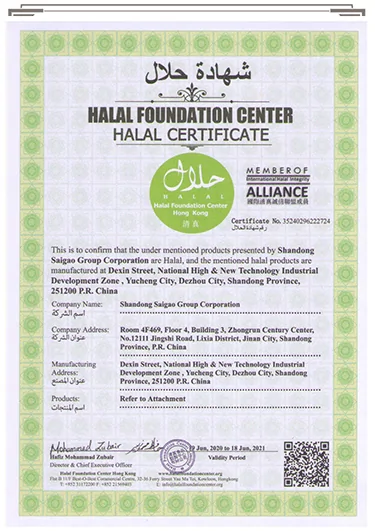
The group operates automated, GMP-compliant production lines in China, from raw material feeding through final filling. Its technical center uses HPLC, gas chromatography, and ion chromatography. Saigao exports worldwide and lists ISO 22000, ISO 9001, HACCP, Kosher, Halal, Non-GMO, and Organic among its certifications.
Before placing a bulk order, how can I verify that the isomalt meets my target market’s organic requirements and is eligible for use under my finished product’s intended organic label?
Request the supplier’s current organic certificate and product scope. Match the exact grade, legal entity, and manufacturing or handling site to the quote. Ask for sample records linking the lot number on the bag and certificate of analysis to the invoice and shipping documents. For U.S. organic imports, verify that the shipment is covered by a valid electronic NOP Import Certificate. Separately, submit the grade, manufacturing process, use rate, full formula, and proposed label to your certifier. For EU sales, ask your control body to confirm the ingredient’s classification and permitted use. Obtain written confirmation before committing to the order.
How can I use specifications and batch certificates of analysis (COAs) to determine whether two suppliers’ isomalt (INS 953) grades are interchangeable?
Request each supplier’s specification and COAs from three recent production lots. On an anhydrous basis, JECFA specifies at least 98% total hydrogenated mono- and disaccharides and at least 86% combined 1,6-GPS and 1,1-GPM. Compare the GPS/GPM ratio on the same reporting basis, water content measured by the same method, and particle size using agreed sieves. For automated feeding, also compare bulk density and fines. Test both grades on the same equipment and measure dissolution time, feed consistency, and finished-product clarity. Use the results to set acceptance limits and require numerical COA results for the parameters that affect your process.
Can I replace maltitol with isomalt in clear hard candy at a 1:1 ratio on a dry-solids basis, and what should I verify in a pilot run?
Start with a 1:1 dry-solids substitution. If your batch uses 100 kg of maltitol syrup at 75% solids, weigh enough isomalt to supply 75 kg of dry solids. Correct the isomalt weight for its measured water content and account for the water removed with the syrup. Run the existing recipe as a control and initially hold flavor and acid levels constant. For an isomalt-rich formula, trial a cook temperature around 155°C with optional vacuum and verify 1.0–1.5% residual moisture using a validated method. Compare sweetness, depositing flow, piece-weight variation, clarity, and demolding defects before approving the production recipe.
If isomalt hard candy becomes sticky or cloudy in humid distribution conditions, how can I distinguish processing, crystallization, and packaging issues and verify shelf life?
Measure moisture after cooking and before wrapping. Record cooling-room temperature, relative humidity, and time to wrap. From the same batch, compare unwrapped controls with pieces packed in the current film and a higher-barrier film. Compare film water-vapor transmission rates under identical test conditions and check seal integrity separately. Moisture gain before wrapping points to line exposure. Gain concentrated in leaking packs points to seal failure. Check cloudy pieces for crystals under polarized light. As a starting screen, test weekly for four weeks at 30°C and 75% RH, tracking mass gain, wrapper adhesion, and haze. Confirm shelf life in the final pack under intended distribution conditions.
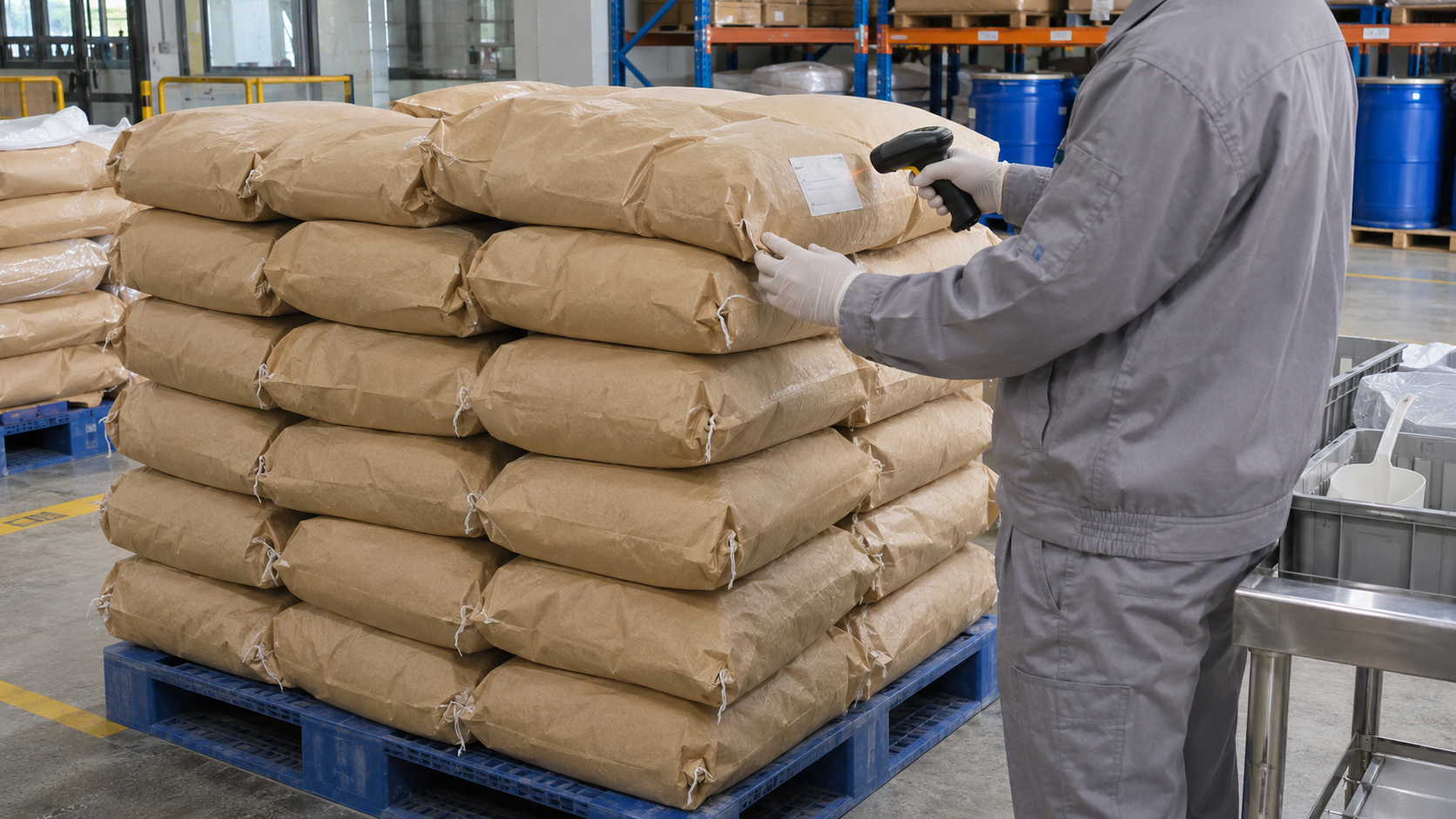
For a first full-pallet or full-container order, what should I specify for lot sampling, bag resealing, and acceptance limits for caking?
Agree on a written receiving plan by production lot. Match pallet labels to the packing list and COAs, then select bags from different pallet positions. Five bags per lot is a starting point for first-delivery screening. Keep samples separate for traceability. Record liner damage, visible moisture, and whether lumps break under light pressure. For a fine grade, a trial limit is no more than 1% by mass of hard agglomerates retained on a 2 mm sieve after gentle screening. Validate that cutoff against the approved particle size and feeder performance. Hold damaged bags and reseal opened liners immediately using a validated closure method.
When is organic isomalt worth the price premium, and how do I calculate the maximum premium I can pay based on the cost per kilogram of saleable finished product?
Divide isomalt input by accepted packed output to calculate usage per kilogram of saleable candy, including yield losses. Subtract the organic option’s other costs per saleable kilogram from the baseline cost. Include packaging, testing, segregation, and extra processing. Divide the remainder by the organic isomalt usage rate to find the break-even landed price. If the baseline costs $4.00/kg of candy, other organic production costs are $1.30/kg, and usage is 0.90 kg/kg, the ceiling is $3.00/kg of isomalt. Against a $2.50/kg landed benchmark, the maximum premium is $0.50/kg. Model any confirmed increase in net selling price separately.
 SGNUTRI