 SGNUTRI



Rechercher un produit
Allulose and Monk Fruit: How the Blend Works
Two packages can both say “monk fruit” on the front, while one lists allulose and the other lists erythritol. You might use them to make a drink equally sweet and still get different results when you bake with them. To understand an allulose and monk fruit blend, separate the sweetness from what the ingredients add to the recipe.
Monk fruit extract boosts sweetness, while allulose adds solids
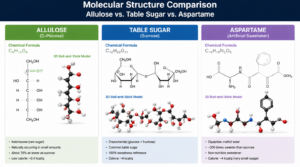
Allulose is a monosaccharide about 70% as sweet as sucrose. It adds sweetness, bulk, and soluble solids to a recipe. Monk fruit extract can supplement the sweetness at a much lower inclusion rate. If you reduce the allulose and bring the sweetness back up with monk fruit extract, the solids you removed are still missing. When those solids help give the food its texture, matching the sweetness addresses only part of the substitution.
What the ingredient list tells you
A product sold as a monk fruit sweetener may pair the extract with allulose, erythritol, dextrose, or another carrier. A product sold as an allulose sweetener can also be a single ingredient or a blend. When allulose provides bulk and solids in a monk fruit sweetener, its presence in the blend does not imply that it was extracted from monk fruit.
MV50 monk fruit extract, for example, is a pale-yellow to white powder with a mogroside V content of 48%–52%. That percentage describes the extract itself. It gives neither the proportion of extract in a blend nor its sweetness relative to sucrose.
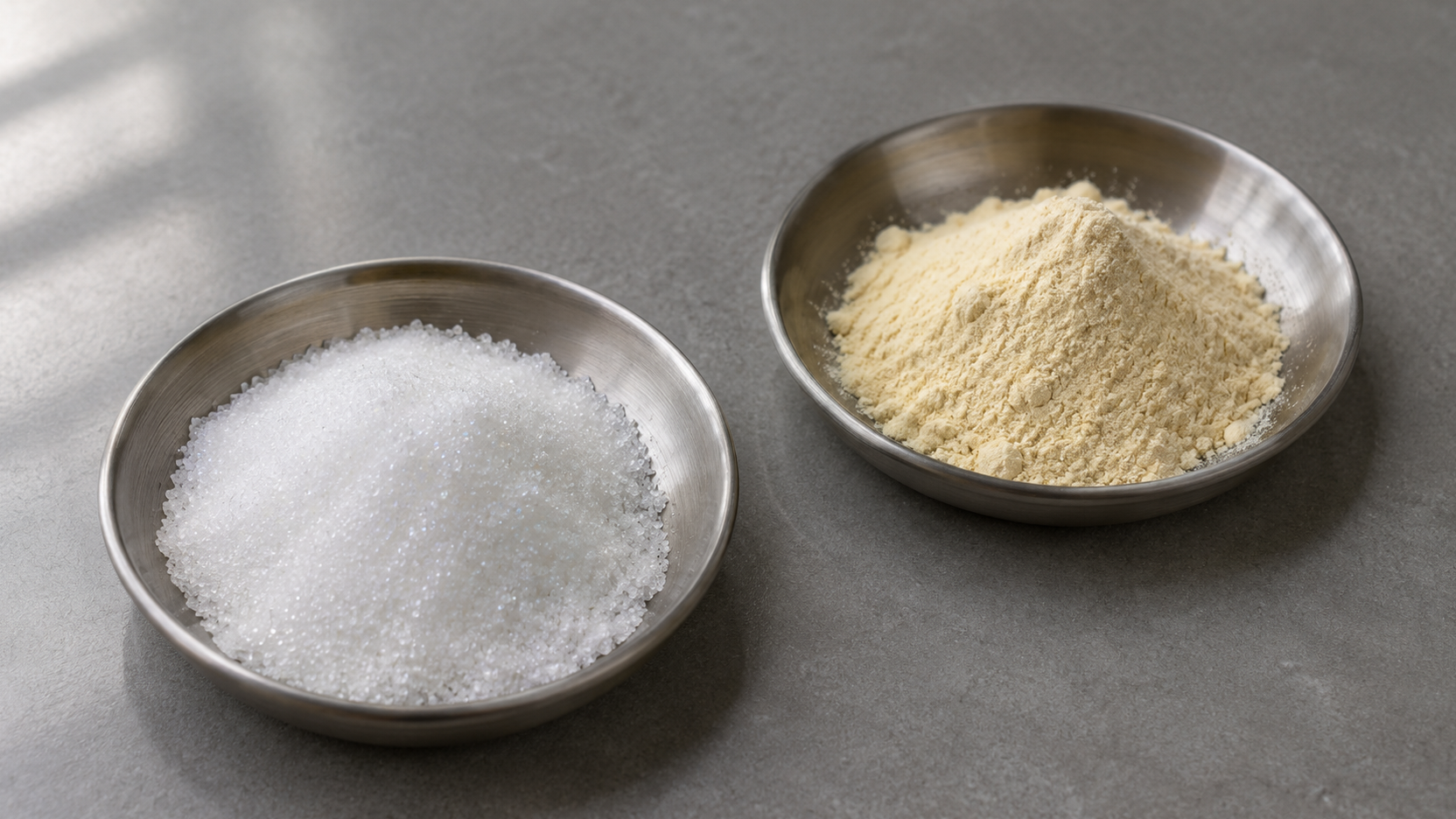
The ingredient list can tell you whether a product contains allulose, but the name of the blend does not specify a standard ingredient ratio. There is no universal substitution ratio either. Compare single ingredients and finished blends separately. Read the stated sweetness and actual ingredient content alongside the serving amount, and check whether the directions use grams or teaspoons. Particle size, bulk density, and how the spoon is filled all affect how much a teaspoon weighs. A spoon-for-spoon conversion applies only to the product it was written for. Changes in concentration, temperature, acidity, or the food itself can also affect perceived sweetness and aftertaste.
What changes in a recipe when sweetness stays the same
In baking, allulose can contribute to browning because it is a reducing sugar. It can also affect moisture retention and the finished texture. If you are switching from a monk fruit and erythritol blend, consider the cooling sensation and crystallization associated with erythritol. In frozen desserts, allulose can also affect the freezing point.
The form of the ingredient affects the substitution as well. When replacing crystalline allulose with syrup, account separately for the water and solids the syrup adds to the recipe.
Le précédent : Allulose and Microbiome: What Human Evidence ShowsLe suivant : Allulose and Monk Fruit Blend: What Each Ingredient Does
Recommandations connexes
-

Allulose and Microbiome: What Human Evidence Shows
485What Human And Ex Vivo Studies Say About Allulose And Microbiome Effects, Symptoms, And Evidence Limits.
Voir les détails -
L'allulose est-elle un édulcorant naturel ou artificiel ? La vérité
2496L'allulose est-elle naturelle ou artificielle ? Découvrez la vérité sur la sécurité et les bienfaits de ce sucre rare pour le régime cétogène.
Voir les détails -
Calories in maltodextrin: Energy per Gram
861Calories in maltodextrin are estimated at about 4 kcal/g; serving size and product composition shape label values.
Voir les détails -
Quelle est la différence entre les fibres alimentaires et les fibres solubles ?
1767Découvrez la différence entre les fibres alimentaires et les fibres solubles, leur fonctionnement et leurs avantages uniques pour la santé.
Voir les détails